South Korea is placing a large bet on a homegrown challenger to Nvidia in one of the fastest-growing parts of the semiconductor industry: chips designed to run artificial intelligence models rather than train them.
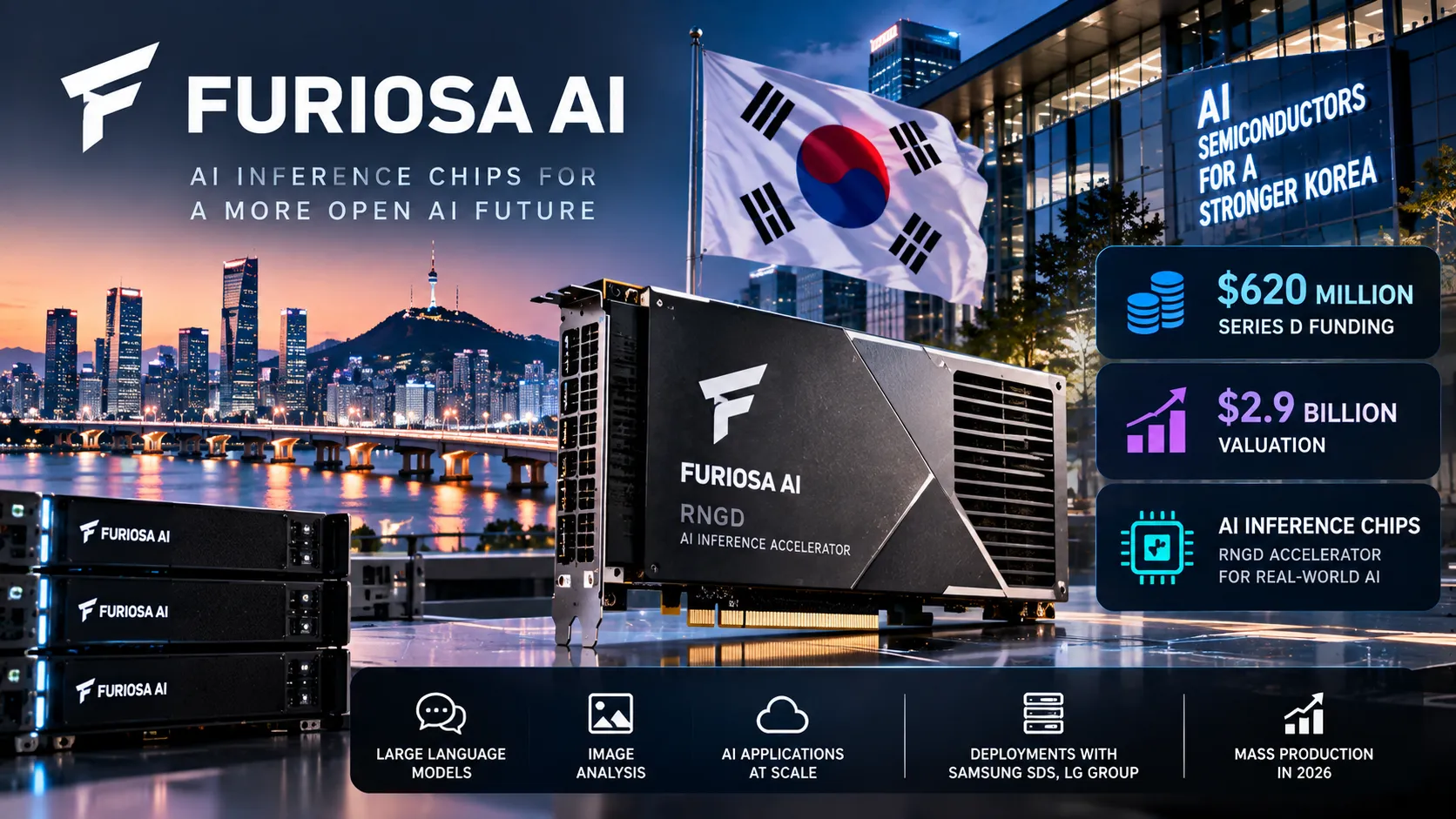
FuriosaAI, a Seoul-based chip designer, has raised $620 million in a Series D funding round at a post-money valuation of $2.9 billion, according to Tech Startups on Thursday, October 29. The National Growth Fund of Korea contributed $280 million, making the state-backed fund the largest single investor in the round.
Other investors include Infinitum, Jericho Capital, QUDA Capital, Cisco Investments, NeoFort Holding, Worldline Capital, internet company Naver, DSC Investment, Korea Development Bank, Nextrans and Kakao Investment.
What FuriosaAI makes
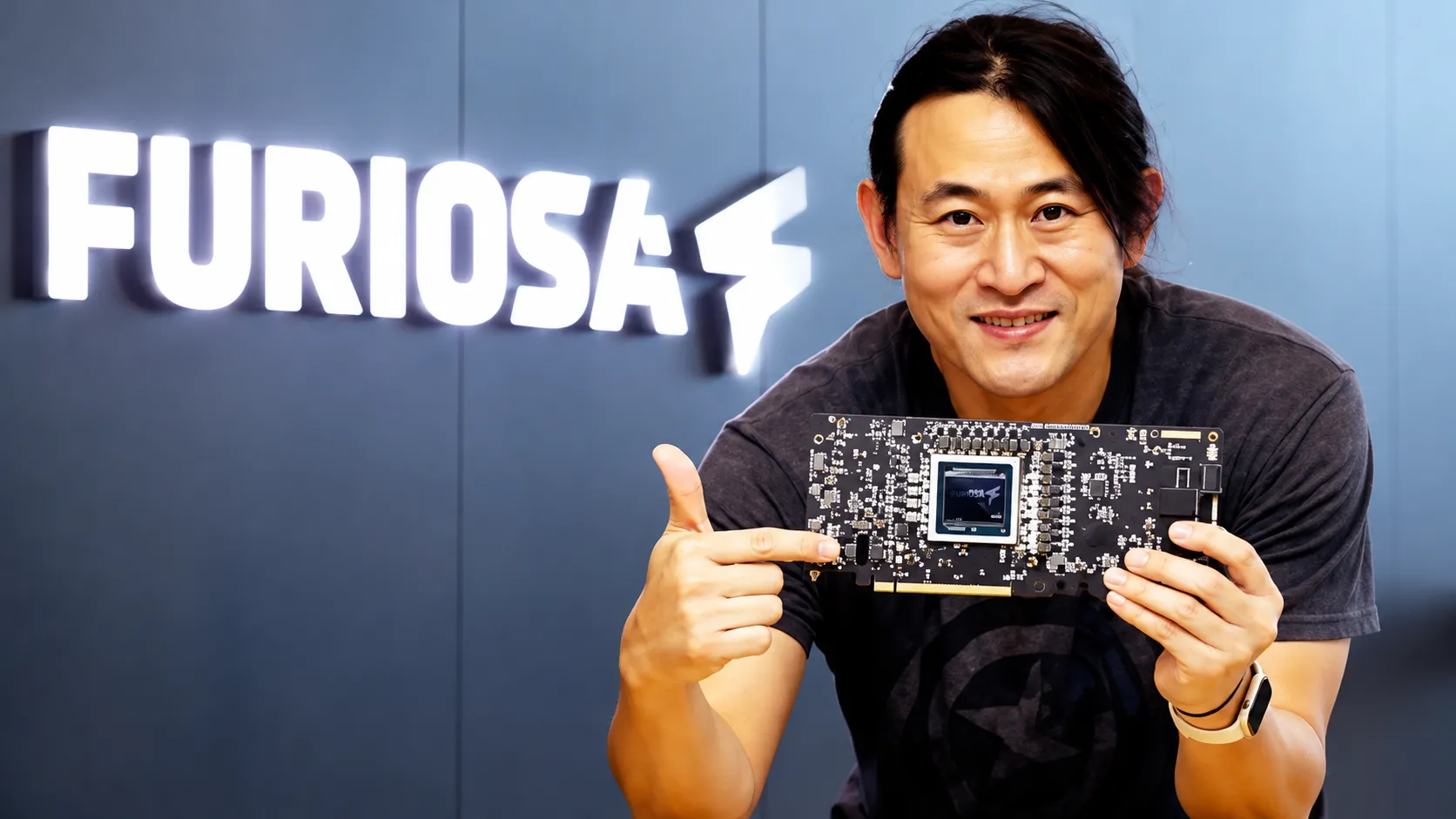
FuriosaAI designs processors for AI inference, the process of running trained AI models to answer questions, generate text, analyse images or make predictions. Its flagship product, the RNGD accelerator (pronounced "Renegade"), is designed as an alternative to general-purpose graphics processing units for running large language models and other AI workloads.
The RNGD entered mass production in January 2026, and the company expects to ship about 20,000 cards this year, with capacity expected to more than double in 2027. Deployments have been identified with Samsung SDS, the IT services arm of the Samsung Group, and LG Group.
Why inference matters
For the first wave of the AI boom, the largest demand for chips came from training: building ever-larger AI models on clusters of thousands of Nvidia GPUs. As AI applications move into widespread use, inference is becoming an increasingly large share of computing demand. Every time a user asks a chatbot a question, generates an image or uses an AI assistant at work, inference chips are at work.
Inference workloads have different requirements from training. They place a premium on energy efficiency, cost per query and the ability to respond quickly to large numbers of users. This has opened the door for specialised chips that can run models more efficiently than general-purpose GPUs, at least for certain tasks.
Large technology companies have developed their own inference chips, including Google's tensor processing units, Amazon's Inferentia and Trainium, and Microsoft's Maia. A wave of startups, including Groq, Cerebras, SambaNova and others, has also targeted the inference market.
State-backed ambitions
The $280 million investment from the National Growth Fund of Korea underlines the strategic importance South Korea attaches to AI chips. South Korea is home to Samsung Electronics and SK hynix, the world's two largest memory chipmakers, which have benefited enormously from AI demand for high-bandwidth memory. However, the country has been less prominent in designing the processors that power AI systems.
The government has made AI and semiconductors a national priority, with plans to build AI data centres, support domestic chip designers and develop sovereign AI capabilities. Backing FuriosaAI is a way to build a domestic champion in AI processors that can complement the country's strength in memory.
Corporate backers
The participation of Naver and Kakao, South Korea's two largest internet companies, is significant. Both are developing their own AI models and services and need large amounts of computing power. Using domestic inference chips could reduce their dependence on Nvidia, whose GPUs are expensive and have often been in short supply.
Cisco Investments' participation suggests interest from a global networking company that supplies equipment for data centres. Korea Development Bank, a state-owned policy lender, has long supported strategic industries in South Korea.
The Nvidia challenge
Competing with Nvidia is one of the hardest tasks in technology. Nvidia controls the vast majority of the market for AI accelerators, and its CUDA software platform is deeply embedded in how AI developers build and run models. Customers that switch to alternative chips must often adapt their software, which can be costly and time-consuming.
Challengers typically focus on specific advantages, such as better performance per watt or lower total cost for particular workloads, and invest heavily in software tools that make it easy to run popular models on their chips. FuriosaAI's ability to win deployments at major Korean conglomerates suggests that its chips are competitive for at least some applications.
FuriosaAI attracted global attention in 2025 when it was widely reported to have turned down an acquisition offer from Meta, choosing to remain independent. The new funding round, at a $2.9 billion valuation, gives it the resources to pursue that independent path.
Manufacturing and supply
Like most chip designers, FuriosaAI does not manufacture its own chips but relies on foundries. Securing manufacturing capacity, as well as supplies of high-bandwidth memory and advanced packaging, is critical for scaling production. With AI demand straining supply chains across the industry, chip designers that can secure capacity have a significant advantage.
Expected shipments of about 20,000 cards in 2026 are modest compared with Nvidia's volumes, which run into millions of units, but they represent meaningful commercial traction for a startup. Doubling capacity in 2027 would allow FuriosaAI to serve more customers.
The global AI chip race
FuriosaAI's funding comes amid a broader surge in investment in AI chip startups. Governments and investors around the world are seeking alternatives to Nvidia, motivated by cost, supply security and strategic considerations. In China, companies such as Huawei and Cambricon are developing domestic AI chips in response to US export controls. In Europe and the United States, startups have raised large sums to develop specialised processors.
What it means for India
India has set out ambitions to build its own semiconductor ecosystem, including chip design and manufacturing. The India Semiconductor Mission supports fabrication plants, assembly and testing facilities, and chip design startups. Indian AI chip design startups remain at an early stage, but India has a large pool of chip design engineers working for global companies, many of whom design processors for Nvidia, Qualcomm, Intel and AMD from Indian offices.
South Korea's approach, combining state investment with corporate backing to build a domestic AI chip champion, offers lessons for India as it seeks to develop sovereign AI capabilities. The IndiaAI Mission has focused on providing GPU computing capacity to Indian startups and researchers, largely using Nvidia chips. Over time, domestic or diversified chip supply could become a strategic consideration.
The investor view
For investors, AI chip startups offer high potential returns but significant risks. The capital required to design and manufacture advanced chips is substantial, and competition from Nvidia and the in-house chips of large technology companies is intense. FuriosaAI's valuation of $2.9 billion reflects investor confidence in its technology and its strategic position in South Korea's AI ecosystem.
What comes next
FuriosaAI will use the funding to scale production of its RNGD chips, develop next-generation products and expand its software ecosystem. Its progress in winning customers beyond South Korea will be watched as a test of whether it can compete globally. With AI inference demand rising rapidly, the market is large enough to support multiple players, and FuriosaAI's new capital gives it a stronger position to capture a share of it.