GalaxEye, the Bengaluru-based spacetech startup building Earth observation capabilities through its proprietary OptoSAR technology, has acquired StarOps, a fellow Bengaluru spacecraft engineering company that traces its lineage to TeamIndus, one of India's pioneering private space ventures. The acquisition brings StarOps' qualified satellite bus platforms, proprietary subsystem technologies, testing infrastructure, engineering tools and an experienced team of spacecraft engineers directly into GalaxEye, marking a significant step in the four-year-old startup's push to become a fully vertically integrated space technology company.
Incorporated in 2022, StarOps was built specifically to develop satellite platforms and indigenise critical spacecraft technologies within India, and has reported achieving more than 66% indigenisation across its satellite systems — a figure that speaks directly to the reduced dependence on global supply chains that has become an increasingly important strategic consideration for Indian space companies, particularly those serving defence and national security customers.
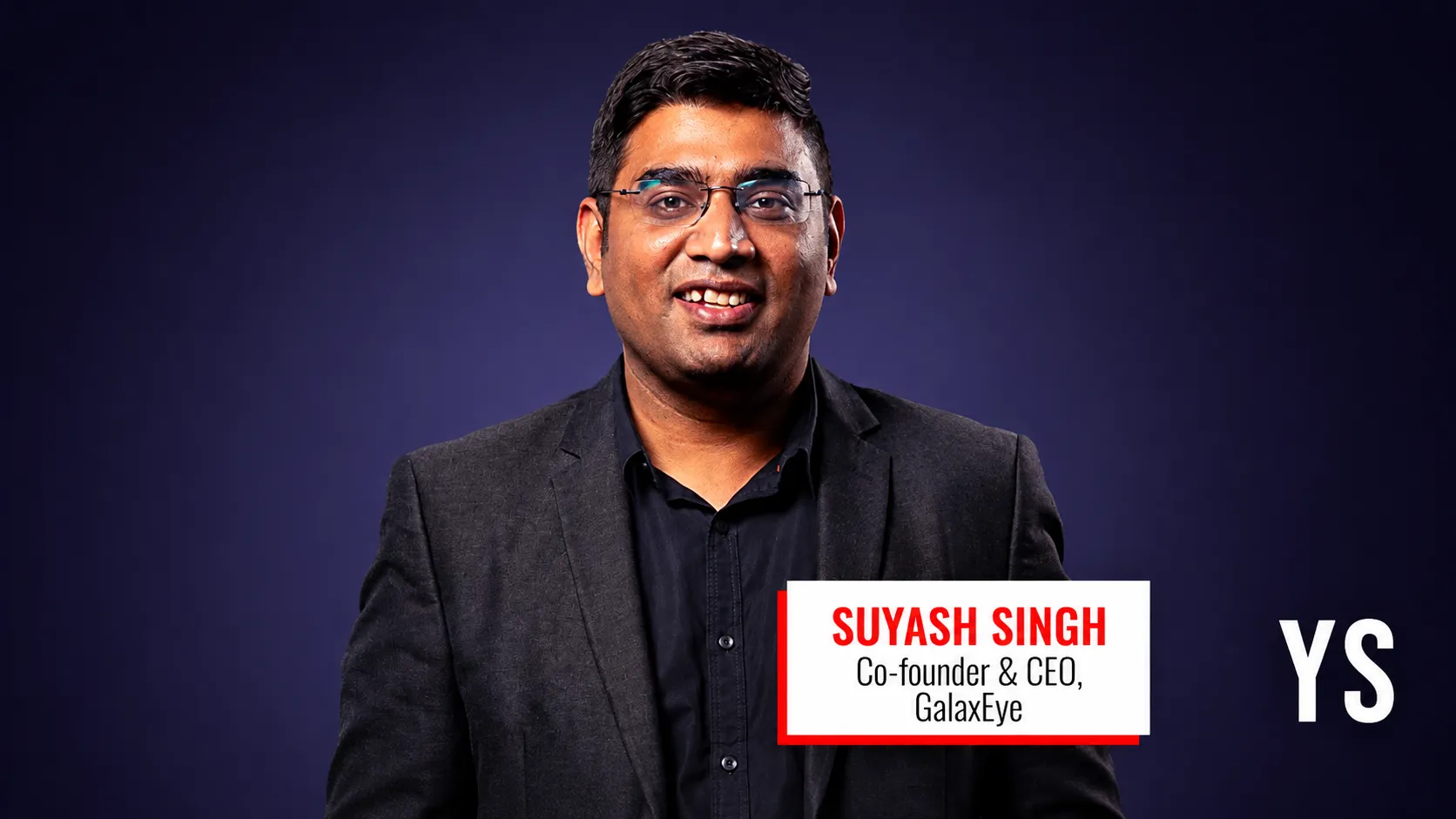
"By welcoming this exceptional team and their technologies into GalaxEye, we are significantly strengthening our capabilities across satellite engineering," said Suyash Singh, Co-founder and CEO of GalaxEye. The deal brings qualified satellite bus platforms spanning the 50 kg, 150 kg and 250 kg weight classes into GalaxEye's portfolio, alongside proprietary subsystem technologies and qualification heritage that would otherwise take years to develop independently.
Several members of the StarOps engineering team previously worked at TeamIndus on its Lunar Lander and Rover programme, bringing end-to-end mission experience — from design through end-of-life operations — into GalaxEye's expanding capabilities. "My journey in space began at TeamIndus, where I learned to build missions from first principles — from developing the technology to bidding for global space agency contracts," said Nirmal Suraj Gadde, Co-founder and Missions Lead at StarOps. The incoming team's expertise spans spacecraft systems engineering, propulsion, avionics, flight computing, guidance and navigation, structures and mechanisms, electrical systems, programme management, mission operations and ground operations — collectively covering nearly the full spacecraft development lifecycle. The team is further supported by a panel of veteran ISRO experts experienced in designing, qualifying and delivering complex space programmes.
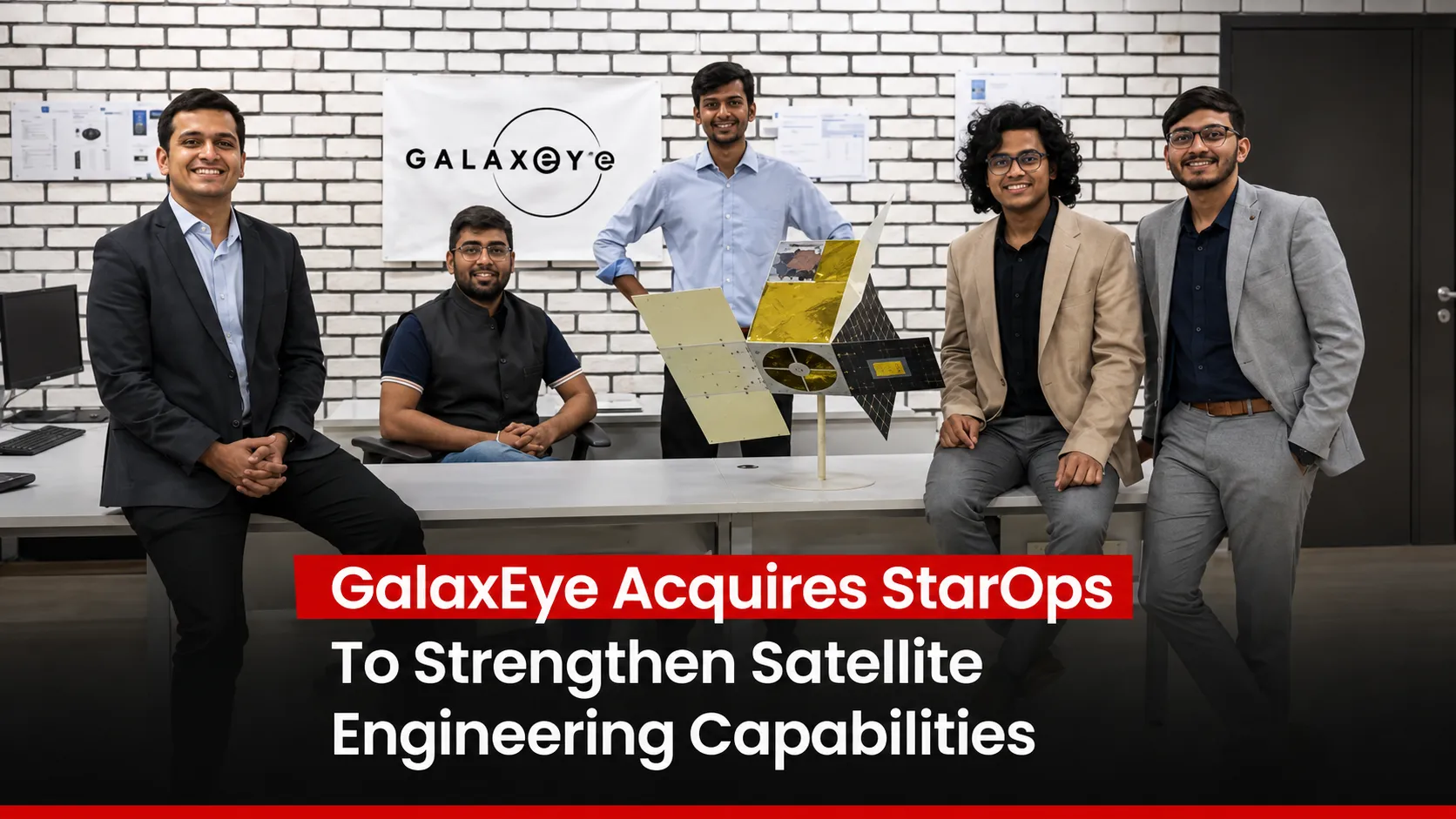
Founded in 2021 by Suyash Singh, Denil Chawda, Kishan Thakkar, Pranit Mehta and Rakshit Bhatt, and incubated at IIT Madras, GalaxEye has built its business around OptoSAR, a proprietary technology that fuses synthetic aperture radar and optical imaging into a single sensing system, delivering high-resolution imaging and geospatial intelligence for defence, agriculture, infrastructure and disaster-management customers. The StarOps acquisition comes shortly after GalaxEye launched its own satellite under "Mission Drishti," an effort aimed at establishing in-orbit credibility for its earth observation technology, and follows a February 2026 agreement under which state-run NewSpace India Limited began reselling GalaxEye's satellite imagery products, including its SyncFused OptoSAR data.
By bringing spacecraft bus manufacturing and systems engineering in-house rather than continuing to rely on external vendors, GalaxEye is positioning itself to control a materially larger share of the satellite development value chain — from initial design and subsystem development through testing, deployment and mission operations — a strategy that mirrors the vertical-integration approach several well-capitalised global spacetech companies have pursued as they scale beyond single-product offerings.
The acquisition adds to a broader pattern of consolidation and capability-building within India's still-young private spacetech sector, where a handful of well-funded startups are increasingly acquiring smaller, specialised engineering teams rather than building every capability from scratch. For GalaxEye, absorbing StarOps' indigenous satellite bus platforms and ISRO-linked engineering talent could meaningfully compress the timeline needed to scale its own satellite constellation ambitions, while also giving the combined entity a broader in-house toolkit to pursue both commercial earth-observation contracts and the kind of defence and national-security programmes where domestic capability requirements are becoming an increasingly explicit procurement criterion.
StarOps' TeamIndus lineage is itself a small but telling data point about how India's private spacetech talent pool has evolved over the past decade. TeamIndus, which competed for the Google Lunar XPRIZE before the venture wound down, trained a generation of Indian engineers in end-to-end mission design at a time when few domestic private-sector opportunities existed for that specific skill set; many of those engineers subsequently dispersed into India's now-expanding spacetech startup ecosystem, carrying deep, hard-won mission experience with them. GalaxEye's acquisition of StarOps effectively reconsolidates a meaningful slice of that TeamIndus-trained talent under one roof, illustrating how a first generation of ambitious but ultimately unsuccessful Indian space ventures has, indirectly, helped seed the technical foundations for the current wave of better-capitalised private space companies now competing for both commercial and government contracts.