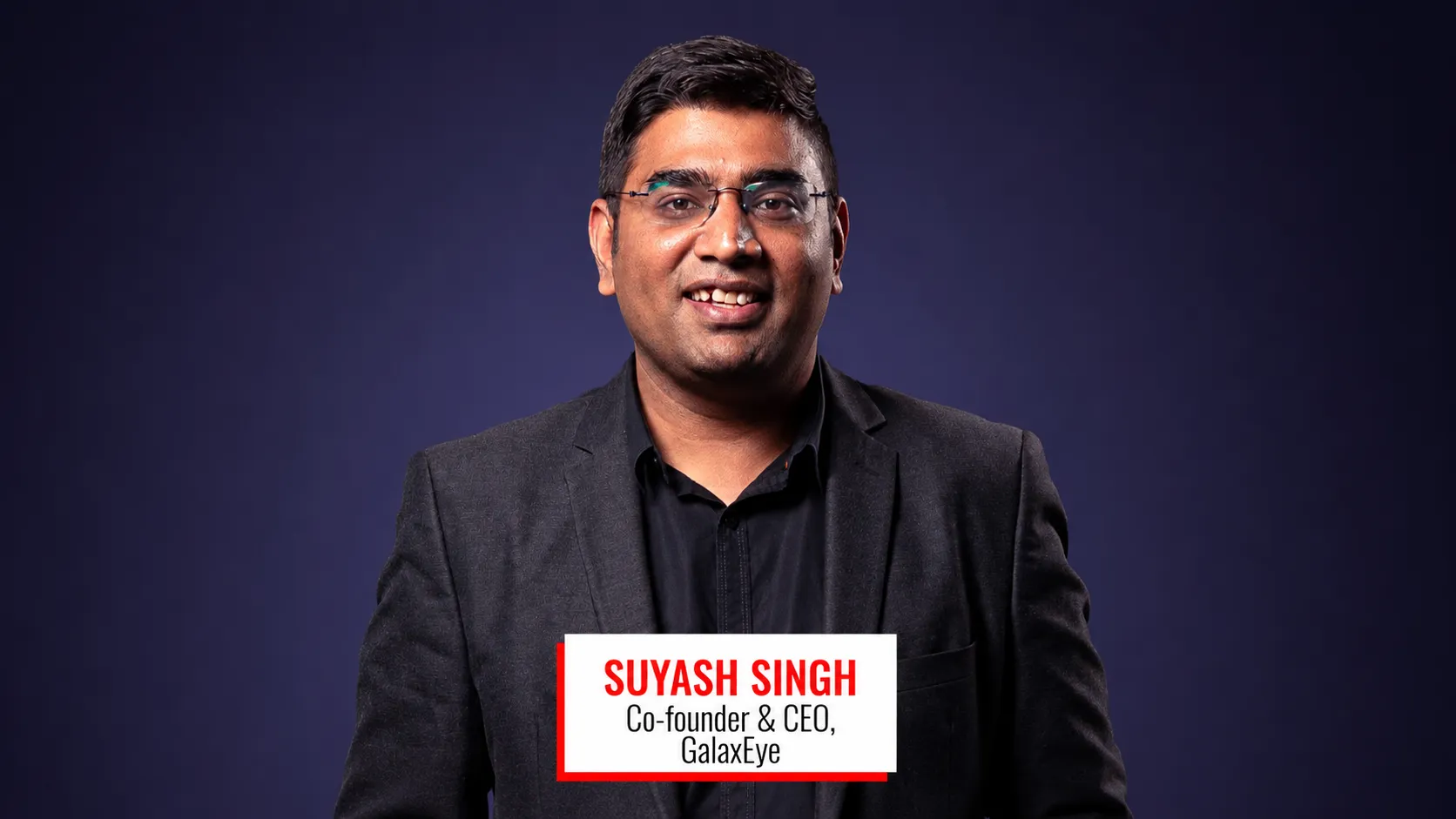
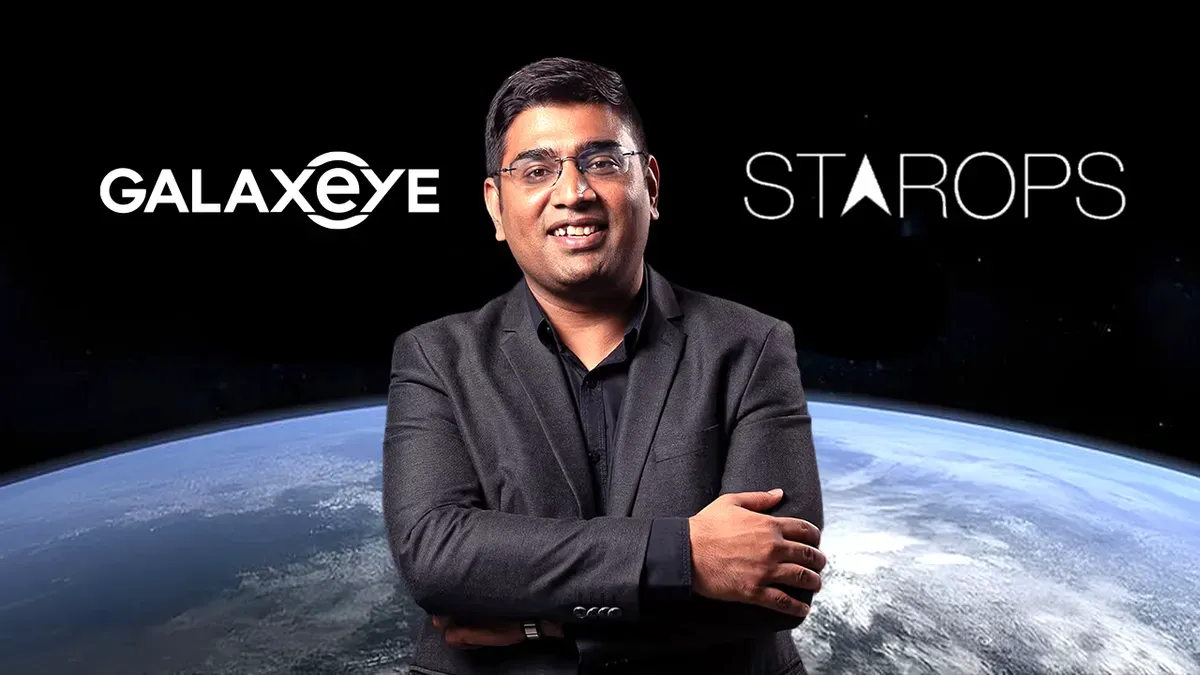
GalaxEye, the IIT Madras-incubated space technology startup building earth observation satellites through its proprietary OptoSAR technology, has acquired StarOps, a Bengaluru-based spacecraft engineering company that traces its origins to TeamIndus, one of India's pioneering private lunar exploration ventures. The acquisition, announced on August 10, marks a significant step in GalaxEye's stated ambition of becoming a fully vertically integrated space technology company.
Incorporated in 2022, StarOps was established to develop satellite platforms and indigenise critical spacecraft technologies within India, building expertise across spacecraft systems engineering, propulsion, avionics, flight computing, guidance and navigation, structures and mechanisms, electrical systems, mission operations and ground operations. The company has developed qualified satellite bus platforms across the 50 kg, 150 kg and 250 kg weight classes and reports more than 66 per cent indigenisation across its satellite systems, a figure that speaks directly to India's broader push to reduce dependence on imported spacecraft components and global supply chains for critical space technology.
"By welcoming this exceptional team and their technologies into GalaxEye, we are significantly strengthening our capabilities across satellite engineering," said Suyash Singh, co-founder and CEO of GalaxEye. The integration brings StarOps' proprietary technologies, qualified satellite platforms, testing infrastructure, engineering tools and an experienced engineering team into GalaxEye's operations, several of whom previously worked at TeamIndus on its Lunar Lander and Rover programme.
"My journey in space began at TeamIndus, where I learned to build missions from first principles, from developing the technology to bidding for global space agency contracts," said Nirmal Suraj Gadde, co-founder and missions lead at StarOps. "We're now bringing that experience to GalaxEye, and I'm excited to see our work become part of its ambitious mission to develop and deploy a constellation of OptoSAR satellites."
Founded in 2021 by Singh alongside Denil Chawda, Kishan Thakkar, Pranit Mehta and Rakshit Bhatt, GalaxEye is developing indigenous space technology for defence, national security and commercial applications, with its proprietary OptoSAR technology combining synthetic aperture radar and optical imaging to deliver high-resolution imaging and geospatial intelligence usable during both day and night and across varying weather conditions. Its solutions target sectors including defence, agriculture, infrastructure monitoring and disaster management, and the company has been expanding its commercial footprint, including a partnership signed with NewSpace India Limited earlier this year and the recent launch of a satellite under its Mission Drishti programme aimed at establishing in-orbit credibility for its earth observation ambitions.
For GalaxEye, the StarOps acquisition is expected to accelerate product development, deepen vertical integration and strengthen its ability to deliver end-to-end space missions from concept through operations, bringing satellite bus design, subsystem development, testing and mission operations under one roof rather than relying on external partners or suppliers for critical spacecraft components. That kind of vertical integration has become an increasingly common strategic priority among ambitious spacetech companies globally, mirroring the approach pursued by larger international players that have found competitive advantage in controlling more of their own supply chain rather than depending on fragmented third-party vendors for mission-critical hardware.
The acquisition also carries broader significance for India's private space sector, which has expanded rapidly since the government's 2020 liberalisation of space activity allowed private companies to build and operate satellites, launch vehicles and related infrastructure without the restrictions that had previously confined most space activity to state-run ISRO. StarOps' TeamIndus lineage adds a layer of institutional continuity to that expansion: TeamIndus, though it never completed its own lunar mission, trained a generation of Indian space engineers who have since gone on to found or join a wave of newer private space ventures, of which GalaxEye's absorption of the StarOps team represents one of the more visible consolidations to date. With India's private space economy still in its relatively early, fragmented stage compared with more mature markets in the US and Europe, GalaxEye's move to acquire rather than build spacecraft engineering capability internally offers a template that other well-capitalised Indian spacetech startups may increasingly look to replicate as the sector matures.
StarOps' more than 66 per cent indigenisation figure across its satellite systems is particularly relevant against the backdrop of India's broader push for self-reliance in strategic and dual-use technologies. Spacecraft components have historically depended on a global supply chain concentrated among a small number of established aerospace suppliers, exposing satellite developers everywhere, including in India, to export-control restrictions, long lead times and geopolitical supply-chain risk. By acquiring a team that has already demonstrated the ability to design and qualify satellite bus platforms domestically across three separate weight classes, GalaxEye gains not just engineering headcount but a body of qualification heritage, the accumulated testing and validation history that regulators and customers alike rely on to trust that a given spacecraft component will perform reliably in orbit, something that is difficult and time-consuming to build from scratch.
The deal also reflects the broader panel of veteran ISRO expertise increasingly available to India's private space companies as the sector matures. Several of StarOps' engineers, alongside advisors drawn from ISRO's own programme history, bring institutional knowledge of India's space engineering practices that private companies founded entirely by first-time space entrepreneurs would otherwise take years to accumulate organically. For GalaxEye, absorbing that expertise through acquisition rather than incremental hiring compresses a multi-year capability-building timeline into a single transaction, an advantage that could prove decisive as the company races to establish in-orbit credibility for its OptoSAR earth observation constellation ahead of increasingly well-funded domestic and international competitors pursuing similar earth-observation ambitions.
For India's defence and national-security establishment, the consolidation of indigenous satellite engineering capability under a single, vertically integrated commercial entity also carries strategic relevance beyond GalaxEye's own commercial roadmap. As India continues expanding its reliance on private space companies to supplement, rather than merely support, government-led space programmes, the government has increasingly signalled preference for domestic suppliers capable of delivering complete, end-to-end space capabilities rather than depending on fragmented consortia of specialised component suppliers, a preference that fits squarely with GalaxEye's stated post-acquisition ambition of controlling everything from spacecraft bus design through mission operations under one roof. As the company works to integrate StarOps' engineering team and technology portfolio over the coming months, the acquisition's ultimate success will be measured less by the transaction itself than by how quickly GalaxEye can translate that newly consolidated capability into faster satellite development cycles and a credible path toward its stated goal of deploying a full OptoSAR constellation.