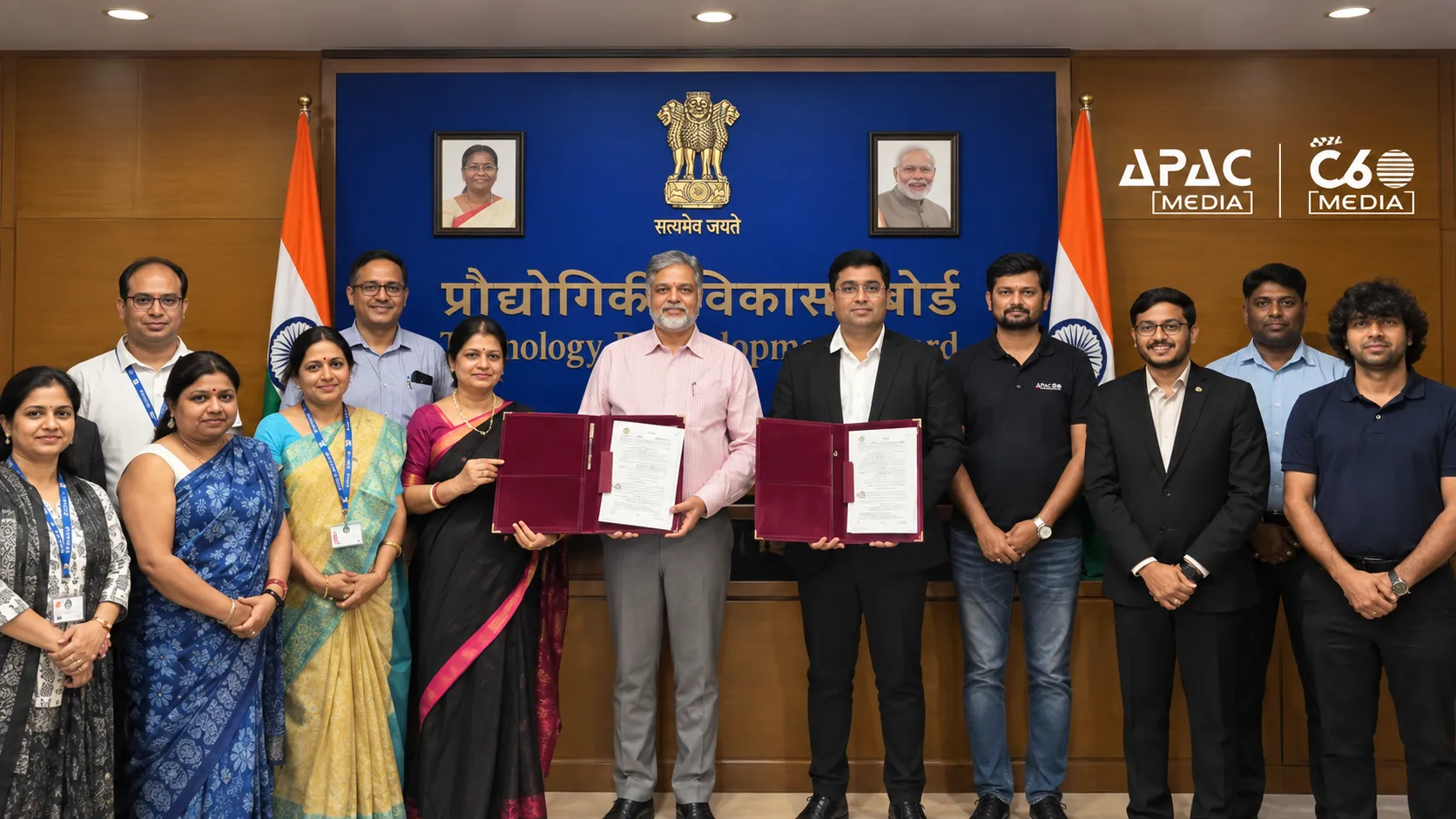
India's push to build sovereign capability in space has found a new beneficiary. GalaxEye, a spacetech start-up incubated at IIT Madras, has secured ₹63.84 crore, about $6.7 million, from the Technology Development Board (TDB) to develop an advanced multi-sensor Earth-observation satellite.
The funding comes under the government's Research, Development and Innovation (RDI) Fund, a ₹1 lakh crore programme approved by the Union Cabinet in July 2025 to encourage private-sector investment in research and deep technology. The support has been structured as optionally convertible debentures, a form of financing that can later convert into equity. TDB, which operates under the Department of Science and Technology (DST), announced the agreement with GalaxEye this week.
The total cost of the project is estimated at ₹247.69 crore, meaning the RDI Fund support covers roughly a quarter of the programme. The rest is expected to come from GalaxEye's own funding and private investors.
"The agreement with GalaxEye reflects TDB's focus on enabling indigenous capabilities in emerging space technologies," said Rajesh Kumar Pathak, secretary of the Technology Development Board.
What GalaxEye is building
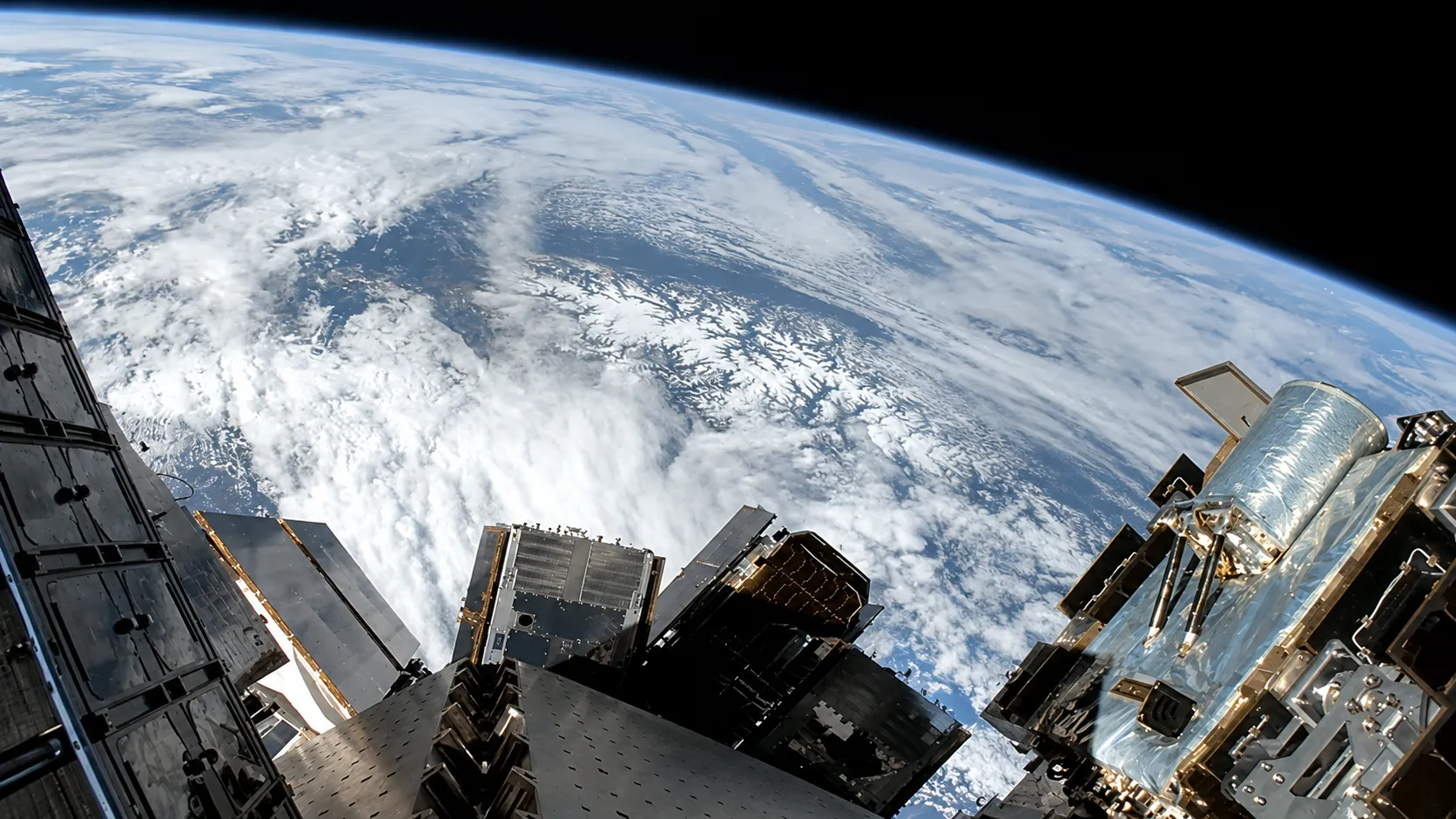
GalaxEye's core technology is what it calls OptoSAR. The approach combines two types of sensor on one satellite: synthetic aperture radar (SAR) and electro-optical imaging.
Each has strengths and weaknesses. Optical cameras produce the familiar, photograph-like images that are easy to interpret, but they cannot see through cloud cover or at night. Radar can image the Earth's surface in all weather conditions and around the clock, but its output is harder for non-specialists to read. By fusing both on a single platform, GalaxEye aims to deliver imagery that is both reliable and easy to use.
The new satellite being developed with the RDI Fund support is designed to achieve a resolution finer than 0.5 metres, which would allow users to distinguish small objects such as vehicles. Under the agreement, the technology is expected to progress from Technology Readiness Level 6, a working prototype demonstrated in a relevant environment, to Level 9, meaning a system proven in actual operation.
Learning from Mission Drishti
The new programme follows GalaxEye's first satellite, Mission Drishti, which was launched in May. According to Inc42, the company lost communication with the satellite in July because of a geomagnetic anomaly.
Losing an early satellite is not unusual in the space industry, particularly for start-ups flying new technology for the first time. What matters to investors and customers is what the company learned and how quickly it can return to orbit. GalaxEye has said it is targeting the launch of two new OptoSAR satellites within the next two years.
The RDI Fund backing is a vote of confidence that the underlying technology remains sound despite the setback with Drishti.
The founders and the funding journey
GalaxEye was founded in 2021 by Suyash Singh, Denil Chawda, Kishan Thakkar, Pranit Mehta and Rakshit Bhatt. The team came out of IIT Madras, which has become one of India's most productive incubators for deep-technology companies, including several in the space sector.
According to Inc42, the company has raised close to $27 million to date. It has also been raising a ₹44.2 crore Series A with investors including Speciale Invest, Rainmatter, MV Core and Mounttech Growth Fund.
That is a modest sum compared with the hundreds of millions raised by the largest Earth-observation companies in the United States and Europe. But Indian spacetech start-ups have typically operated with lower costs, and government programmes such as the RDI Fund are designed to help bridge the gap between early private capital and the large sums needed to build and launch satellites.
Why the RDI Fund matters
The RDI Fund was created to address a long-standing weakness in India's innovation system: low private investment in research and development. India's gross spending on R&D has hovered well below 1 per cent of GDP for years, and industry contributes a smaller share than in countries such as the United States, China or South Korea.
The fund is intended to provide long-term, low-cost capital for projects in strategic and emerging sectors, including space, semiconductors, clean energy and advanced materials. By channelling money through instruments such as convertible debentures, the government can share in the upside if companies succeed, while giving founders patient capital that commercial investors may be unwilling to provide at an early stage.
GalaxEye's agreement is one of a growing number of disbursals under the programme, and it signals that space is among the priority areas.
A strategic capability for India
All-weather, high-resolution Earth observation has become a strategic asset. Governments use it for border monitoring, disaster response, infrastructure planning and agriculture. Businesses use it to track crops, monitor supply chains, assess insurance claims and measure environmental change.
For India, which faces frequent monsoon cloud cover over much of its territory for several months each year, radar-based imaging is especially valuable. Optical satellites alone can leave long gaps in coverage during the rainy season, precisely when floods and landslides make timely imagery most important.
India's space sector has changed rapidly since the government opened it to private companies in 2020. The creation of the Indian National Space Promotion and Authorisation Centre (IN-SPACe) and a new space policy have encouraged a wave of start-ups in launch vehicles, satellite manufacturing and data services. Earth observation is one of the segments with the clearest commercial demand, both domestically and in export markets.
What comes next
GalaxEye's immediate task is execution. Taking a complex dual-sensor satellite from prototype to proven operational system within the timeline it has set will require careful engineering, testing and access to reliable launch opportunities.
The company will also need to build a commercial pipeline for its data. Government agencies are likely to be early customers, but long-term success will depend on selling imagery and analytics to a broad base of enterprise users in India and abroad.
The RDI Fund support gives GalaxEye a stronger financial foundation for that effort. It also sends a message to the wider start-up ecosystem: the government is prepared to back deep-technology companies through setbacks, as long as the underlying technology and team are credible.
If GalaxEye delivers on its plan to launch two OptoSAR satellites within two years, it could become one of India's first private companies to offer sub-half-metre, all-weather imagery from its own constellation. That would be a significant milestone for the company, and for India's ambition to become a serious player in the global commercial space economy.