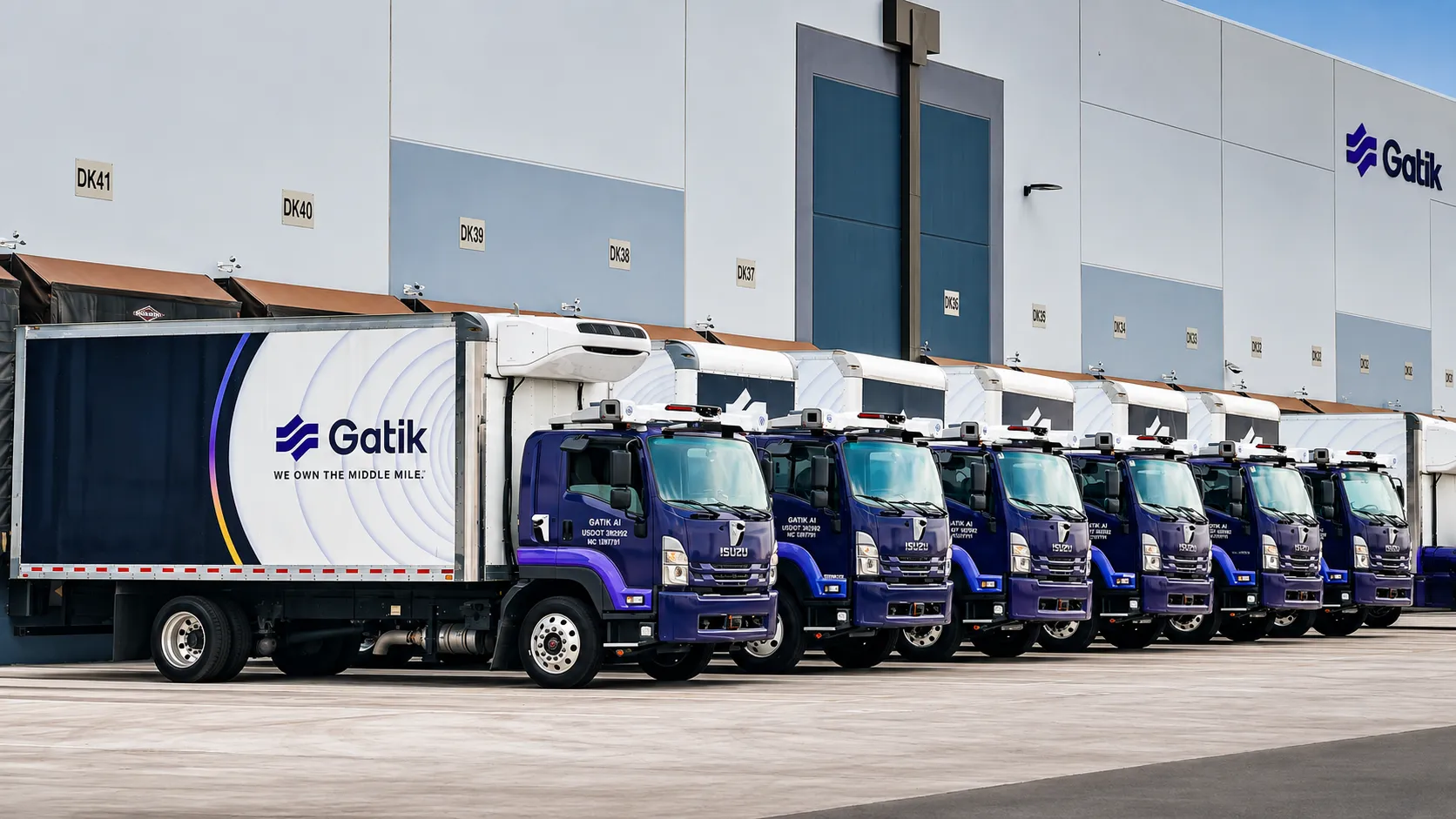
Autonomous trucking startup Gatik AI has raised $200 million in a funding round led by the Qatar Investment Authority and Koch Disruptive Technologies, the company's largest raise to date, according to a Bloomberg report published August 25, 2026. The round also included participation from Millennium Management, ARK Invest and Intact Private Capital, bringing Gatik's total capital raised since its founding to approximately $500 million.
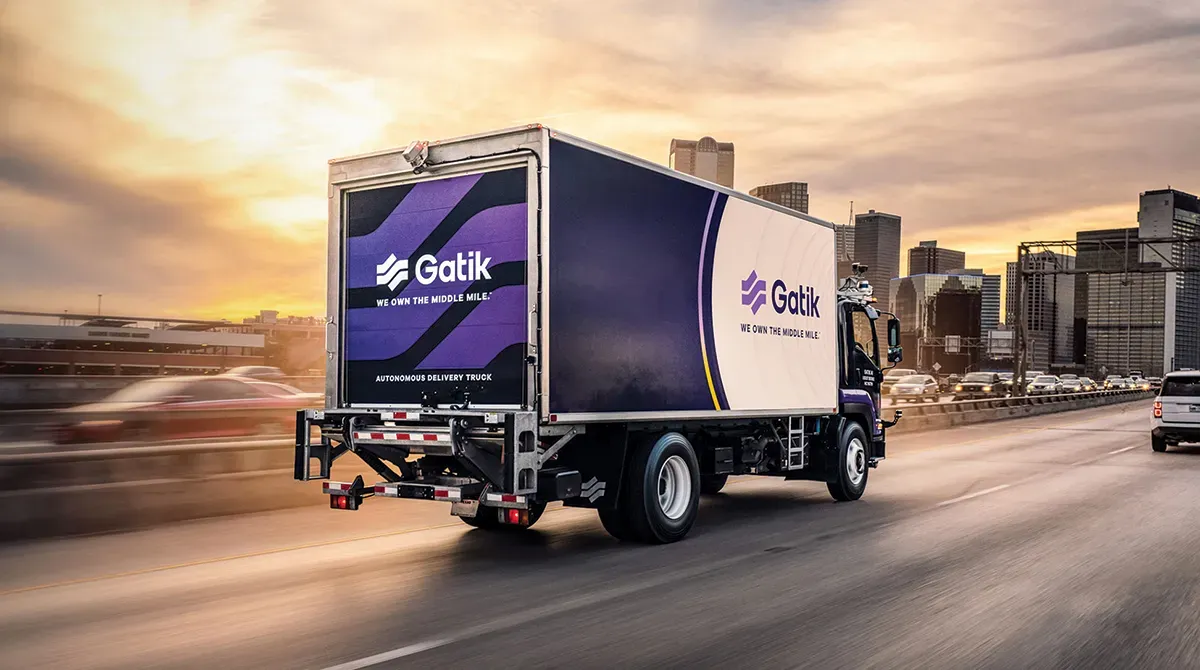
Gatik has built its business around short-haul, middle-mile autonomous trucking, a niche within the broader self-driving vehicle industry that focuses on repetitive, fixed routes between distribution centres, warehouses and retail locations rather than the long-haul interstate routes that have drawn more headline attention from competitors. This middle-mile focus has allowed Gatik to operate its autonomous trucks on well-mapped, predictable corridors, an approach the company has argued reduces the technical complexity — and associated safety risk — of achieving genuine driverless operation compared with more variable long-haul or urban driving environments.
Chief Executive Officer and co-founder Gautam Narang said the fresh capital would be used to grow the company's presence in the regions where its self-driving trucks currently operate, expanding both route density and the pool of retail and logistics customers it serves. The middle-mile freight segment Gatik targets has become increasingly attractive to investors as retailers and consumer goods companies look to automate the repetitive, cost-intensive movement of goods between fulfilment nodes, particularly as e-commerce and quick-commerce volumes continue to grow globally.
The involvement of sovereign wealth capital through the Qatar Investment Authority, alongside industrial conglomerate Koch's venture arm, signals a broadening of the investor base willing to back autonomous trucking at scale, moving beyond the traditional venture capital and specialist mobility funds that have historically dominated the sector's capitalisation. This diversification of investor types often accompanies a startup's transition from an early-stage technology bet toward a company perceived as having a credible, near-term commercial path — a shift that autonomous vehicle companies across the industry have struggled to convincingly demonstrate for much of the past decade.
Gatik's approach stands in contrast to several higher-profile autonomous vehicle companies that have pursued more ambitious, fully generalised self-driving capabilities across a wider range of environments, a strategy that has in some cases proven more technically challenging and capital-intensive to commercialise than initially anticipated. By narrowing its operational scope to predictable middle-mile routes, Gatik has positioned itself as a company pursuing a more conservative but potentially faster path to sustainable, revenue-generating autonomous operations.
The $200 million raise arrives amid a broader resurgence of investor interest in autonomous vehicle and robotics companies more generally, driven in part by advances in underlying AI capabilities and growing enterprise willingness to deploy automation technology across logistics and supply chain operations. Gatik's ability to attract its largest round to date, backed by a diverse syndicate spanning sovereign wealth, industrial and hedge fund capital, suggests investors increasingly view the middle-mile autonomous trucking segment specifically as one of the more commercially proven and near-term-viable applications within the broader self-driving vehicle category.
For the logistics and retail industries the company serves, continued scaling of Gatik's fleet could translate into meaningful reductions in the cost and complexity of middle-mile freight movement — a segment of the supply chain that has historically relied on a highly fragmented base of independent truckers and small fleet operators, and one that companies across retail and consumer goods have long identified as ripe for automation-driven efficiency gains.