GIVA, the Bengaluru-based jewellery brand that turned affordable silver into one of India's most visible consumer startup stories, has raised more than $100 million in a round led by Multiples Alternate Asset Management. It is one of the largest private equity cheques written into an Indian consumer brand this year.
The round, announced on November 3, also included participation from existing investors. Inc42 put the total at $103 million. According to the company, the capital will be deployed across three areas: opening new stores, expanding manufacturing capacity and strengthening its leadership bench.
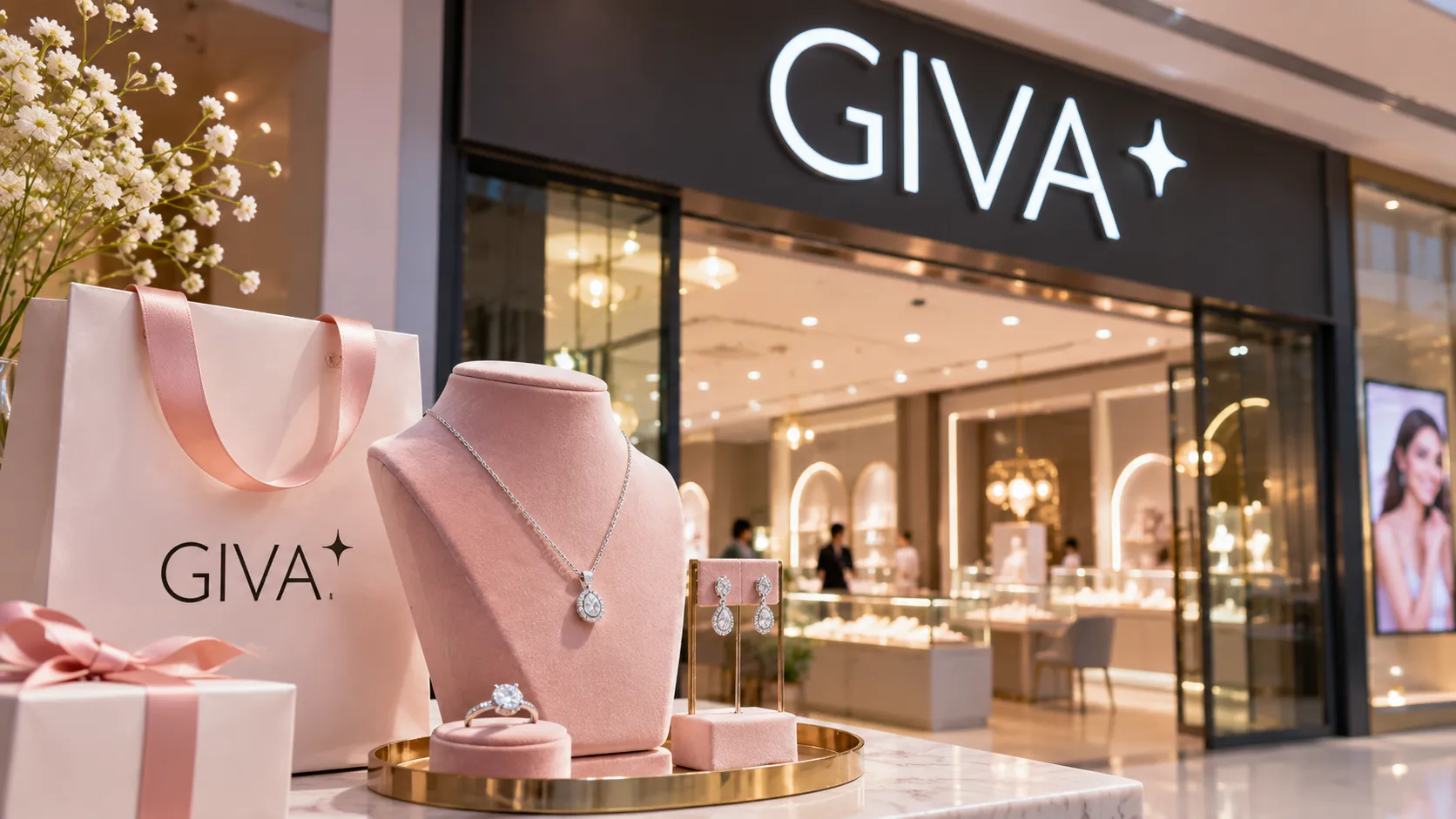
The ambition behind the money is striking. GIVA is targeting more than 1,000 stores over the next three to five years, a sharp step up from its current network of over 400 stores across India and Sri Lanka.
From silver startup to omnichannel jeweller
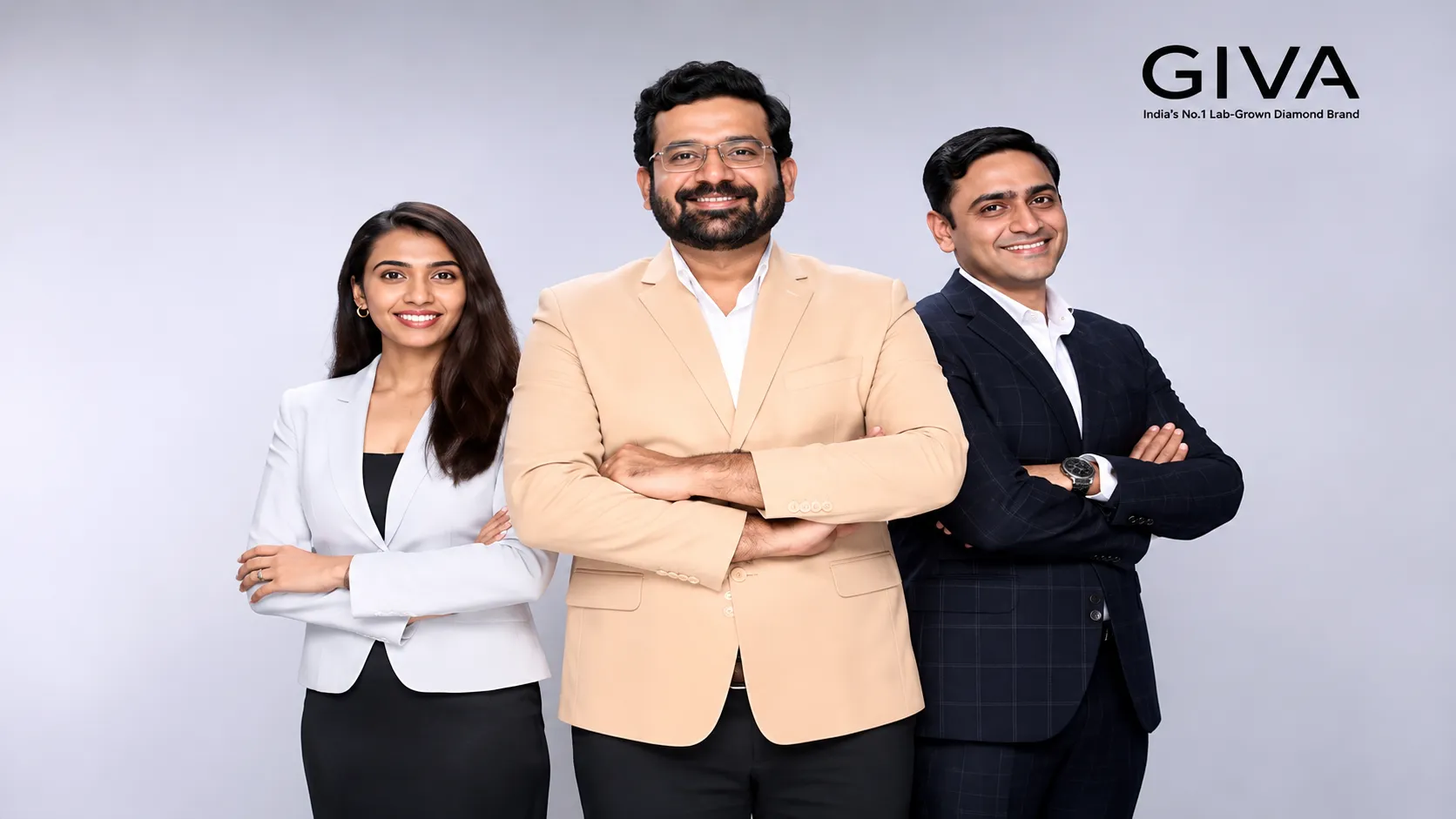
Founded in 2019 by Ishendra Agarwal, along with Nikita Prasad and Sachin Shetty, GIVA started by selling 925 sterling silver jewellery online. It targeted a gap that traditional jewellers had largely ignored: young, urban, digitally native consumers who wanted fashionable, everyday pieces at accessible price points rather than heavy gold heirlooms bought for weddings.
The brand has since moved steadily up the value chain. It now sells 14-karat and 18-karat gold and lab-grown diamond jewellery alongside its silver range. Its distribution model has evolved from pure online sales to an omnichannel network that combines a website, a mobile app and a fast-growing fleet of physical stores, many of them operated through a franchise-led model.
That transition has driven the top line. GIVA reported FY26 revenue of about ₹865 crore, according to StartupTalky, although the company had not yet filed its full FY26 accounts.
Why private equity is backing jewellery
Multiples' participation had been widely expected. In April, Mint reported that several large private equity firms, including Multiples, Warburg Pincus and Kedaara Capital, were in discussions for a stake of $80–100 million in GIVA. A later report said Multiples had signed an exclusive agreement for the deal at a valuation of around ₹6,000 crore. The company has not officially confirmed the valuation of the latest round.
Multiples, founded by veteran investor Renuka Ramnath, is one of India's best-known home-grown private equity firms, and its interest says something about how institutional investors now view branded jewellery. India's jewellery market has historically been dominated by family-run, unorganised players. Organised retailers and brands have been steadily taking share as consumers demand hallmarked purity, transparent pricing, easy exchange policies and a modern shopping experience.
Lab-grown diamonds are a particular growth engine. They are chemically identical to mined stones but sell at a fraction of the price, and they appeal strongly to younger buyers who care about value and, in many cases, about the environmental and ethical questions surrounding mining. Industry estimates cited by Mint earlier this year placed India's lab-grown diamond jewellery market at $300–350 million, growing at about 15% a year.
A history of steady capital raising
The latest round caps a series of increasingly large fundraises. GIVA raised a Series C of about ₹530 crore in June 2025, led by Creaegis with participation from Premji Invest, Epiq Capital and Edelweiss. That round valued the company at about ₹3,950 crore. It was followed by an extension led by HPV CC1, with participation from Premji Invest, Kenro Capital and Titan Capital.
The brand has also drawn celebrity backing. In May 2026, actor Kriti Sanon was reported to have invested in GIVA, a move that adds star power to a brand whose core customers follow Bollywood and social media trends closely.
Earlier backers include Premji Invest, A91 Partners, India Quotient, Alteria Capital and Aditya Birla Ventures, among others. Whether some of them used the latest round for partial exits has not been publicly detailed. Earlier reports suggested the transaction could include a mix of primary and secondary capital.
The execution challenge: from 400 to 1,000 stores
Scaling physical retail is a far harder and more capital-intensive business than scaling an app. Each new store demands real estate, inventory, trained staff and, in jewellery, significant working capital tied up in precious metals. Gold price volatility adds another layer of risk, affecting both inventory valuation and consumer demand.
That is why manufacturing features prominently in GIVA's spending plans. Greater control over production can improve margins, shorten design-to-shelf cycles and reduce dependence on third-party karigars and suppliers. Investing in leadership signals that the company knows a 1,000-store organisation requires a different management structure from a 400-store one.
GIVA has also signalled a focus on tier-II and tier-III cities, where rising incomes and aspirational spending are reshaping consumer markets. Earlier this year, the company said it planned up to 150 new outlets in 2026, with a large share in smaller cities where demand has been strong.
Competition is intensifying
GIVA is not alone. Tata-owned Tanishq and its lightweight-jewellery sister brand Mia, CaratLane, Kalyan Jewellers' digital ventures and a growing cohort of D2C labels are all chasing the same young, style-conscious buyer. Lab-grown diamond specialists are proliferating, and established players are launching their own lab-grown lines.
In that environment, brand, store productivity and inventory discipline will separate winners from the rest. GIVA's advantages are its digital-first understanding of customers, a design-led product range refreshed frequently, and price points that make jewellery an everyday or gifting purchase rather than a once-in-a-decade event.
What it means for Indian consumer startups
The funding comes as investors remain selective. Across the Indian startup ecosystem, capital is flowing to businesses that can show revenue scale, a path to profitability and strong unit economics, rather than growth at any cost. A $100 million-plus private equity round for a consumer brand founded only seven years ago suggests that GIVA has met that bar in the eyes of a sophisticated investor.
It also strengthens the case for an eventual public listing, a route several Indian consumer brands have taken or are preparing for. GIVA has not announced IPO plans, but a cheque of this size from a growth-focused PE firm typically comes with expectations of an exit within a defined horizon.
For now, the task for Ishendra Agarwal and his team is clear: turn fresh capital into hundreds of productive new stores without diluting the brand that made GIVA a household name among India's young jewellery buyers.


