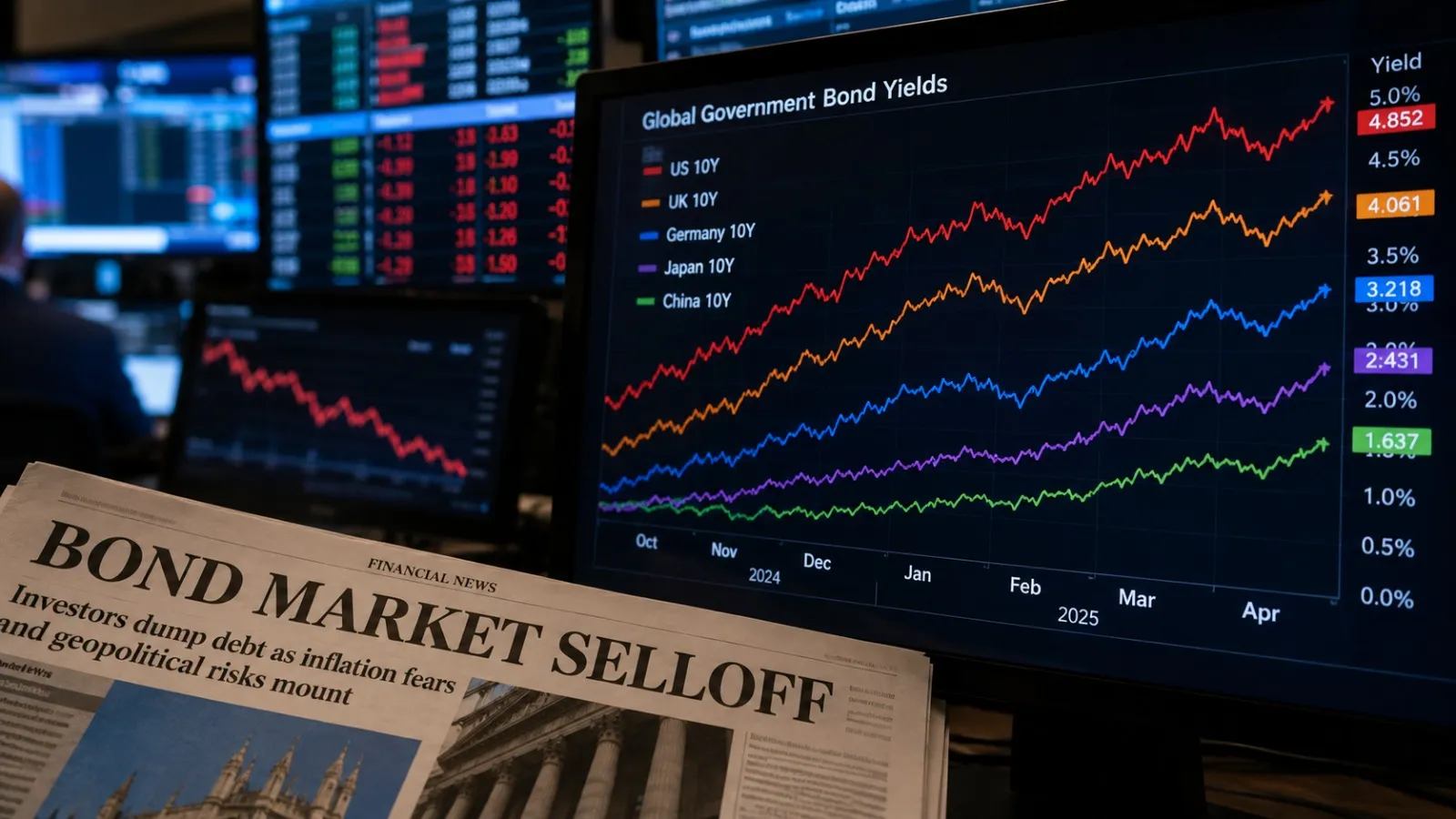
Global equity markets closed lower this week as a combination of surging bond yields, rising oil prices and a widening Middle East conflict weighed heavily on investor sentiment, in one of the more consequential macroeconomic weeks of 2026 to date. US equity markets ended Thursday's session down as rising bond yields and oil prices pressured stocks, with the benchmark 10-year Treasury yield climbing to 4.95% — its highest level in nearly three years, a level not seen since the aftermath of the aggressive monetary tightening cycle earlier in the decade.
The move in yields came alongside a significant policy decision in Europe, where the European Central Bank raised its key deposit rate to 2.5% from 2.25%, a move that had been widely anticipated by markets but nonetheless reinforced the broader theme of central banks globally responding to persistent inflationary pressure rather than pivoting toward easing, as many investors had expected earlier in the year. The rate increase adds to a growing list of signals that the era of ultra-low interest rates which characterised much of the previous decade shows no sign of returning in the near term.
Energy markets provided a further source of pressure on risk assets, with West Texas Intermediate crude approaching $103 per barrel amid continued disruptions in the Strait of Hormuz, one of the world's most critical oil transit chokepoints, through which a substantial share of global seaborne crude oil exports pass. The escalation follows a broader widening of conflict between the United States and Iran over recent weeks, during which reports emerged of strikes on Iranian oil tankers and Iranian-backed Houthi forces targeting energy infrastructure in Saudi Arabia — developments that have injected a significant geopolitical risk premium into oil pricing that market participants had not fully priced in as recently as August.

The combination of rising yields and rising oil prices creates a particularly difficult environment for equity markets, since higher yields increase the discount rate applied to future corporate earnings — weighing disproportionately on growth and technology stocks whose valuations depend heavily on cash flows expected many years into the future — while higher oil prices simultaneously raise input costs across the broader economy and threaten to reignite the kind of inflationary pressure that central banks have spent much of the past several years attempting to bring under control.
European markets reflected this dual pressure clearly, with the pan-European Stoxx 600 index and major national benchmarks showing mixed but generally cautious performance through the first half of September, as investors weighed the European Central Bank's rate decision against the inflationary implications of higher energy costs for a continent that remains more dependent on imported oil and gas than the United States. Asian markets, by contrast, showed more resilience in recent sessions, with Japan's Nikkei 225 and South Korea's Kospi posting notable gains earlier in the week on the back of strength in technology stocks including Samsung, SK Hynix, SoftBank and Advantest, suggesting regional divergence in how investors are weighing the same set of global macroeconomic pressures.
For emerging markets, the rise in US Treasury yields carries particular significance, since higher US rates typically strengthen the dollar and increase the relative attractiveness of dollar-denominated assets, potentially drawing capital away from emerging market currencies and equities at precisely the moment when many emerging economies are also grappling with the direct cost impact of higher oil prices on their import bills and domestic inflation. Currency and equity markets in several emerging economies have shown heightened volatility over the past week as a result of this dual pressure.
Looking ahead, market participants are likely to focus closely on whether the Strait of Hormuz disruptions escalate further or begin to ease, given the outsized influence oil prices are currently exerting on the broader macroeconomic and market narrative. Equally, attention will remain fixed on incoming inflation data in both the United States and Europe, which will determine whether the current elevated-yield environment represents a temporary spike tied to geopolitical risk or the beginning of a more sustained repricing of interest rate expectations for the remainder of 2026 and into 2027.