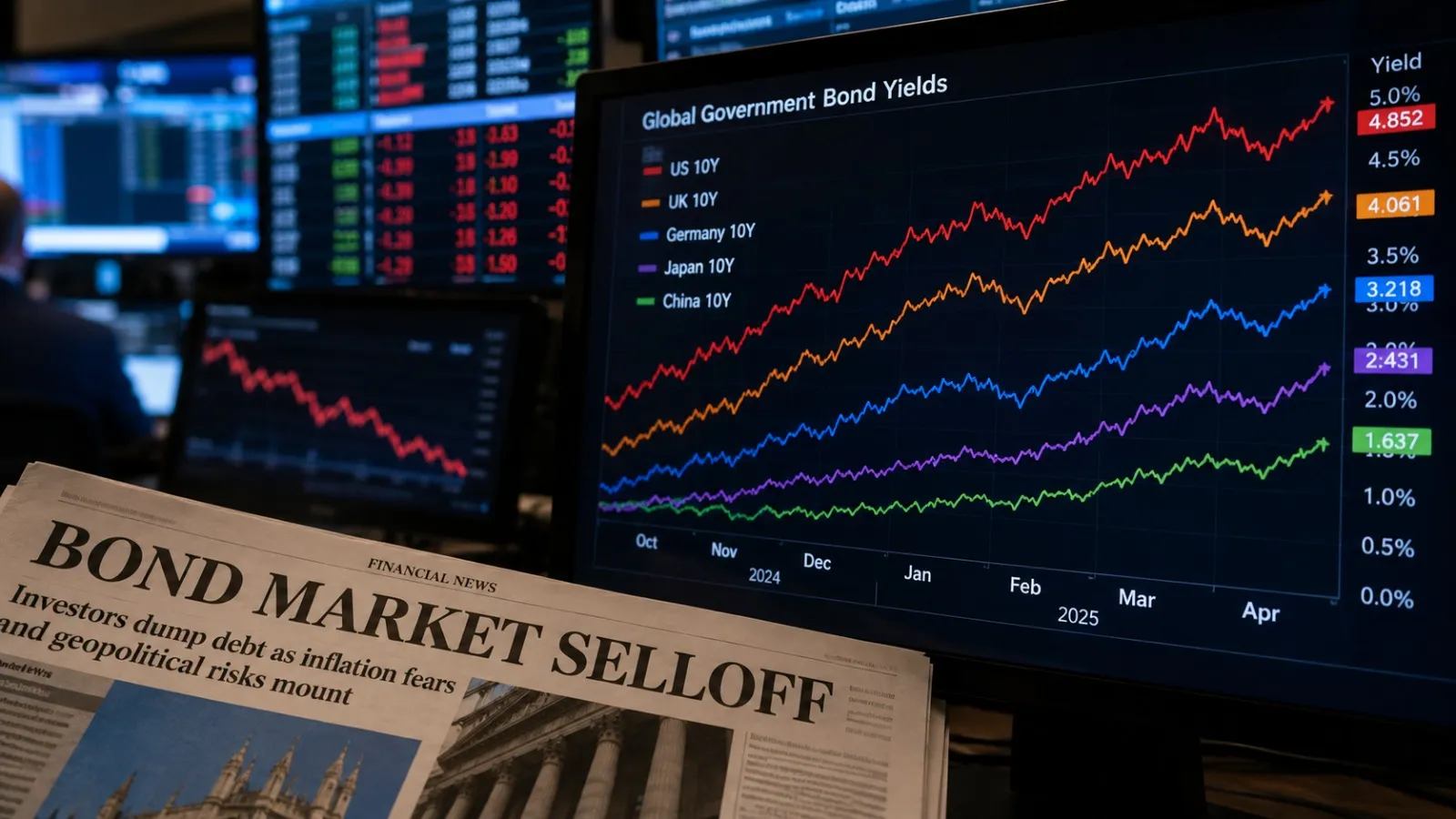
Global stock markets extended their decline through mid-September 2026 as bond yields continued to climb, with market strategists warning that fixed-income markets are entering what some have described as a "new era" of risk — one that could weigh on equity valuations for longer than the current bout of selling might suggest, should the trend of rising yields persist.
The combination of rising sovereign bond yields and softening equity markets reflects a broader repricing of risk across global financial markets, as investors weigh a confluence of pressures: persistent inflation concerns, elevated crude oil prices amid escalating Middle East tensions, and growing anxiety around the pace and sustainability of the artificial intelligence-driven capital expenditure boom that has underpinned much of the past two years' equity market gains.
Rising bond yields typically exert downward pressure on equity valuations through two primary channels: higher discount rates applied to companies' future cash flows, which disproportionately affects growth-oriented and technology stocks with earnings weighted further into the future, and increased competition for investor capital from fixed-income assets offering meaningfully higher yields than in recent years. Strategists warning of a "new era" of bond market risk point to structural factors — including elevated government debt issuance across major economies and persistent inflation pressures — that could keep yields structurally higher than markets have grown accustomed to over the preceding decade of historically low interest rates.

The renewed market volatility comes at a particularly sensitive moment for the technology sector specifically, given the scale of capital expenditure commitments major technology companies have made toward AI infrastructure buildout, commitments that are increasingly being scrutinised by investors for their return-on-investment timelines amid a more challenging financing environment defined by higher borrowing costs.
For portfolio managers and institutional investors globally, the combination of a sustained rise in bond yields and continued equity market weakness raises important questions about asset allocation strategy heading into the final months of 2026, particularly for investors who had built portfolios weighted heavily toward growth and technology equities during the preceding period of historically low interest rates and abundant liquidity.
With crude oil prices, geopolitical developments in the Middle East, and the broader trajectory of AI-sector capital expenditure all remaining significant sources of uncertainty, market participants are likely to continue closely monitoring bond market signals as a leading indicator of broader risk sentiment across global equity markets in the weeks ahead.