FundingMarket Data Women5 MIN READ

GMR Airports' Profit Jumps 86% to ₹65 Crore as Its Airports Handle 28 Million Passengers and Sanjeev Gupta Joins as Deputy CEO

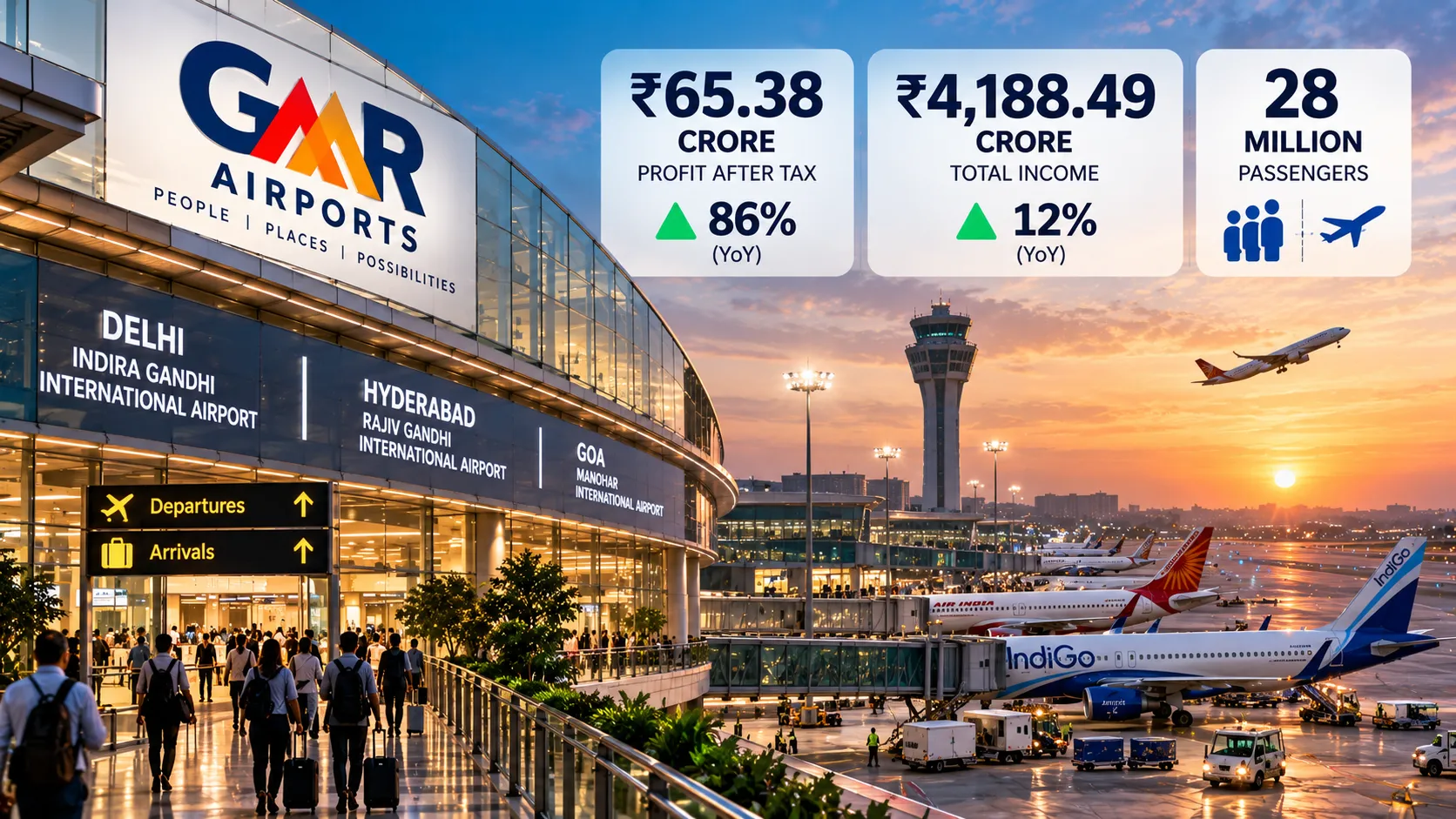
GMR Airports reported September-quarter profit after tax of ₹65.38 crore, up 86% from ₹35.06 crore, as total income rose to ₹4,188.49 crore and its airports handled 28 million passengers. The operator of Delhi and Hyderabad airports appointed Sanjeev Gupta as additional director and deputy CEO effective October 29, though total comprehensive loss attributable to owners was ₹80.75 crore.

By Shaym Kumar · Author29 October 2026New
GMR Airports' Profit Jumps 86% to ₹65 Crore as Its Airports Handle 28 Million Passengers and Sanjeev Gupta Joins as Deputy CEO

GMR Airports, which runs some of India's busiest airports, including Delhi and Hyderabad, has reported a sharp rise in quarterly profit as air traffic continues to grow, despite headwinds from high fuel prices and geopolitical disruption.

The company reported profit after tax of ₹65.38 crore for the July-September quarter, up 86% from ₹35.06 crore a year earlier, according to Upstox on Thursday, October 29. Total income rose to ₹4,188.49 crore from ₹3,754.38 crore.

However, total comprehensive loss attributable to owners, which includes items such as fair-value changes and currency movements, was ₹80.75 crore, compared with comprehensive income of ₹14.30 crore a year earlier.

Passenger traffic

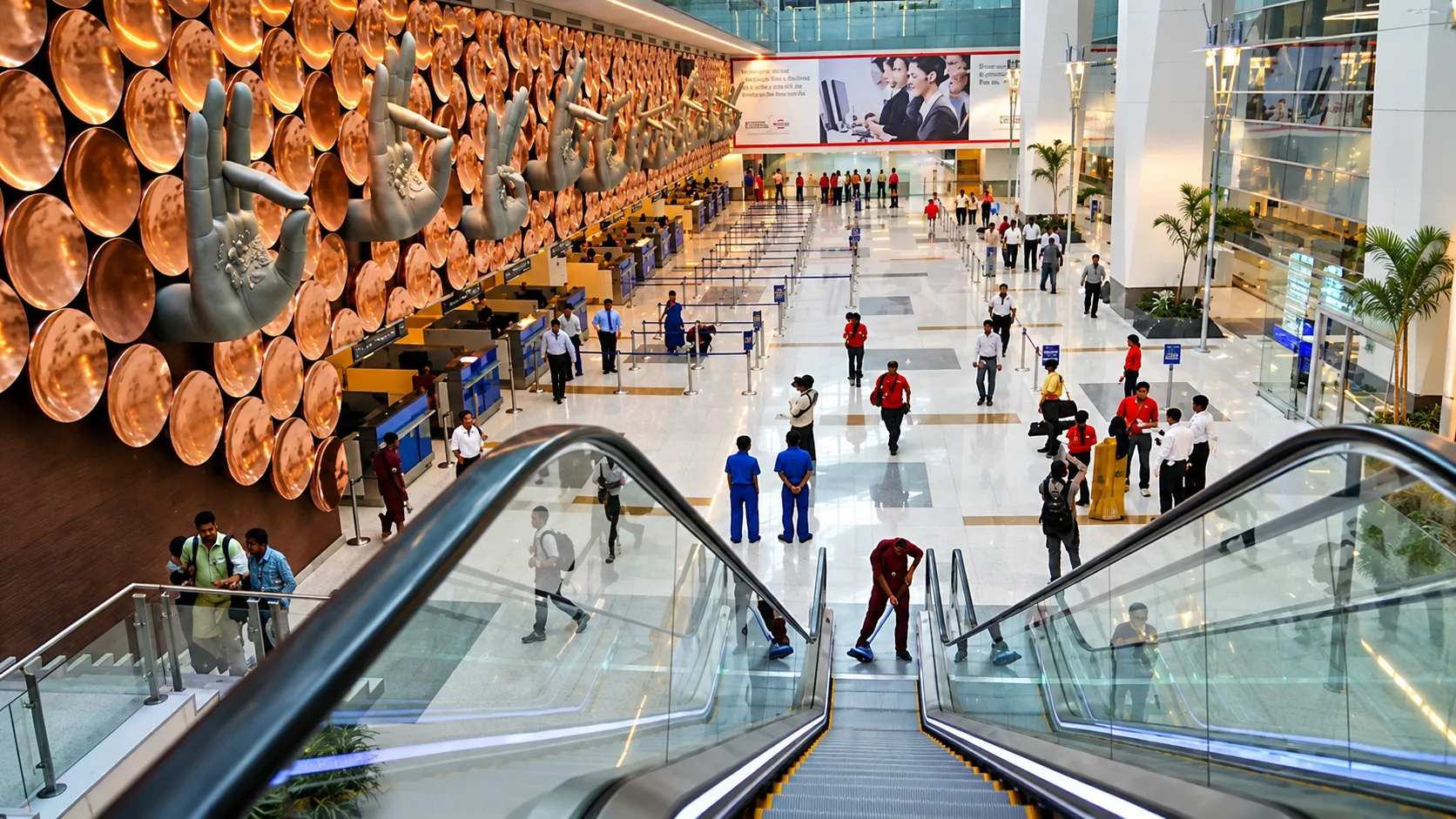
GMR's airports handled 28 million passengers during the quarter. The company operates Indira Gandhi International Airport in Delhi, India's busiest airport, and Rajiv Gandhi International Airport in Hyderabad, as well as the new Manohar International Airport at Mopa in Goa. It also has international airport interests.

Passenger traffic is the main driver of airport revenue, through charges paid by airlines and passengers, and through spending at shops, restaurants and other services in terminals.

Leadership change

The company appointed Sanjeev Gupta as additional director and deputy chief executive officer, effective October 29. Leadership appointments at airport operators are closely watched, given the complexity of running large infrastructure assets and managing relationships with regulators and airlines.

The business of airports

Airports earn revenue from two main sources. Aeronautical revenue comes from charges levied on airlines and passengers, such as landing fees and user development fees, which are regulated by the Airports Economic Regulatory Authority of India. Non-aeronautical revenue comes from retail, duty-free shops, food and beverages, advertising, car parking, real estate and cargo.

Non-aeronautical revenue has become increasingly important, as it is less regulated and can offer higher margins. Airport operators have invested in developing commercial real estate around their airports, including hotels, offices and retail spaces.

Aviation growth and challenges

India is one of the world's fastest-growing aviation markets, with domestic passenger traffic rising steadily as more people travel by air. Airlines such as IndiGo and Air India have placed massive aircraft orders to meet demand.

However, the industry faces challenges. High jet fuel prices, linked to the surge in crude oil, have raised airline costs and fares. Airspace closures in West Asia have forced longer routes to Europe, and Indian airlines have suspended flights to Saudi Arabia because of attacks by Houthi rebels. Delays in aircraft deliveries from Boeing and Airbus have limited airlines' ability to add capacity.

These factors could slow passenger growth, affecting airport traffic and revenue.

Expansion and investment

Airport operators in India have been investing heavily in expanding capacity. Delhi airport has added new terminals and runways, and Hyderabad airport has been expanding its terminal. New airports, such as Navi Mumbai and Noida (Jewar), are adding capacity in major metropolitan regions.

These investments require significant capital, and airport operators carry substantial debt. Managing financing costs is an important factor in profitability, particularly when interest rates are high.
a68bfe43-6ac3-4a96-84a0-ef6cc78bbb8c.png

The privatisation story

GMR was one of the first private companies to operate Indian airports after the government began privatising airport management in the 2000s. The Delhi and Hyderabad airports were among the first to be operated under public-private partnerships. Since then, the government has privatised more airports, with the Adani Group emerging as another major operator.


“India's airports are expanding into shopping malls and logistics hubs as much as runways and terminals.”
— TIGI Markets Desk

What it means for investors

For investors, GMR Airports offers exposure to the long-term growth of Indian aviation. Its results show improving profitability, though the comprehensive loss highlights the effect of financial items on its overall results.

Investors will watch passenger traffic trends, progress on expansion projects, regulatory decisions on airport charges and the growth of non-aeronautical revenue.

Delhi and Hyderabad

GMR's two largest airports, Delhi's Indira Gandhi International Airport and Hyderabad's Rajiv Gandhi International Airport, are among the busiest in India. Delhi is the country's largest airport by passenger traffic and a major hub for both domestic and international travel. GMR also operates airports internationally and is developing new airports in India, including at Mopa in Goa and Bhogapuram in Andhra Pradesh.

Airport revenue comes from aeronautical charges, such as landing and passenger fees, which are regulated, and non-aeronautical sources, such as retail, food and beverage, parking, advertising and real estate. Non-aeronautical revenue has become increasingly important, as airports develop shopping and dining areas and commercial property around their terminals.

The airline factor

Airport traffic depends heavily on airline capacity. India's airline industry has consolidated, with IndiGo and the Air India group accounting for the majority of domestic traffic. Both are expanding their fleets with large aircraft orders, which should support traffic growth at major airports. However, aircraft delivery delays and engine problems have constrained capacity in recent years, and high fuel prices could affect airfares and demand.

Debt and capital spending

Airport development requires large capital investment, and GMR Airports has significant debt. Building new terminals, runways and airports is funded through a mix of debt, equity and internal cash flows. As traffic grows and expansion projects are completed, revenue should rise, but the company must manage its debt carefully. Improvements in profitability, such as the 86% rise in profit in the quarter, help strengthen its financial position.

What comes next

The December quarter, which includes the festive and winter holiday season, is typically strong for air travel. GMR's traffic figures for this period will indicate whether demand remains robust despite high fares and geopolitical disruptions. The company's new leadership appointment will also be watched for any changes in strategy.

Navi Mumbai and the competition

The opening of new airports, including the Navi Mumbai International Airport developed by the Adani Group, is changing the competitive landscape for Indian airports. While airports generally hold regional monopolies, new capacity in major cities can affect traffic patterns, airline hub decisions and non-aeronautical revenue. Adani Airports, which operates several airports, is GMR's main private-sector rival in India's airport sector.

Investors will watch how GMR Airports manages competition, expands capacity at its existing airports and develops its new projects.

With India's aviation market expected to keep growing as incomes rise and more people travel by air, the long-term outlook for airport operators remains positive. GMR's challenge will be to translate that growth into consistent profits while managing the heavy capital spending and debt needed to expand its airports. The appointment of a deputy chief executive also suggests the company is planning its leadership bench as the business grows.

TagsGMR AirportsDelhi airportHyderabad airportGoa Mopa airportaviationairport infrastructureair trafficpassenger growthSanjeev GuptaGMR Groupnon-aeronautical revenueduty freeIndiGoAir IndiaIndian aviationairport privatisationinfrastructure stocksQ2 resultstravelinvestors

Reader reviews

Sign in to rate and review this article.
Loading reviews…
