Stock options have long been one of the most powerful tools Indian startups use to attract and retain talent, offering employees the promise of a share in the company's future success. A change at GoKwik, an e-commerce technology company, is now raising difficult questions about how far that promise can be conditioned.
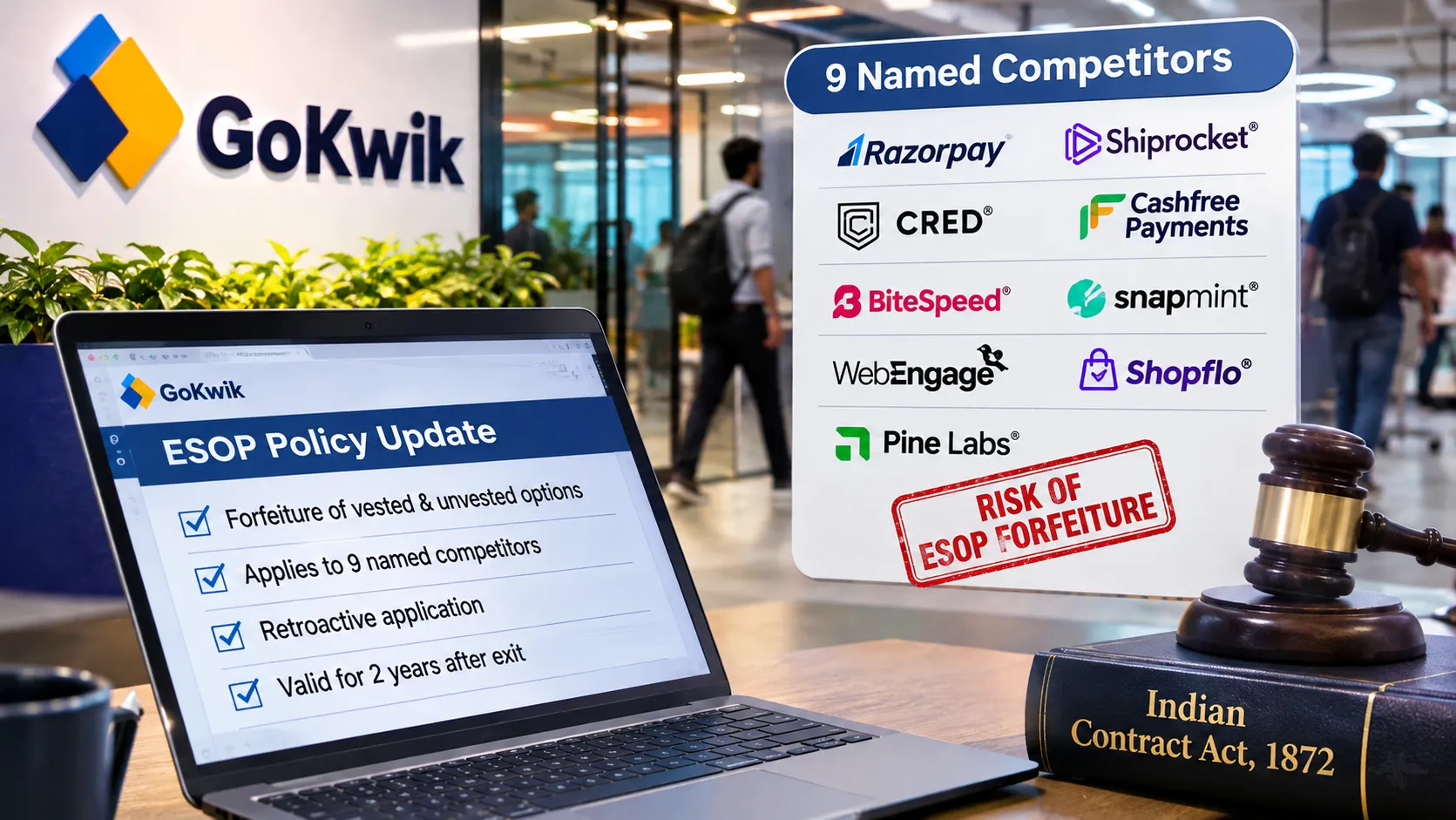
GoKwik has amended its ESOP Plan 2021 to penalise employees who join rival companies, according to Inc42, which reported the change on Thursday, November 12. Under the amendment, current and former employees "could forfeit their unvested and vested-but-unexercised options" if they join one of nine named competitors.
The nine rivals
The named companies are Razorpay, Shiprocket, CRED, Cashfree Payments, BiteSpeed, Snapmint, WebEngage, Shopflo and Pine Labs, according to Inc42. Employees cannot join, advise or invest in these firms without risking their outstanding options.
The list reflects GoKwik's position in the market. The company provides checkout, payments, fraud prevention, logistics and marketing tools for direct-to-consumer brands and e-commerce merchants, putting it in competition with payment gateways, logistics platforms, buy-now-pay-later providers and marketing technology companies.
Retroactive and long-lasting
Two features of the change have drawn particular attention. The restriction "applies retroactively to previously issued grants," according to Inc42, meaning it affects options that employees received before the amendment was made. And it runs for two years after an employee leaves the company.
For employees with large holdings, the change creates a difficult choice between career mobility and the potential loss of significant wealth, Inc42 reported. Vested options are those an employee has already earned through service, and many employees regard them as part of their compensation. Making those options conditional on where an employee works after leaving changes their value considerably.
A backdrop of departures
The amendment comes after several senior staff members have left GoKwik recently, and a layoff earlier this year has added to employee concerns, according to Inc42. Inc42 previously reported that GoKwik laid off around 120 employees amid a push towards artificial intelligence.
Companies sometimes tighten restrictions on employees when they are concerned about losing talent and know-how to competitors, particularly in fast-moving markets where customer relationships and technical knowledge are valuable.
The legal question
Legal experts reportedly believe the clause could face scrutiny if it is used to penalise employees who join a competitor, according to Inc42. Under Indian law, Section 27 of the Indian Contract Act, 1872, makes agreements in restraint of trade void, and Indian courts have generally held that post-employment non-compete clauses are unenforceable, although restrictions during employment and protections for confidential information are permitted.
However, ESOP plans occupy a grey area. A company may argue that it is not preventing employees from working for rivals, but rather setting conditions on a benefit it grants. Whether courts would view the forfeiture of vested options as an unlawful restraint of trade or as a legitimate condition of a discretionary benefit is a question that may eventually need to be tested.
The retroactive application could also raise questions about whether employees agreed to the changes and whether the amendment was properly approved under the plan's terms and company law.
Governance concerns
The change has raised governance concerns, according to Inc42, which asked whether GoKwik will keep or roll back the clause. Investors in startups often emphasise the importance of fair treatment of employees, and changes perceived as unfair could affect a company's reputation in the talent market.
There is a precedent for reversal. Unacademy, the edtech company, rolled back changes to its ESOP exercise window several years ago after a backlash from employees, according to Inc42.
Why ESOPs matter
ESOPs have become central to startup compensation in India. Employees often accept lower cash salaries in exchange for options that could become valuable if the company grows, raises funding at higher valuations or goes public. Many Indian startups have run ESOP buyback programmes, allowing employees to sell some of their vested options for cash.
India's wave of startup listings, including companies such as Zomato, Nykaa, Paytm, Swiggy and others, has created significant wealth for employees who held stock options. That track record has reinforced the importance of ESOPs in attracting talent.
The talent market
Competition for experienced engineers, product managers and sales staff in India's fintech and e-commerce technology sectors is intense. Companies such as Razorpay, CRED and Pine Labs, which is now listed, are among the most attractive employers in the startup ecosystem, often offering strong compensation and their own ESOPs.
A clause that discourages employees from joining these companies could make GoKwik less attractive to prospective hires, who may worry about restrictions on their future careers.
About GoKwik
GoKwik was founded in 2020 and has raised funding from investors including Peak XV Partners, Matrix Partners India (now Z47), RTP Global and others. It serves thousands of D2C brands and e-commerce merchants, helping them improve checkout conversion and reduce returns and fraud.
What employees can do
Employees affected by the change face difficult decisions. Those holding vested options may consider exercising them before leaving, although that requires paying the exercise price and, in India, tax on the difference between the fair market value and the exercise price at the time of exercise, even if the shares cannot yet be sold. For many employees of private companies, that cost can be prohibitive.
Employment lawyers typically advise employees to read their ESOP plan documents carefully, keep records of any amendments and the communications around them, and seek legal advice before making career decisions that could affect valuable options.
A wider debate on ESOP terms
ESOP plans in India vary widely in their terms, including vesting schedules, exercise windows after leaving and conditions attached to options. Some startups have extended exercise windows for departing employees, recognising that short windows can force employees to forfeit options they cannot afford to exercise. Others have introduced clawback provisions for misconduct.
GoKwik's approach, tying options to where a former employee works, is more unusual. If it becomes more common, it could reshape how employees value ESOPs when comparing job offers, placing a discount on options that come with strings attached.
What comes next
Employees, investors and the wider startup community will watch whether GoKwik maintains, modifies or withdraws the clause, and whether any employee challenges it legally. The episode could prompt a broader conversation in India's startup ecosystem about the terms attached to employee stock options, and about the balance between protecting a company's interests and respecting employees' freedom to build their careers.