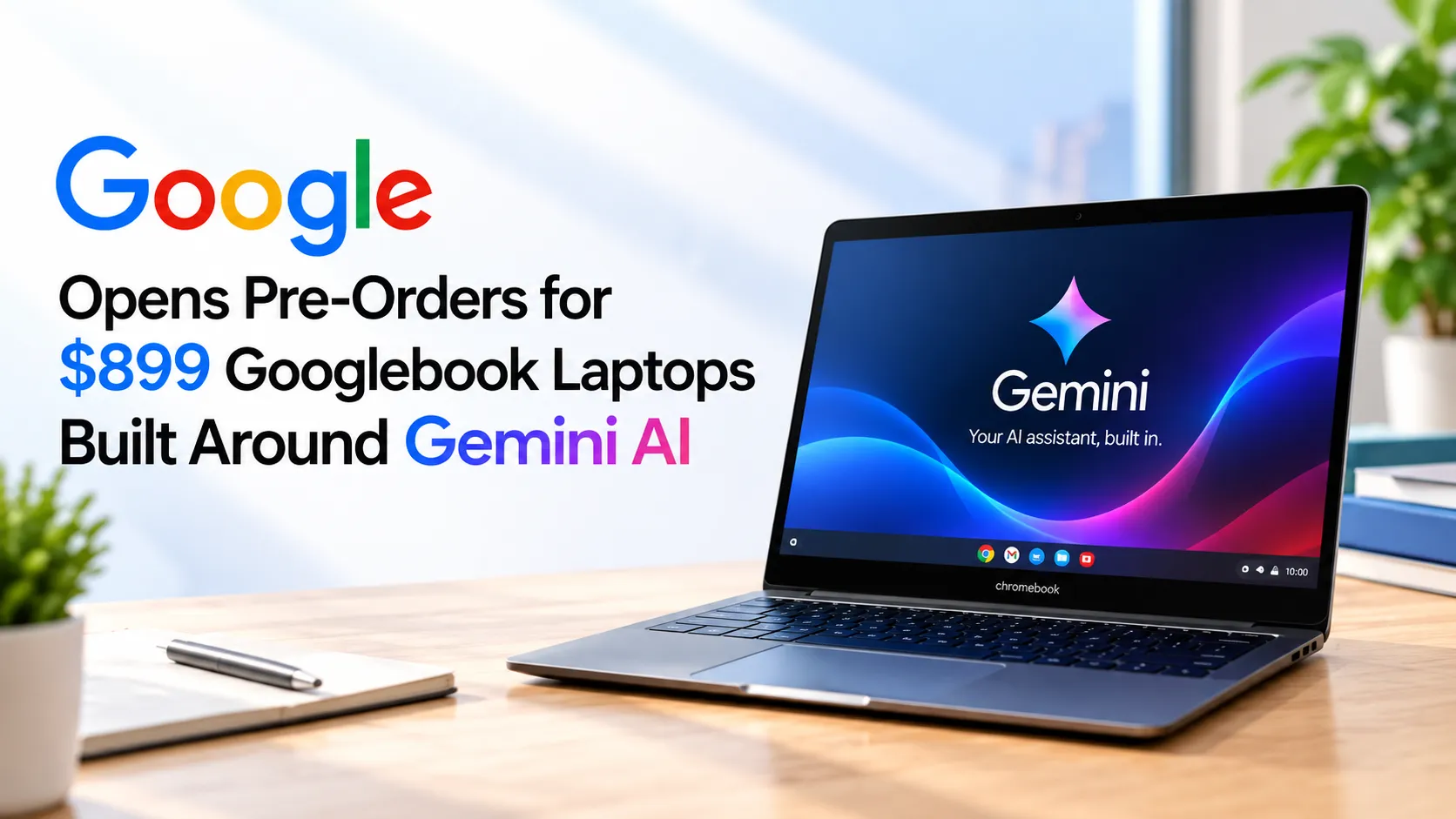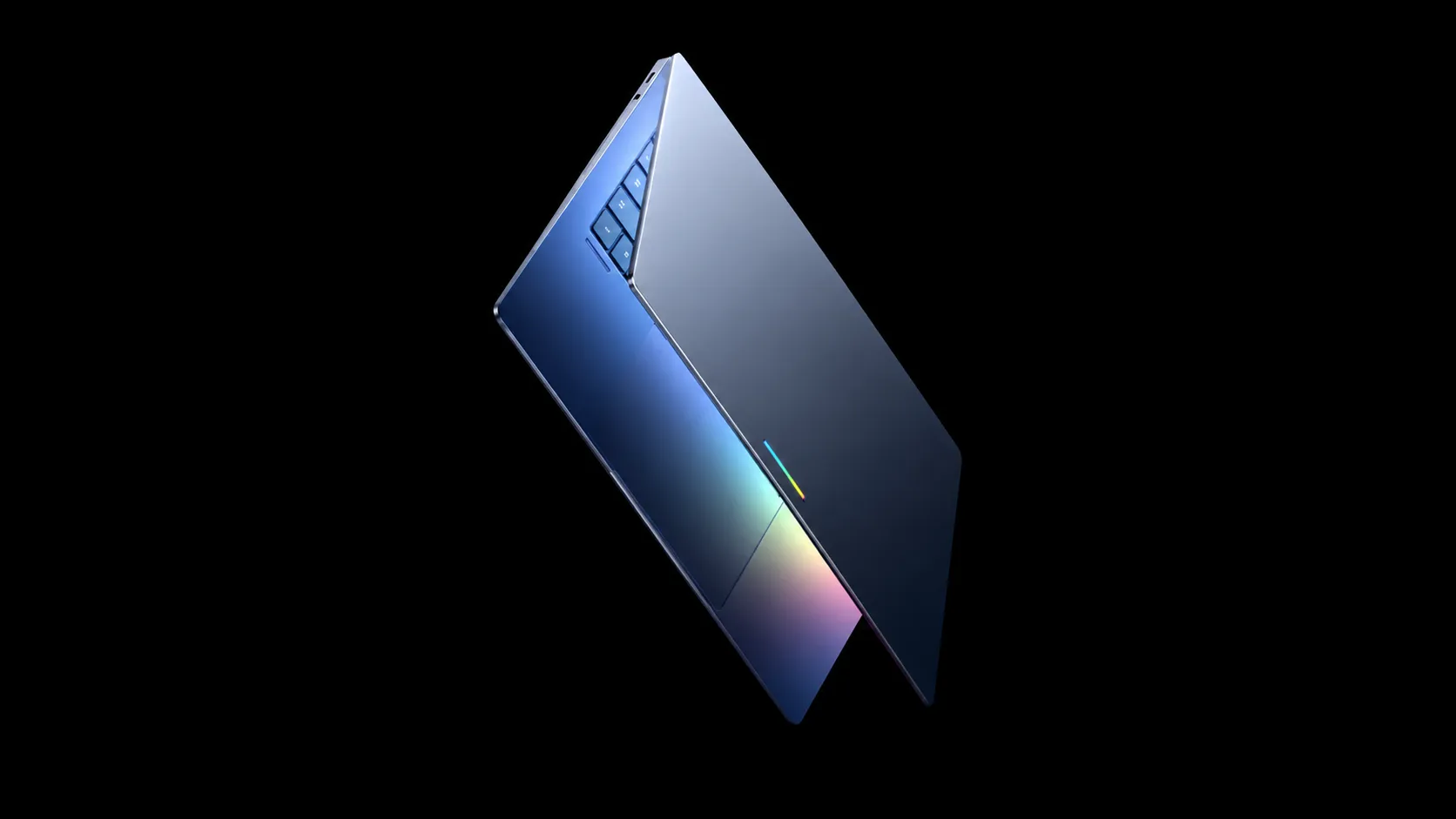
Google has opened preorders for Googlebook, a new line of laptops that runs Android with elements of desktop ChromeOS and places its Gemini artificial-intelligence assistant at the centre of the experience, in the company's most ambitious attempt yet to challenge Apple and Microsoft in personal computing.
Launch partners Acer, ASUS, Dell, HP and Lenovo are offering five models starting at $899, according to reports on 22 September 2026. That price sits below Apple's entry-level MacBook Air, positioning Googlebook as a mainstream alternative rather than a budget device.
US retail availability is set for 4 October, with Canada, the United Kingdom, Ireland, France, Germany and Australia following the next day.
Not a renamed Chromebook
Googlebook is not simply a rebranded Chromebook. Chromebooks, built around a browser-centric operating system, found success in education and among budget buyers but struggled to win over professional users and consumers seeking a full-featured computer.
Googlebook runs Android, the world's most widely used mobile operating system, combined with desktop elements from ChromeOS. The approach reflects Google's long-running effort to unify its operating systems, giving laptop users access to the vast library of Android apps while providing a desktop-style experience with windows, keyboard shortcuts and multitasking.
The machines use Intel Core Ultra or Qualcomm Snapdragon X Elite processors, with OLED or high-resolution touch displays. Crucially, they include neural processing units that Google says can handle Gemini tasks locally on the device, rather than relying entirely on cloud servers.
AI as the reason to buy
On-device AI is the centrepiece of Google's pitch. Running AI tasks locally can offer faster responses, better privacy for sensitive data and the ability to work without an internet connection. It can also reduce Google's cloud computing costs for common tasks.
Each Googlebook comes with a year of Google AI Pro, which includes Gemini Advanced and additional cloud storage. The bundle gives buyers access to Google's most capable AI models and positions the laptop as a gateway to Google's broader AI ecosystem.
Google is also emphasising continuity with Android phones, aiming to replicate the seamless experience Apple offers between the iPhone and Mac. Features such as app casting and shared accounts allow users to move between their phone and laptop more fluidly. The strategy targets the billions of Android phone users who may be attracted to a laptop that works naturally with their existing devices.
Ten years of updates
Google is promising ten years of software updates for Googlebook devices, a commitment that addresses a common concern about laptop longevity and security. Long support periods are increasingly important to consumers and businesses concerned about both cost and environmental impact, and they may help reassure buyers wary of Google's history of launching and later retreating from hardware categories.
That history is a genuine risk factor. Google has entered and exited several hardware product lines over the years, and some consumers may hesitate to invest in a new platform without confidence in its long-term future. The ten-year update pledge is a direct attempt to address that concern.
The competitive landscape
The laptop market is dominated by Windows PCs and Apple's Macs, each with deeply entrenched ecosystems. Microsoft has aggressively integrated its Copilot AI assistant into Windows and has promoted a category of AI-capable PCs with dedicated neural processors. Apple has built its own AI features into macOS and emphasised on-device processing and privacy.