Gridsight, an AI-powered grid capacity management company founded in Sydney, Australia, has raised $26 million in a Series B funding round led by Insight Partners, with participation from new investor Galvanize and existing backers Airtree, Energy Transition Ventures and Aera VC, the company announced on September 1, 2026.
The round brings Gridsight's total funding to approximately $33.5 million, following a $7.5 million Series A, and will be used to accelerate the company's expansion across the United States while continuing to support growth in Australia, New Zealand and the United Kingdom, where Gridsight already operates.
The financing arrives as US electricity demand rises after roughly fifteen years of stagnant growth, driven by the build-out of AI data centers, growing electric vehicle adoption and broader industrial electrification — a surge that is straining grid infrastructure and pushing utilities to look for faster, cheaper alternatives to new construction.
At the core of Gridsight's platform is what the company calls its Foundational Grid Model, a continuously updated, utility-specific model that unifies fragmented grid data into a single, trusted view of a distribution network. Rather than relying on the conservative, worst-case assumptions utilities have historically used to set connection and export limits, Gridsight's AI agents combine utility-specific grid models with electrical physics to help engineers identify real-time capacity, analyze complex networks, and make faster, more accurate decisions. The company notes that as much as three-quarters of grid capacity goes unused on average, varying by location, time of day and season — capacity Gridsight's software is designed to help utilities locate and safely deploy.
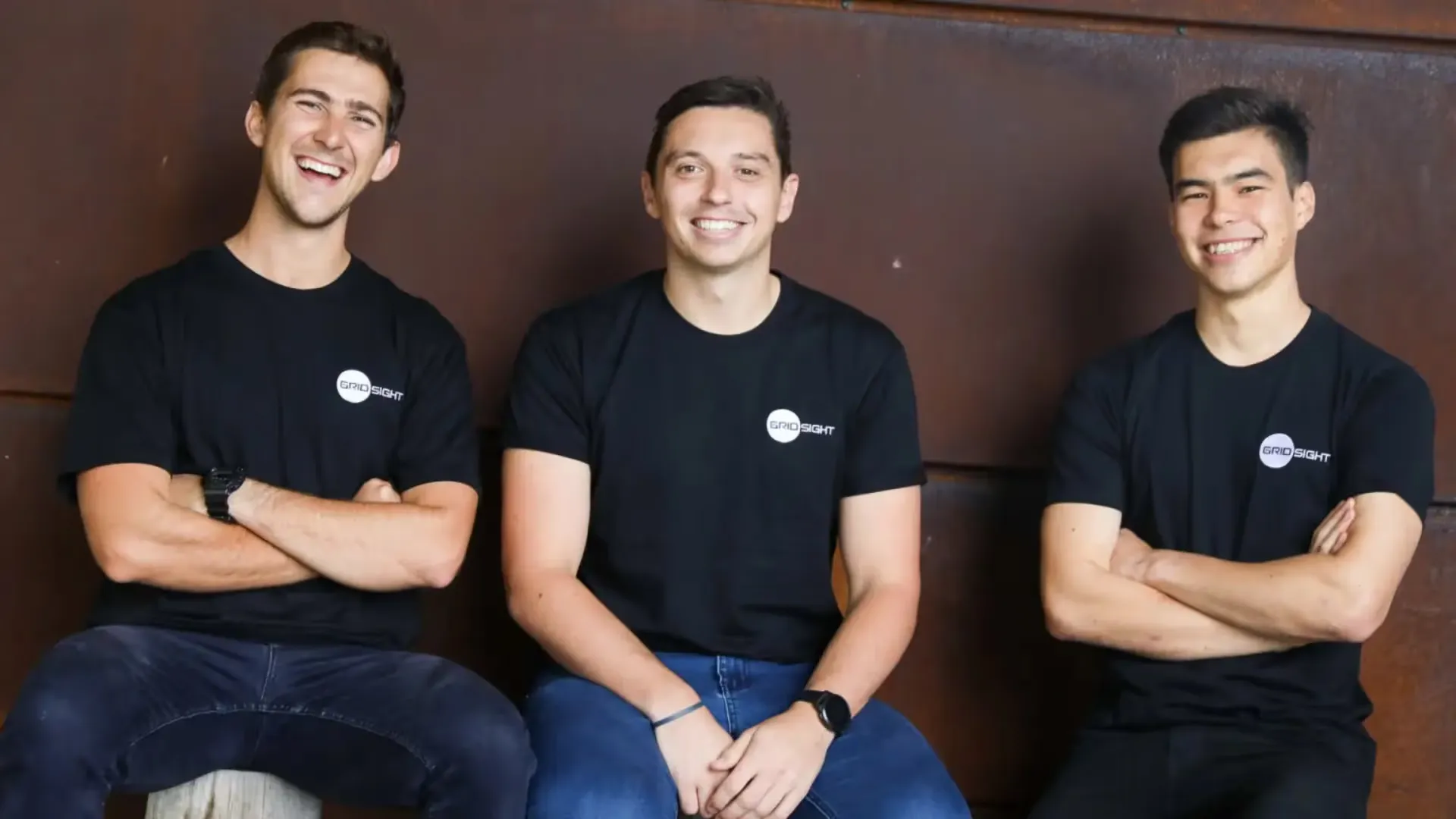
Gridsight is already working with major US utilities, including Xcel Energy and United Illuminating, a subsidiary of Avangrid. In Australia, where the company was founded in 2020, Endeavour Energy — which distributes electricity to more than 2.7 million people in New South Wales — has used Gridsight's unified capacity management platform since 2021 to more than double static household solar export limits, from 5 kW to 10 kW, paired with real-time dynamic control to protect the local grid. That program is expected to unlock more than $100 million in value for customers and add 600 MW of additional solar capacity to the grid.
"Gridsight is now an integral part of how our Distribution teams operate and plan, turning data our network produces into intelligence our engineers can act on," said Todd Conner, Senior Vice President, Electric Distribution at Xcel Energy. "As complexity in our distribution system continues to grow, this partnership helps us make rapid decisions to safely get the most out of our existing grid."
The Series B financing reflects a broader shift in how regulators and utilities are approaching grid capacity constraints: as the cost and timeline of building new transmission and distribution infrastructure climb, regulators are increasingly shifting incentives toward better utilization of existing networks rather than relying solely on new construction to meet rising demand.
For utilities, regulators and climate-tech investors, Gridsight's raise is a signal that AI-driven grid optimization software is moving from a niche efficiency tool to a mainstream infrastructure category, one that could materially affect how quickly new data centers, EV charging networks and distributed solar can be connected to the grid without requiring years of new transmission buildout.
Gridsight said the new capital will be used specifically to accelerate its US expansion while supporting continued growth in Australia, positioning the company to scale its platform at a moment when grid capacity constraints are increasingly viewed as a binding limit on the pace of both AI infrastructure growth and the broader clean energy transition.