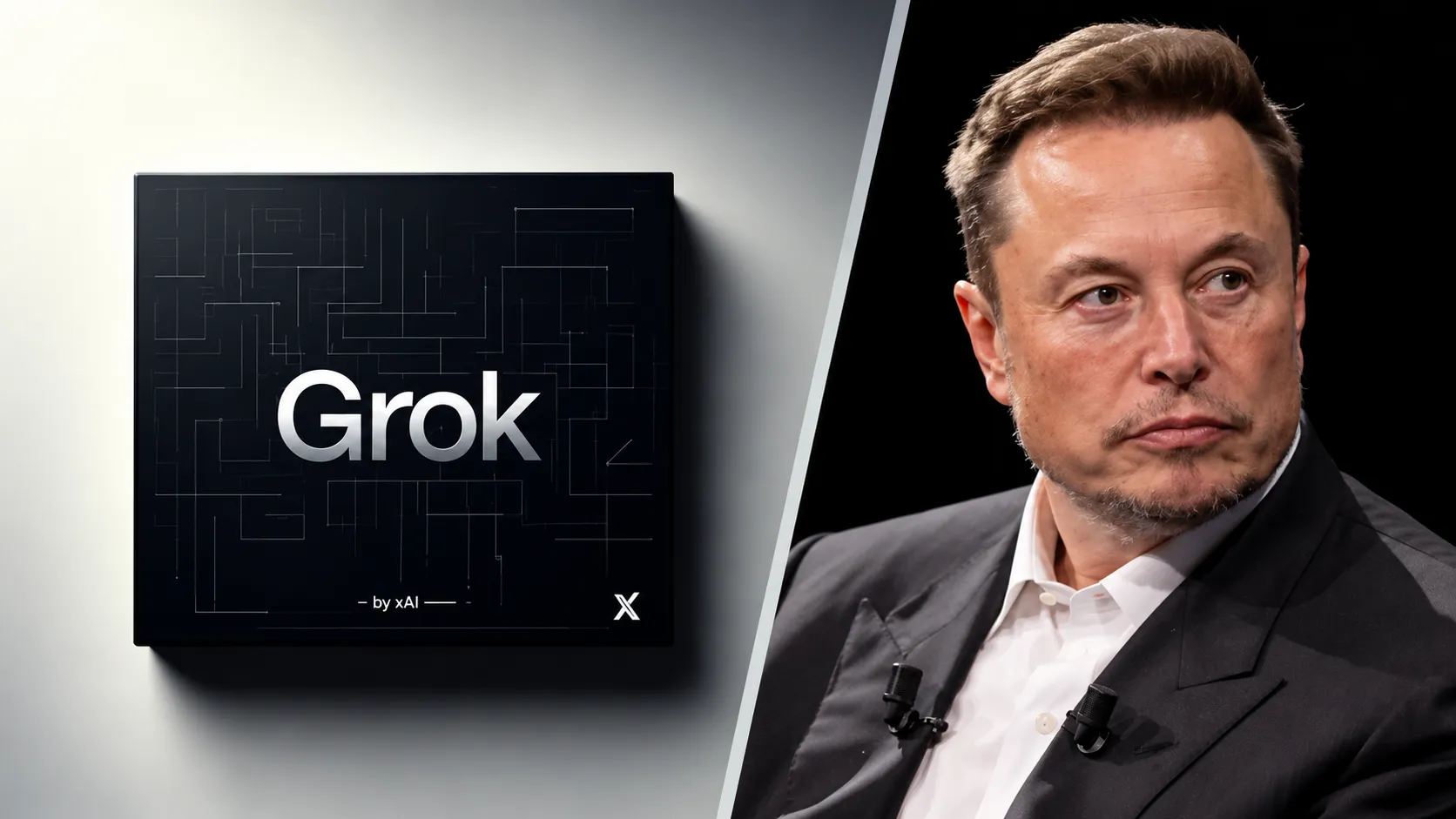
Elon Musk's artificial intelligence venture has released its most ambitious demonstration yet of AI-generated filmmaking, offering an early look at how the technology might reshape the entertainment industry and a glimpse of its current limitations.
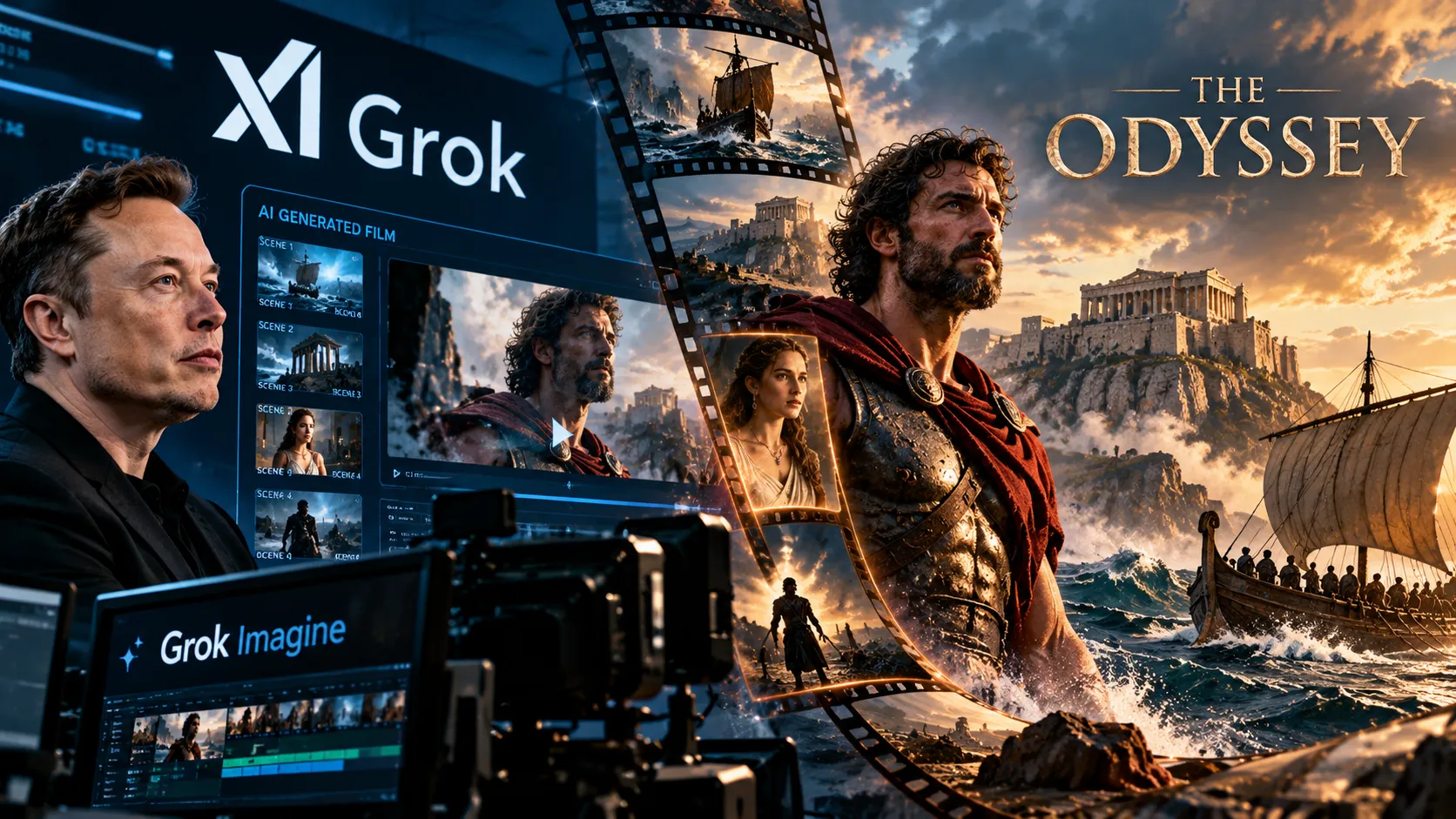
On Sunday, October 25, Grok published the first seven minutes of an AI-generated version of "The Odyssey," Homer's ancient Greek epic, describing it as "Episode 1 of our Odyssey series," TechCrunch reported. The clip was made using Grok Imagine, the company's AI video generation tool, in collaboration with Wonder Studios and director Dev Walker.
Musk's promise
About three months ago, Musk said Grok would release a full-length, "historically accurate" version of The Odyssey. The project was framed in part as a response to Christopher Nolan's film adaptation of the epic, which Musk had criticised over its casting choices.
Nolan's version, released in July, relied primarily on practical filmmaking, with a shoot across six countries and a cast and crew numbering in the thousands. It became a major box office success, sold out IMAX screenings for months and is considered a likely front-runner at the next Academy Awards.
Nolan has described himself as "a techno-skeptic" and said that before AI, he had never seen a technology "so completely rejected by the public."
How it looks
TechCrunch's reviewer, Anthony Ha, found the footage better than expected, and better than Musk's recent AI-generated videos, noting that some shots could pass for real footage. The reviewer could not assess the claim of historical accuracy but noted that the characters do not speak ancient Greek.
However, the review was critical of the clip's artistic qualities, finding it lacking in inspiration and human interest. It described long voiceover backstory, stilted dialogue and a generic narrator, calling the result "completely airless" and suggesting that a full feature in the same style would be hard to sit through.
The state of AI video
The release illustrates how far AI video generation has advanced. Just a few years ago, AI-generated video was limited to short, distorted clips. Today, tools from companies including OpenAI, Google, Runway and xAI can produce footage that, in places, is difficult to distinguish from live action.
But producing a coherent, emotionally engaging film requires more than realistic images. Storytelling, performance, pacing and editing remain areas where human creativity plays a central role. The TechCrunch review suggests that, for now, AI can generate convincing visuals but struggles to replicate the craft that makes films compelling.
Hollywood's anxiety
The entertainment industry has been grappling with the implications of AI. Actors and writers in Hollywood went on strike in 2023 partly over concerns about AI, winning protections on the use of their likenesses and work. Studios are experimenting with AI for visual effects, pre-visualisation and other tasks, while facing pressure from creative workers to limit its use.
Copyright is another unresolved issue. AI video models are trained on vast amounts of existing footage, and creators and studios have challenged the use of their work without permission. The Odyssey itself is in the public domain, avoiding copyright issues with the source material, but questions remain about the data used to train the models.
Musk's AI ambitions
Grok is developed by xAI, Musk's AI company, which competes with OpenAI, Google and Anthropic. Musk has positioned Grok Imagine as a tool for creators and frequently posts AI-generated content on his social media platform X. TechCrunch noted that Musk, who also leads SpaceX and Tesla, has promoted ideas such as space-based data centres.
The Odyssey project serves as a high-profile showcase for Grok Imagine's capabilities, aimed at demonstrating that AI can produce long-form content.
What it means for India
India has one of the world's largest film industries, producing more films each year than any other country across Hindi, Tamil, Telugu, Malayalam and other languages. Indian studios and visual effects companies have begun experimenting with AI tools to reduce costs and speed up production.
India is also a major centre for visual effects and animation work for global studios. AI video generation could both create opportunities, by lowering production costs and enabling new kinds of content, and pose risks to jobs in visual effects, dubbing and post-production.
Low-budget productions and regional cinema could be early adopters of AI tools, which might allow filmmakers to realise ambitious visual concepts on limited budgets.
The audience question
Ultimately, the success of AI-generated films will depend on whether audiences want to watch them. Nolan's comment that AI has been "so completely rejected by the public" reflects scepticism among many viewers and creators. The commercial success of his practically shot Odyssey suggests that audiences still value human craft.
At the same time, AI-generated content is spreading rapidly on social media, where short clips attract large audiences. The question is whether AI can make the leap from viral clips to long-form storytelling that holds viewers' attention.
The economics of AI filmmaking
The appeal of AI filmmaking lies partly in cost. Traditional feature films, particularly large-scale epics like The Odyssey, can cost hundreds of millions of dollars to produce, with expenses for locations, sets, costumes, actors, crews and visual effects. AI-generated films could, in theory, be produced for a fraction of that cost, opening filmmaking to creators without studio budgets.
But cost savings mean little if audiences do not want to watch the result. Studios are more likely to adopt AI for specific tasks, such as background generation, de-ageing actors, previsualisation and dubbing, than to replace entire productions, at least until the technology can match human craft in storytelling and performance.
What comes next
Grok is expected to release further episodes of its Odyssey series, working towards the full-length film Musk promised. Each release will be a test of whether AI filmmaking is improving and whether it can win over audiences.
For the entertainment industry, the project is a sign of rapid technological change that will force studios, creators and regulators to grapple with questions about creativity, employment and intellectual property in the years ahead. Industry observers will also watch how audiences respond on social media, where reactions to AI-generated content are often polarised. Engagement figures for subsequent episodes will offer one indication of whether viewers are willing to embrace long-form machine-made storytelling, or whether the novelty fades after the first instalment.