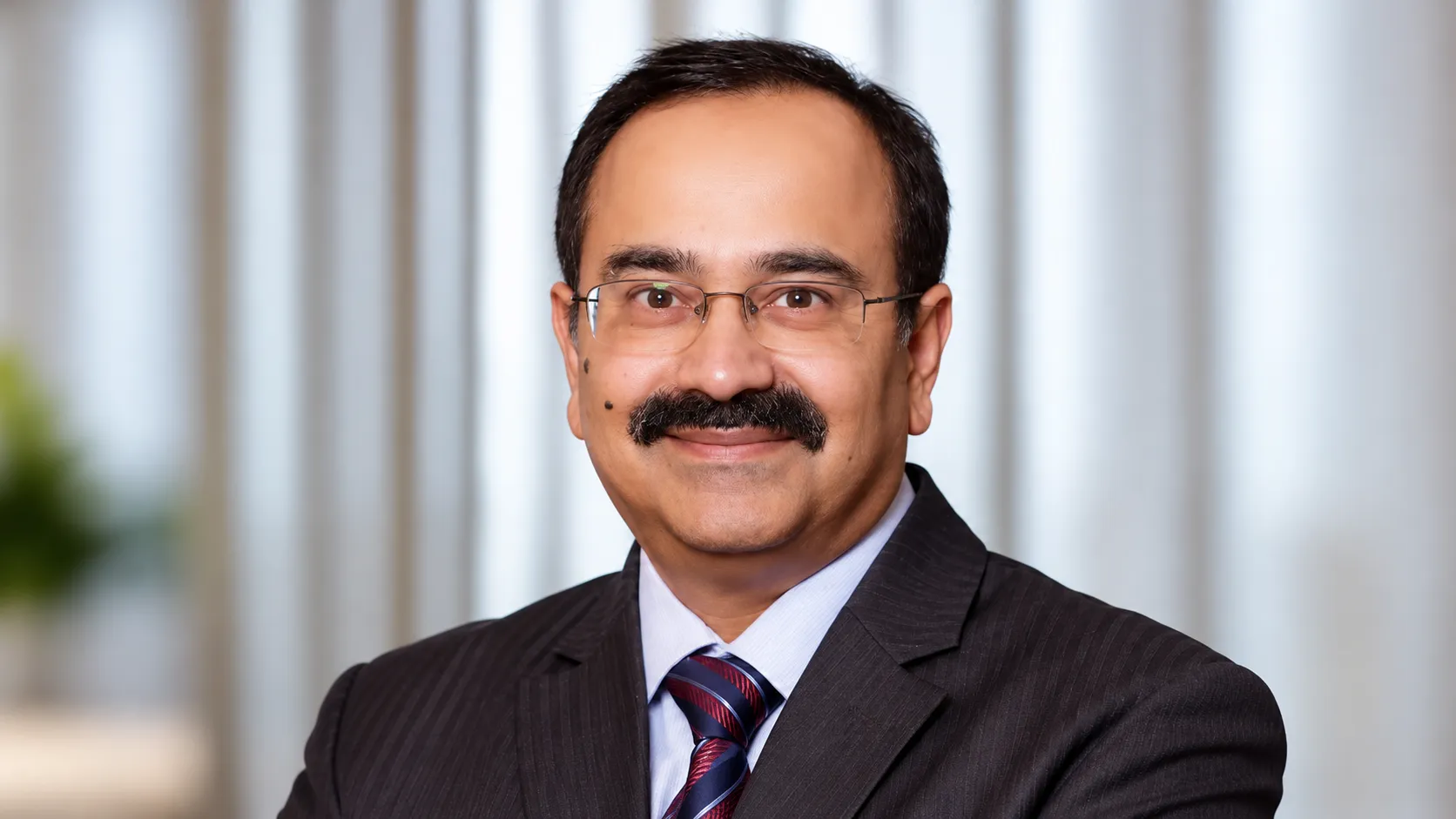
India's largest private sector bank is preparing to look further afield. HDFC Bank is set to expand its international presence under its incoming managing director and chief executive, Anup Bagchi, after its limited overseas network constrained its ability to raise foreign currency deposits this year, Business Standard reported on October 20.
Sashidhar Jagdishan, who steps down as MD and CEO on October 26, said the bank's small footprint outside India had held back its mobilisation of foreign currency non-resident (FCNR) deposits under a special swap window offered by the Reserve Bank of India. "We have just about two effective branches operating outside of the country," he said, adding that the bank would likely pursue expanding its overseas presence "at some point in time."
Bagchi, who takes over on October 27, made his first public remarks since being named to the role. "At this point, I am just understanding the mechanics of the balance sheet and P&L," he said, describing HDFC Bank as "a very process-driven institution and not dependent on just one or two or three individuals."
The FCNR deposit race
The issue came into focus during a concessional swap facility offered by the RBI this year to attract foreign currency deposits from non-resident Indians and support the rupee, which has traded near record lows. Under the scheme, banks raised FCNR(B) deposits, which are held in foreign currencies by non-residents, and swapped the dollars with the central bank.
HDFC Bank mobilised $11.5 billion under the window, which closed on August 31. That was a substantial sum, but it trailed ICICI Bank, which raised $17.88 billion, and foreign lender HSBC, which raised $14.5 billion. State Bank of India raised nearly $11 billion and Axis Bank $10.62 billion.
HDFC Bank's overseas branches extended $5.7 billion in loans against these deposits, and the bank issued standby letters of credit to other banks worth $3.1 billion. Separately, HDFC Bank raised $2.5 billion through US dollar bonds between June and August.
The comparison highlights how an overseas branch network can be a competitive advantage. Banks with more branches in markets with large Indian diaspora populations, such as the Gulf, Singapore and Hong Kong, are better placed to gather deposits from non-resident Indians.
A modest international footprint
According to its FY26 annual report, HDFC Bank has branches in Hong Kong, Bahrain, Singapore and the Dubai International Financial Centre (DIFC), along with an international banking unit in GIFT City, Gujarat. It has representative offices in Nairobi, Abu Dhabi, Dubai and London.
That footprint is modest for a bank of HDFC Bank's size. In September 2025, the DIFC's financial regulator barred HDFC Bank's branch there from onboarding new customers, further limiting its reach in one of the most important markets for Indian expatriates.
Its rivals have broader international networks. State Bank of India has 245 overseas points of presence across 29 countries. ICICI Bank has business centres in six locations and representative offices in 12, including Hong Kong, Singapore, the United States, the United Kingdom, Canada, China, DIFC and Bahrain. Axis Bank has branches in Singapore and DIFC, an IFSC unit in GIFT City and representative offices in the UAE and Bangladesh.

The diaspora opportunity
India's diaspora is the world's largest, with millions of non-resident Indians working in the Gulf, North America, Europe and Southeast Asia. Remittances to India reached about $110 billion in FY26, and NRI deposits are an important source of stable funding for Indian banks.
An overseas presence also allows banks to serve Indian companies expanding abroad, finance trade, and provide wealth management services to wealthy non-resident Indians. As Indian corporations make more international acquisitions and as trade with the Gulf, Southeast Asia and Africa grows, demand for cross-border banking services is rising.
For HDFC Bank, which built its dominance largely through its domestic branch network, retail lending and payments, international expansion represents a relatively untapped growth opportunity.
A leadership transition
Bagchi takes charge at a significant moment for HDFC Bank. The bank has spent the past two years integrating its merger with its former parent, mortgage lender HDFC Ltd, which created one of the world's most valuable banks but also brought challenges in managing its loan-to-deposit ratio and margins.
Bagchi previously served as managing director and chief executive of ICICI Prudential Life Insurance and spent many years at ICICI Bank, including in senior roles overseeing retail and wholesale banking. His experience at ICICI, a bank with a large international presence, may inform his thinking about overseas expansion.
The leadership change has been closely watched by investors. HDFC Bank's shares fell after its September-quarter results, with analysts suggesting the worst of its post-merger challenges may be over and that the new chief executive could set a fresh strategic direction.
The case for international expansion
For Indian banks, overseas operations serve several purposes. They allow banks to serve Indian companies expanding abroad, finance trade, and capture remittance flows and deposits from the large Indian diaspora. International branches in financial centres such as Dubai, Singapore, London and New York can also provide access to wholesale funding in foreign currencies.
However, overseas expansion is costly and carries regulatory and operational risks. Banks must meet the requirements of foreign regulators, compete with established local and global banks, and manage the risks of lending in unfamiliar markets. Several Indian public sector banks have scaled back parts of their international networks in recent years to focus on profitability.
What to watch
Bagchi has not yet outlined specific new markets or timelines for overseas expansion, and Business Standard reported only that he may explore it. Any expansion would require regulatory approvals both in India and in host countries, and building an international network takes time.
Key indicators will include whether HDFC Bank seeks to resolve its regulatory restrictions in DIFC, expands its GIFT City operations, or opens new branches in markets with large Indian communities. For the Indian diaspora and for Indian businesses operating abroad, a more internationally active HDFC Bank would add competition and choice in cross-border banking. For HDFC Bank's customers and shareholders, the coming months will show how quickly the new leadership moves to translate international ambitions into concrete plans, and whether a bigger overseas presence can add meaningfully to growth.