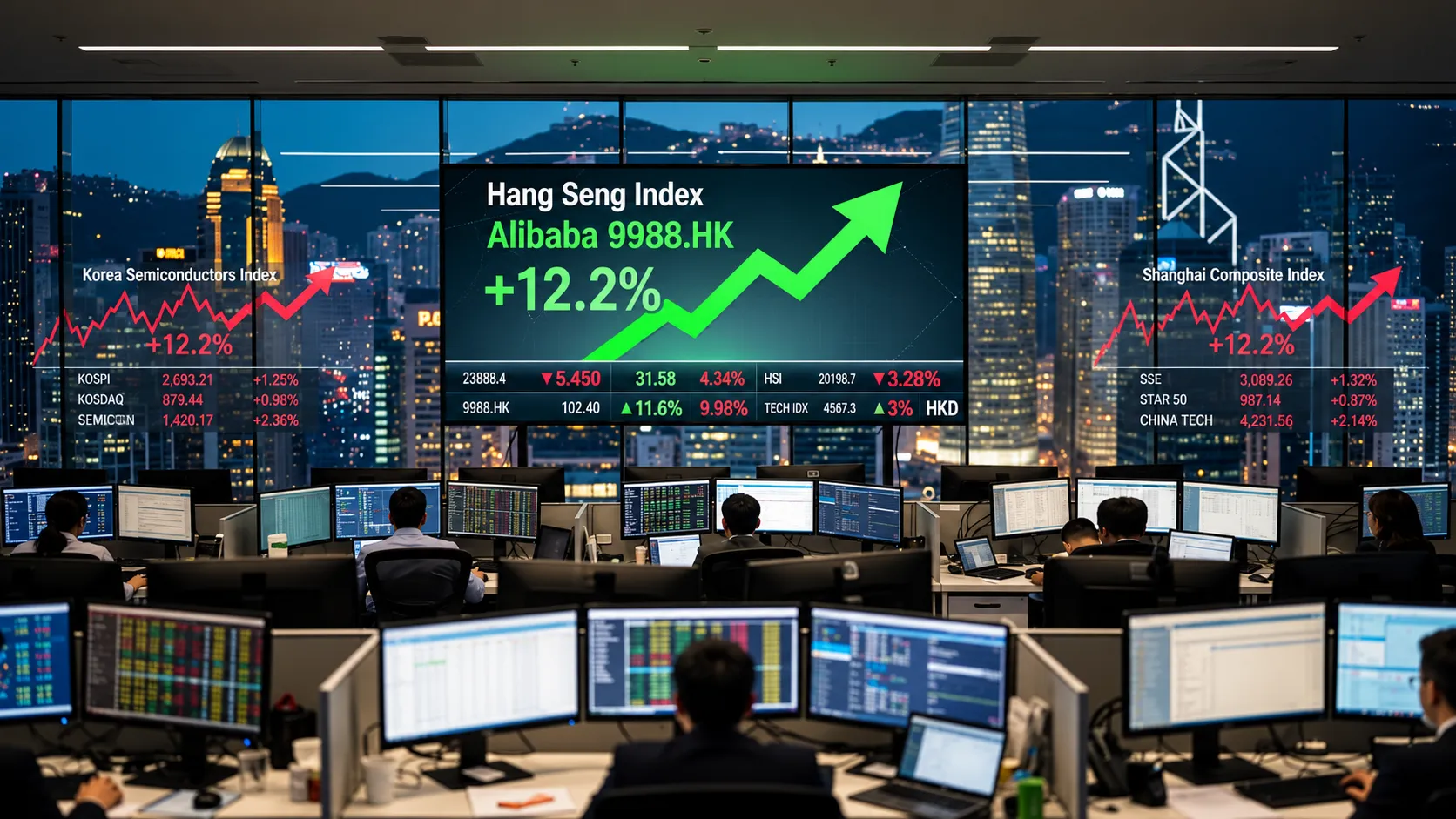
Greater China equity markets moved in different directions on September 7, 2026, even as both drew support from broad gains in technology shares. Hong Kong's Hang Seng index closed down 0.15 percent, while mainland China's CSI 300 index advanced 0.44 percent, closing at 4,575.02. The divergence, while modest in magnitude, points to differing investor positioning across the two closely linked but distinct market ecosystems.
Technology stocks provided a common thread of strength across both markets, benefiting from the same regional AI-hardware and infrastructure investment themes that lifted semiconductor names in South Korea and Japan over the same period. For mainland China's CSI 300, gains in technology shares helped offset weaker performance elsewhere in the index, reflecting continued investor interest in China's domestic AI and technology champions even amid a broader economic environment shaped by ongoing property-sector challenges and uneven consumer spending recovery.
Hong Kong's modest decline, despite similar technology-sector strength, suggests capital flows and investor sentiment in the offshore market remain somewhat more sensitive to global risk factors — including the oil-price spike following reports of the Saudi Aramco refinery incident — than the mainland market, which tends to be more insulated from international capital-flow dynamics given China's capital-account controls. That structural difference has become an increasingly important factor for investors assessing relative value and risk between the two markets.
As global investors continue to weigh China's economic trajectory against its technology sector's ongoing innovation momentum, the divergence between Hong Kong and mainland Chinese equities is likely to persist as a recurring feature of regional market dynamics. Technology-sector performance, in particular, will remain a key swing factor determining whether the two markets converge or continue moving along separate paths in the sessions ahead.