
FundingLatest Deals5 MIN READ

Defence Manufacturer Hughes Precision Raises ₹250 Crore to Nearly Triple Small-Calibre Ammunition Output

Goa-based Hughes Precision Manufacturing has raised ₹250 crore from family offices and ultra-high-net-worth individuals to expand small-calibre ammunition capacity from about 80 million to 220 million rounds.

By Shaym Kumar · Author24 September 2026New
Defence Manufacturer Hughes Precision Raises ₹250 Crore to Nearly Triple Small-Calibre Ammunition Output

Hughes Precision Manufacturing, a Goa-based defence manufacturer, has raised ₹250 crore from family offices and ultra-high-net-worth individuals to expand its ammunition production, according to a report published by YourStory on Wednesday, September 23.

The company plans to use the capital to increase its small-calibre ammunition production capacity from around 80 million rounds to 220 million rounds — an expansion of close to three times — and to set up a new facility for medium-calibre ammunition.

Hughes Precision says its order book has crossed ₹1,000 crore, with around 60% of orders coming from India and the rest from overseas markets. The company supplies the Indian armed forces and paramilitary forces and exports to more than 20 countries.

Private capital meets defence manufacturing

The structure of the round is notable. Rather than raising from venture capital or private-equity funds, Hughes Precision has turned to family offices and wealthy individuals — a pool of capital that has become increasingly active in Indian growth-stage and manufacturing businesses over the past few years.

For family offices, defence manufacturing offers exposure to a sector backed by sustained government procurement, long-term contracts and a policy push to localise production. For companies such as Hughes Precision, these investors can provide patient capital without some of the governance and exit-timeline pressures that come with institutional funds.

A sector reshaped by policy

India’s defence manufacturing sector has changed significantly over the past decade. The government has sought to reduce the country’s long-standing reliance on imported weapons and ammunition through a combination of procurement preferences for domestic suppliers, lists of items that must be sourced locally and efforts to open defence production to private companies.

Ammunition has been a particular focus. It is consumed in large volumes in training and operations, and supply disruptions can have immediate consequences for military readiness. Building domestic capacity reduces dependence on foreign suppliers and shortens supply chains in the event of a crisis.

Globally, demand for ammunition has also risen sharply in recent years as conflicts in Europe and the Middle East have depleted stockpiles and prompted governments to invest in replenishment. That has created export opportunities for manufacturers in countries with competitive cost structures and established production capabilities — including India.

Hughes Precision’s order-book split reflects this dual opportunity. With roughly 60% of orders from India and about 40% from overseas, the company is positioned to benefit from both domestic procurement and international demand.

Scaling up production

The planned expansion from about 80 million to 220 million small-calibre rounds is a substantial increase in capacity. Small-calibre ammunition is used in rifles, carbines and machine guns, and represents a high-volume segment of the market.

The distinction matters for investors. Small-calibre ammunition is a volume business in which reliability, cost and consistent quality determine competitiveness, while medium-calibre work tends to involve longer qualification cycles but potentially higher margins and deeper customer relationships.

The new medium-calibre facility would take Hughes Precision into a different product category. Medium-calibre ammunition is typically used in cannons mounted on armoured vehicles, naval vessels and air-defence systems, and generally involves more complex engineering and quality requirements than small-calibre rounds.
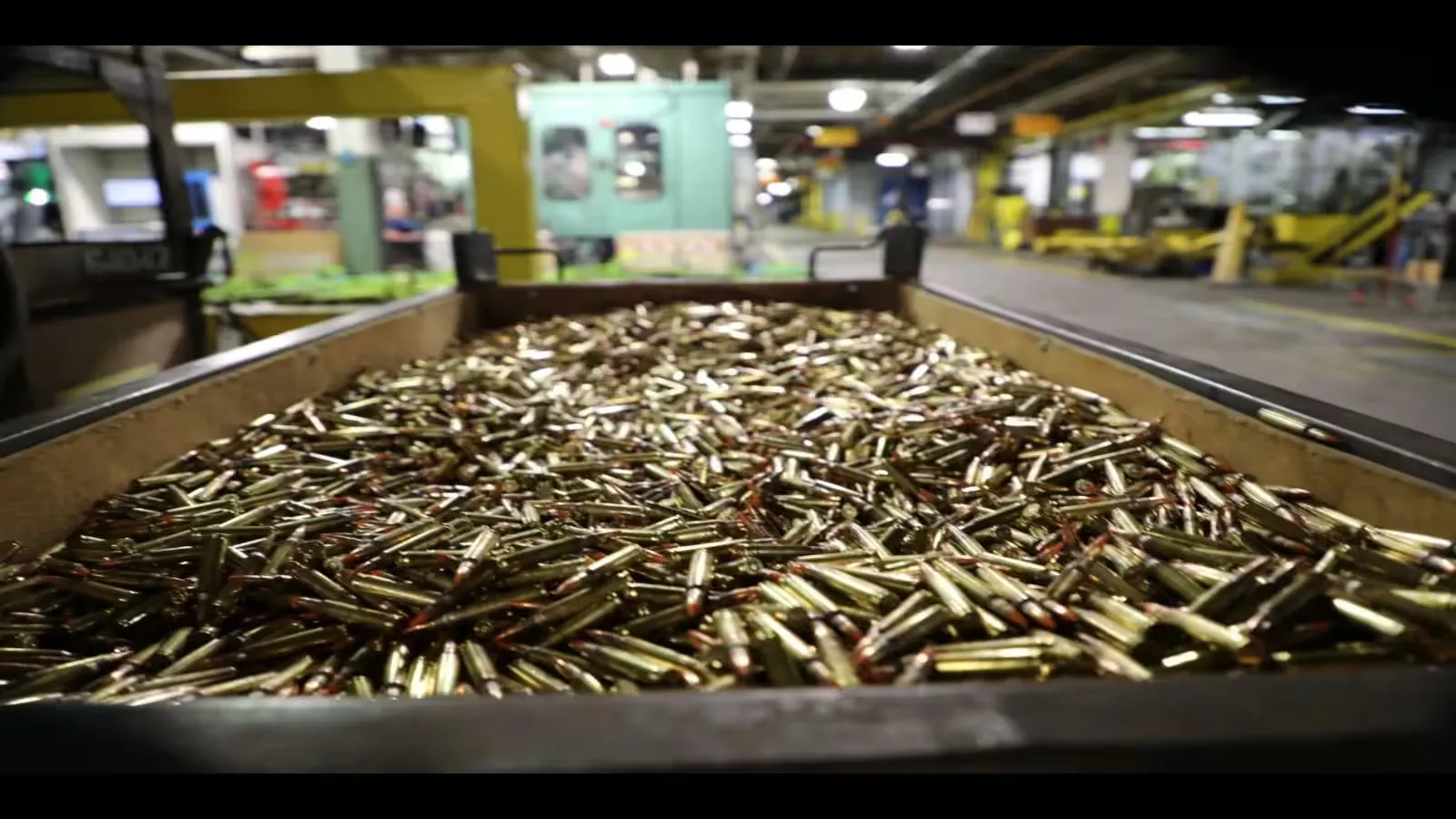

With about 40% of its order book coming from overseas, Hughes Precision is part of a new generation of Indian defence suppliers selling to the world, not just to the home market.
TIGI Funding Desk

Moving into that segment could allow the company to address a broader range of military programmes and to increase the average value of its contracts. It would also place it in competition with larger domestic and international defence groups that already supply medium-calibre ammunition.

image.png

Execution risks

Defence manufacturing is capital-intensive and highly regulated. Expanding capacity requires not only new machinery and facilities but also licensing, safety approvals, quality certifications and qualification by military customers — processes that can take considerable time.

Export sales carry additional complexity. Each overseas contract is subject to India’s export-control regime and to the regulatory requirements of the buying country. Geopolitical considerations can influence which markets are accessible, and sales can be affected by shifts in foreign policy.

Working capital is another consideration. Defence contracts often involve long delivery schedules and staged payments, which means manufacturers need to finance raw materials, inventory and production well before they are paid in full. A ₹1,000 crore order book is a strong indicator of demand, but converting it into revenue and cash flow requires careful financial management.

Part of a broader trend

Hughes Precision’s fundraise is one of several recent deals highlighting investor interest in Indian defence and dual-use manufacturing. Defence technology startups and suppliers have attracted increasing attention from venture investors, family offices and public-market investors, with listed defence companies among the strongest performers on Indian exchanges in recent years.

The appeal lies in a combination of structural demand, policy support and export potential. At the same time, investors are increasingly discerning about which companies have the manufacturing capability, certifications and customer relationships to convert that opportunity into sustainable revenue.

For Hughes Precision, the ₹250 crore raise provides the capital to pursue a significant expansion. The company’s ability to execute — bringing new capacity online, qualifying new products and delivering on its growing order book — will determine whether it can establish itself as a leading private-sector ammunition supplier in India and a credible exporter on the global stage.

Why it matters for India

The expansion also carries broader significance. Localising ammunition production strengthens India’s strategic self-reliance, while exports support the government’s goal of making the country a net exporter of defence equipment. Private manufacturers such as Hughes Precision are central to that ambition, complementing the output of state-owned defence companies.

As Indian defence manufacturing matures, the sector is also creating skilled jobs in engineering, precision machining and quality assurance — particularly in states such as Goa that are seeking to diversify their industrial base beyond traditional sectors.

The success of companies like Hughes Precision will help determine whether India can turn its defence-manufacturing ambitions into a durable industrial base — one that serves the country’s own forces while competing credibly in international markets.

For investors, the round is a reminder that some of the most interesting opportunities in Indian manufacturing are emerging outside the traditional venture-capital spotlight, backed instead by private wealth willing to take a long-term view on strategic industries.

TagsHughes Precision ManufacturingDefenceAmmunitionMake in IndiaDefence ExportsGoaFamily OfficesManufacturingAtmanirbhar BharatDefence TechFundingOrder BookIndian Armed Forces

Reader reviews

Sign in to rate and review this article.
Loading reviews…