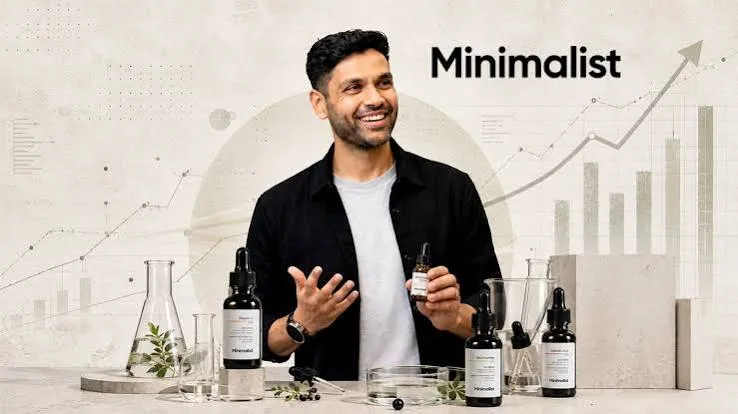
Minimalist, the science-backed skincare brand majority-acquired by consumer goods giant Hindustan Unilever in 2024, is nearing Rs 700 crore in income for the financial year 2025-26 while posting a Rs 26 crore profit after tax, according to financial details reported this week. The numbers offer one of the clearest validations yet of HUL's broader strategy of acquiring high-growth, digitally native beauty and personal care brands to supplement its legacy portfolio — a strategy that had, until now, delivered mixed results across the wider Indian FMCG sector.
Minimalist built its reputation in a crowded Indian skincare market by leaning into ingredient transparency and formulation science, positioning itself against both mass-market brands that emphasised marketing over efficacy and premium international players priced well beyond the reach of most Indian consumers. That positioning resonated strongly with a generation of digitally savvy, ingredient-conscious shoppers who had grown accustomed to researching product formulations online before purchase — a consumer behaviour shift that traditional FMCG players were often slower to recognise and respond to.
HUL's acquisition of Minimalist was widely read at the time as an acknowledgment that the conglomerate's organic innovation pipeline could not match the speed and cultural relevance of nimble, founder-led D2C brands operating with direct customer feedback loops through e-commerce and social media. The latest financial performance suggests that the integration has, so far, preserved rather than diluted the brand's growth trajectory and independent identity — a risk that has undone several prior instances of large conglomerates acquiring high-growth digital-first brands, both in India and globally, where post-acquisition bureaucracy has often slowed the acquired company's pace of innovation.
The profitability figure is arguably as significant as the revenue milestone. India's D2C beauty and personal care sector has produced no shortage of brands capable of generating impressive top-line growth through aggressive digital marketing spend, but comparatively few that have demonstrated the ability to convert that growth into sustainable bottom-line profitability. Minimalist's Rs 26 crore profit, achieved alongside continued revenue expansion, positions it among a select group of Indian D2C brands that have proven the category can scale profitably rather than merely capture market share at the cost of margin.
For HUL, the results will likely reinforce its appetite for further strategic acquisitions in India's fragmented but rapidly consolidating D2C beauty landscape, even as competitors including other multinational conglomerates and homegrown beauty conglomerates pursue similar roll-up strategies. For the broader Indian startup ecosystem, Minimalist's trajectory under corporate ownership offers a reassuring counter-narrative to founder anxieties about acquisition-driven dilution of brand identity — suggesting that, when executed with discipline, strategic acquisitions can accelerate rather than blunt a challenger brand's growth.
The scale of Minimalist's growth since acquisition also invites closer examination of what HUL has done differently in this integration compared with less successful precedents elsewhere in the FMCG industry. Rather than folding Minimalist's operations directly into its existing beauty and personal care division, HUL has reportedly allowed the brand's founding team to retain significant operational autonomy, preserving the product development speed and digitally native marketing approach that built Minimalist's following in the first place. This 'light-touch integration' model has increasingly become the preferred approach among sophisticated conglomerate acquirers of D2C brands globally, informed by repeated lessons that heavy-handed post-acquisition integration frequently destroys the very cultural and operational attributes that made a target attractive in the first place.
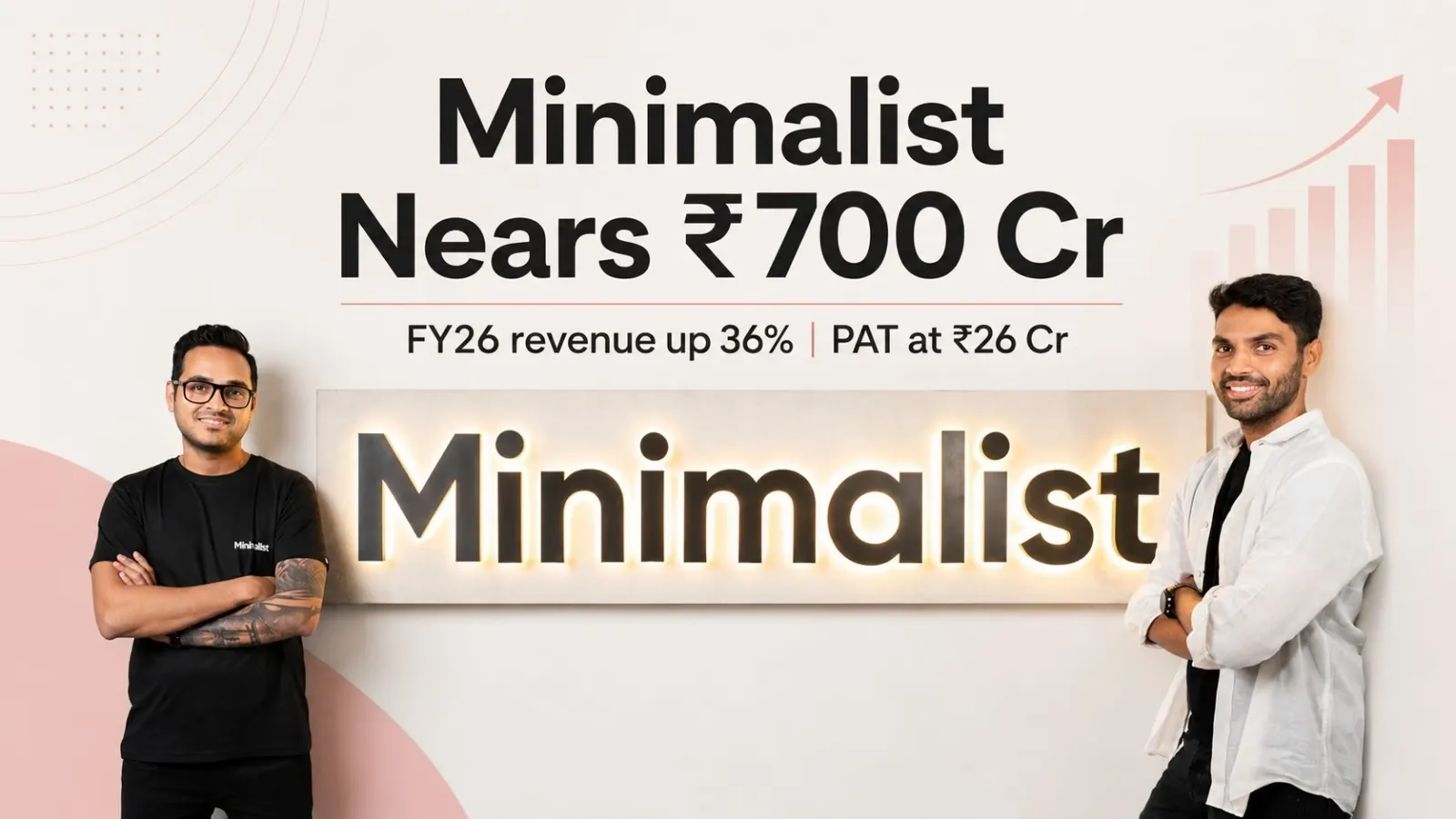
Minimalist's continued growth also benefits from access to HUL's extensive distribution infrastructure — including general trade, modern retail and e-commerce relationships built over decades — that would have taken a standalone D2C brand years to replicate independently. This distribution advantage has allowed Minimalist to extend beyond its original digital-first customer base into offline retail channels, a transition that has historically proven challenging for D2C-first beauty brands attempting it without a strategic partner's existing infrastructure and retailer relationships.
The Indian D2C beauty and personal care sector more broadly continues to attract significant strategic acquirer interest, with both multinational conglomerates and homegrown beauty houses actively scouting for high-growth digital-first brands capable of capturing the ingredient-conscious, digitally engaged consumer segment that has proven difficult for legacy mass-market brands to serve authentically. Minimalist's financial performance under HUL ownership is likely to be cited repeatedly in coming quarters as the reference case for how such acquisitions can be structured to preserve growth momentum.
As Minimalist approaches the Rs 1,000 crore revenue milestone that many industry watchers now view as plausible within the next one to two fiscal years, its trajectory will continue to serve as an important data point for both founders considering strategic exits and conglomerates evaluating similar acquisitions — offering evidence that scale and brand authenticity need not be mutually exclusive outcomes when integration is managed with sufficient care.
The brand's performance also carries lessons for India's broader beauty and personal care investment landscape, where founders weighing strategic acquisition offers against continued independent fundraising increasingly look to precedents like Minimalist when negotiating deal terms and post-acquisition operating autonomy. As more conglomerates pursue similar acquisitions of high-growth digital-first brands across categories beyond beauty, the governance and integration playbook HUL has applied to Minimalist is likely to become an increasingly influential reference point across India's consolidating D2C landscape.
For consumers, meanwhile, the acquisition's apparent success has done little to alter the brand's core proposition — ingredient transparency and formulation science remain central to Minimalist's marketing even under conglomerate ownership, suggesting that HUL has resisted the temptation to dilute the brand's differentiated positioning in pursuit of broader mass-market appeal, a discipline that has arguably been as important to preserving revenue momentum as any distribution or capital advantage the acquisition provided.
Looking ahead, industry watchers will be paying particular attention to whether Minimalist can sustain its current growth rate as it scales beyond its core digitally native customer base into broader offline retail channels, where competitive dynamics and consumer purchasing behaviour differ meaningfully from the online-first environment in which the brand initially built its reputation. Successfully navigating this channel expansion while preserving brand equity will be the next major test of HUL's stewardship of the acquisition.