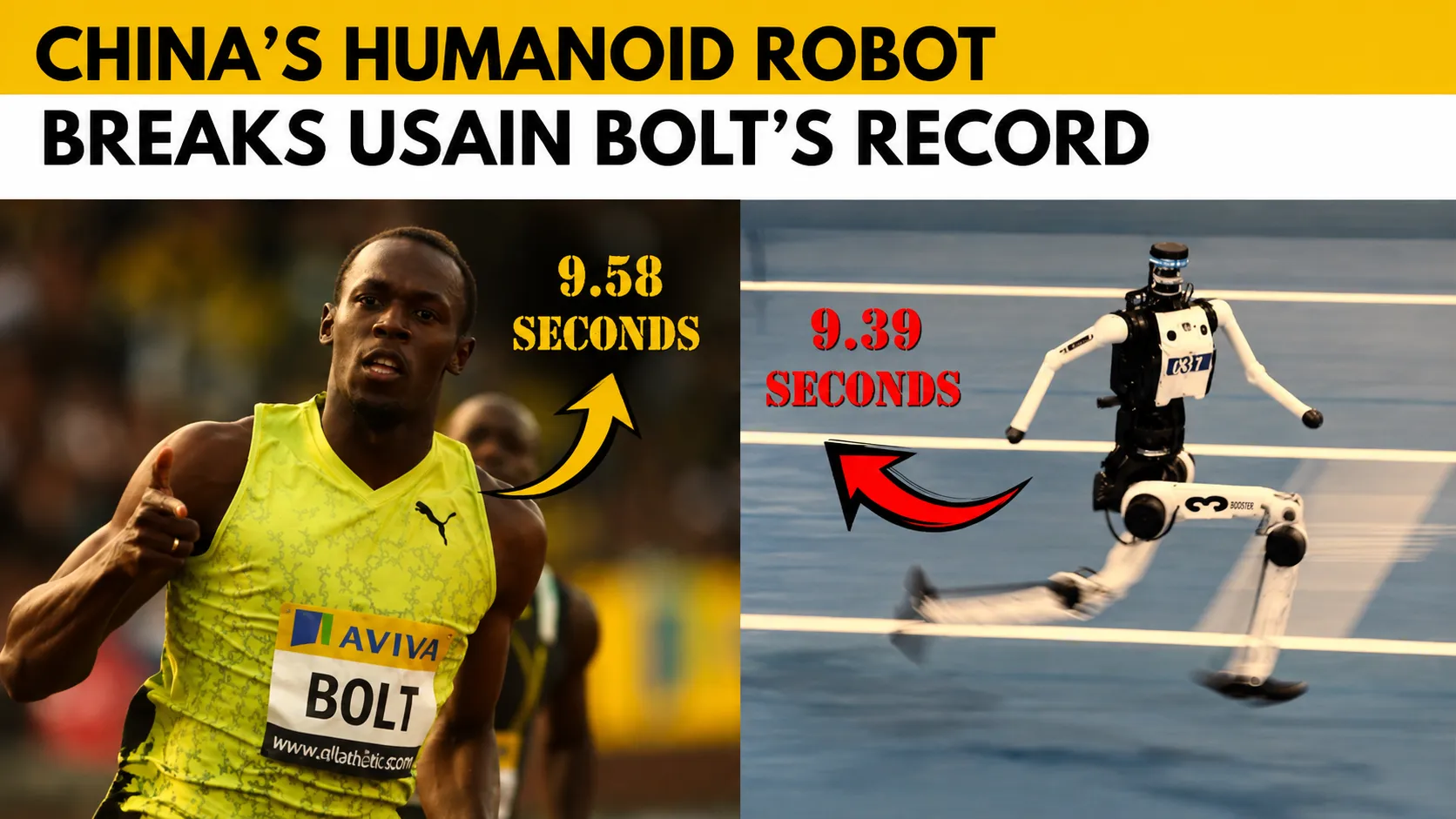
A humanoid robot named Tiangong Ultra ran 100 metres in 9.39 seconds at the opening of the second World Humanoid Robot Games in Beijing, beating Usain Bolt's 9.58-second world record set at the 2009 World Athletics Championships in Berlin — marking the first time a machine has officially outrun the fastest recorded human sprint. The run took place during preliminary heats on August 22 at Beijing's National Speed Skating Oval, the venue built for the 2022 Winter Olympics.
Developed by the Beijing Humanoid Robot Innovation Center, Tiangong Ultra overtook a rival robot called Lightning — built by Chinese smartphone maker Honor — near the finish line after falling behind early in the race. Lightning itself finished in 9.47 seconds, also faster than Bolt's mark, and had separately clocked an even quicker 9.32 seconds with a peak speed of 14.5 metres per second during an earlier test event. At the end of the sprint, the robots slammed into a cushioned barrier and fell to the ground to stop, before being carried off on stretchers, according to footage from the event.
The results marked a dramatic leap from the inaugural Games held in Beijing a year earlier, when Tiangong won the 100-metre event in a comparatively pedestrian 21.50 seconds. This year's competition features 51 events and more than 1,300 individual contests, drawing 666 teams and 2,056 humanoid robots from 16 countries — a 138 percent increase in team participation from the first edition, according to state news agency Xinhua.
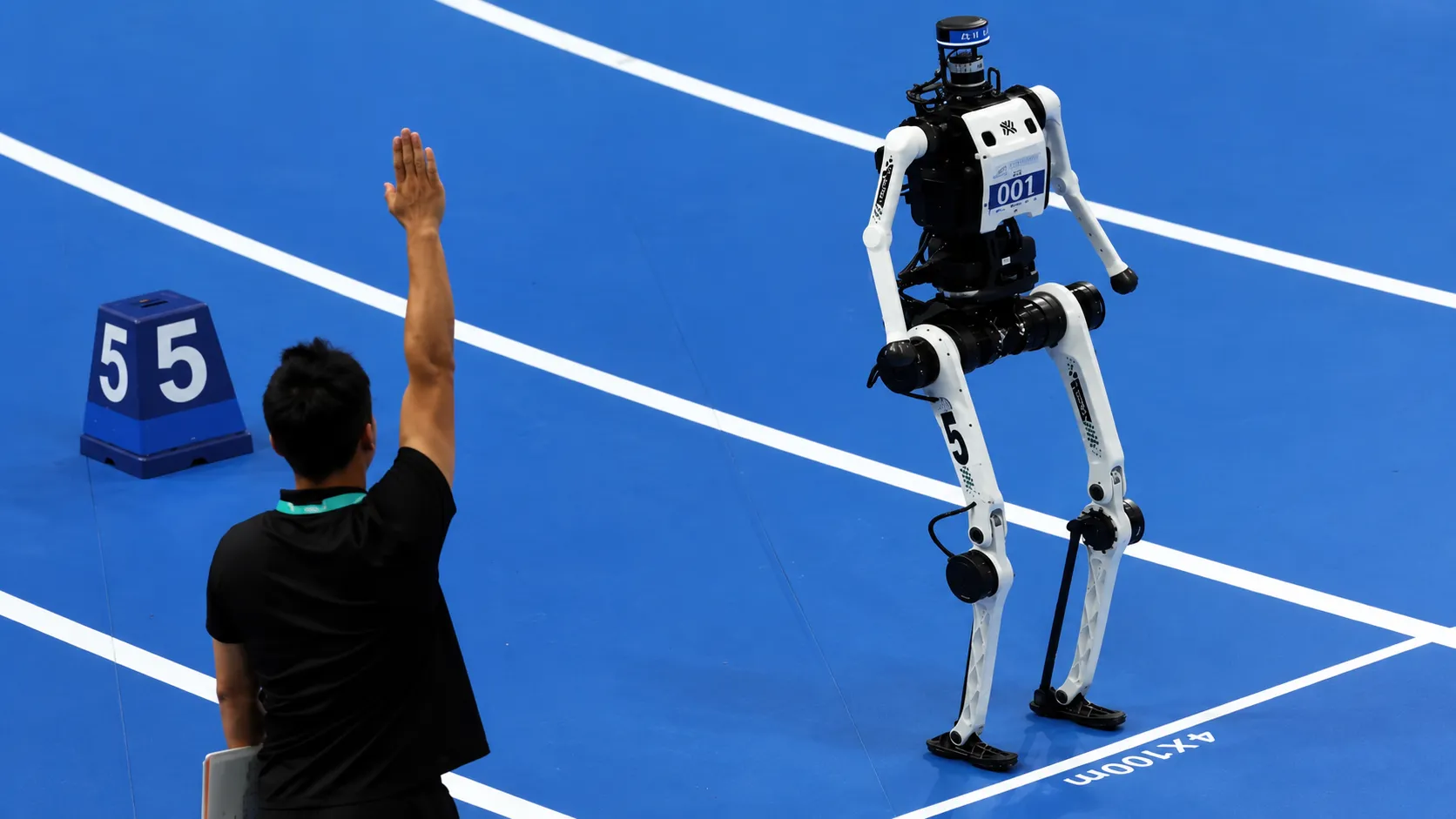
The five-day Games, staged as an Olympics-style spectacle, span disciplines from sprinting and the standing high jump to table tennis, football and practical tasks such as medicine sorting and cleaning — a deliberate showcase of China's rapid progress in advanced robotics as the technology race with the United States intensifies. A separate Tiangong-built robot also broke the human record in the standing high jump, reaching 2.88 metres, according to organisers.
For China's robotics industry, the symbolism of a machine outrunning history's most decorated sprinter is difficult to overstate, even as engineers caution that controlled, short-burst sprinting on a purpose-built track remains a far simpler problem than the balance, endurance and real-world adaptability required for humanoid robots to perform useful physical labour outside a stadium. Unitree Robotics, Hangzhou-based and among China's most prominent humanoid robot makers, won four gold medals in running events at last year's inaugural Games, underscoring how quickly the competitive field among domestic robotics firms is maturing.
Human athletes are, for now, unlikely to feel genuinely threatened: a robot beating Bolt's mark on a closed circuit under ideal, purpose-built conditions is a very different feat from matching human athletic versatility. But the spectacle achieves something China's robotics champions clearly intended — turning an engineering benchmark into a viral, globally watched demonstration of how fast embodied AI is advancing, at a moment when investors and governments worldwide are racing to determine which country will lead the next phase of physical, real-world automation.


