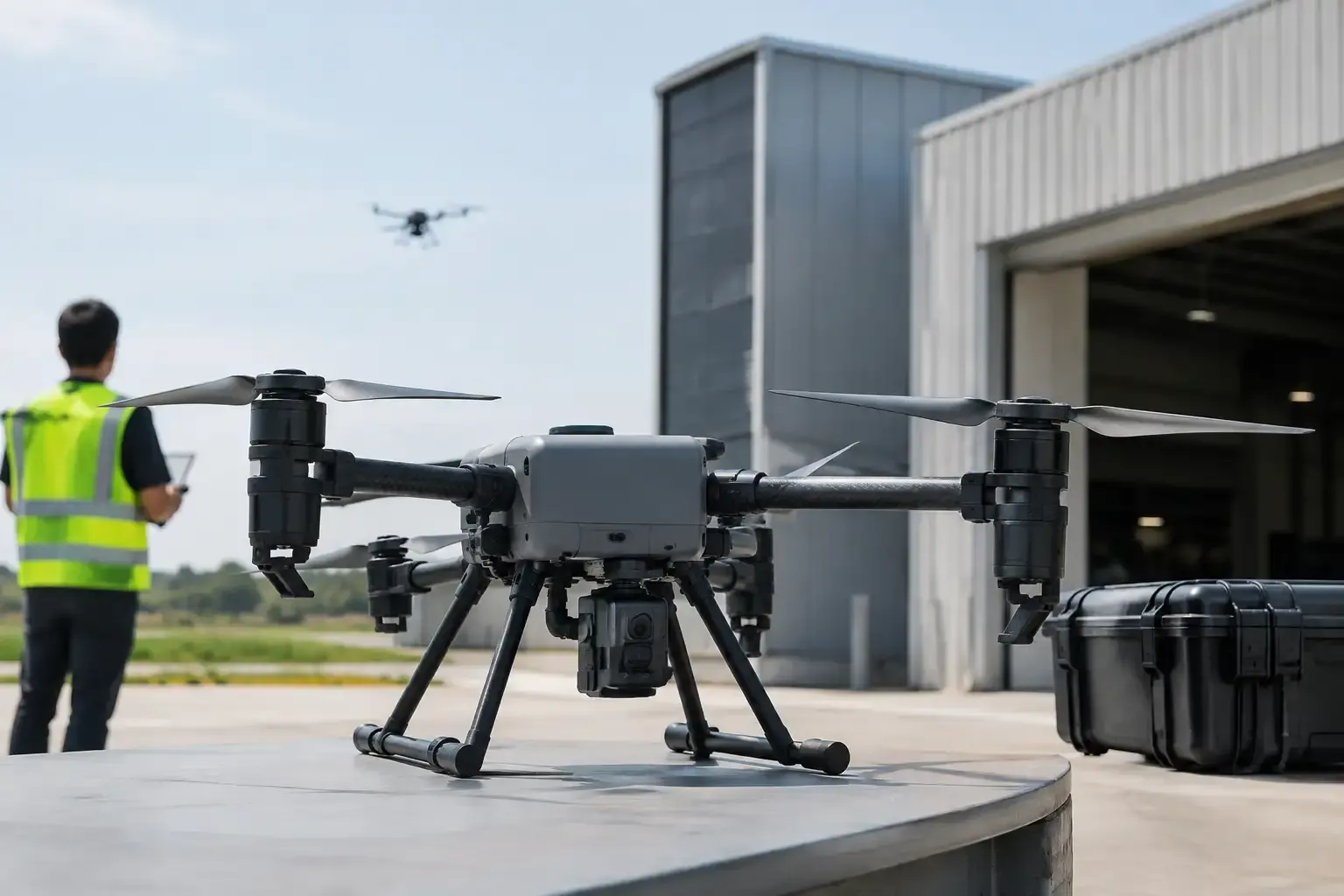
ideaForge Technology, India's best-known listed drone manufacturer, has been served a goods and services tax demand of about ₹109 crore over the rate it applied to its products, adding a tax dispute to the list of challenges facing the defence-focused company.
The order, dated 2 October 2026, was issued by the Additional Commissioner of CGST and Central Excise in Belapur, Navi Mumbai. It covers the period from January 2022 to March 2024. The total demand of ₹109.17 crore comprises an alleged tax shortfall of ₹54.59 crore and a penalty of an equal amount.
At the heart of the dispute is a question of classification. Tax authorities allege that ideaForge applied a 5% GST rate on its drones when it should have charged 13%. The company disagrees.
In its disclosure, ideaForge said it had followed the correct 5% GST rate, supported by a 2025 government clarification, and that it would appeal the order before the appellate authority. Management said it expects a favourable outcome and anticipates no immediate impact on operations while the appeal is pending.
A classification fight common to new technologies
Disputes over tax classification are a recurring feature of India's GST regime, particularly for products that do not fit neatly into categories designed before the technology became widespread. Drones can be classified in several ways depending on their use, specifications and whether they are treated as aircraft, cameras, toys or specialised equipment.
The difference between 5% and a higher rate is significant for a hardware maker selling expensive systems to government and enterprise customers. When the tax rate is disputed after the sales have been made, the company may not be able to recover the additional amount from customers, which means any final liability would come out of its own margins.
ideaForge's reference to a 2025 government clarification suggests that the company believes the official interpretation has since moved in its favour. If that clarification is accepted as applying to the earlier period, the appeal could succeed. If the authorities argue it applies only prospectively, the dispute could take longer to resolve.
Tax demands of this kind frequently pass through several layers of appeal, from the departmental appellate authority to tribunals and sometimes the courts. Companies typically disclose such orders to stock exchanges because they could be material, but many are reduced or overturned on appeal. Investors usually look at whether the company has made provisions in its accounts and how much cash, if any, it must deposit to pursue the challenge.
Who is ideaForge
Founded by alumni of the Indian Institute of Technology Bombay, ideaForge became one of India's first drone companies to list on the stock exchanges when it went public in 2023. Its unmanned aerial systems are used mainly by the armed forces, paramilitary and police for surveillance and mapping, and increasingly by civilian customers for infrastructure inspection, mining, agriculture and disaster management.
The company's listing was seen as a milestone for India's deep-tech and defence manufacturing ecosystem, and its shares attracted strong demand at the time. Since then, however, the business has faced the volatility typical of companies dependent on government procurement, where large orders can arrive in lumps and timing is hard to predict.
The GST demand lands at a time when competition in the domestic drone market is intensifying. Several well-funded startups and established defence companies are chasing orders as India expands its use of unmanned systems.