For decades, a borrower's credit score was the gatekeeper to a loan in India. A good CIBIL score opened doors; a poor one, or no score at all, closed them. That is changing, according to Ashok Hariharan, founder of identity verification and risk management platform IDfy.
"Credit history will still be used, but it won't decide a loan on its own anymore," Hariharan said in an email interview with Business Standard published on October 18.
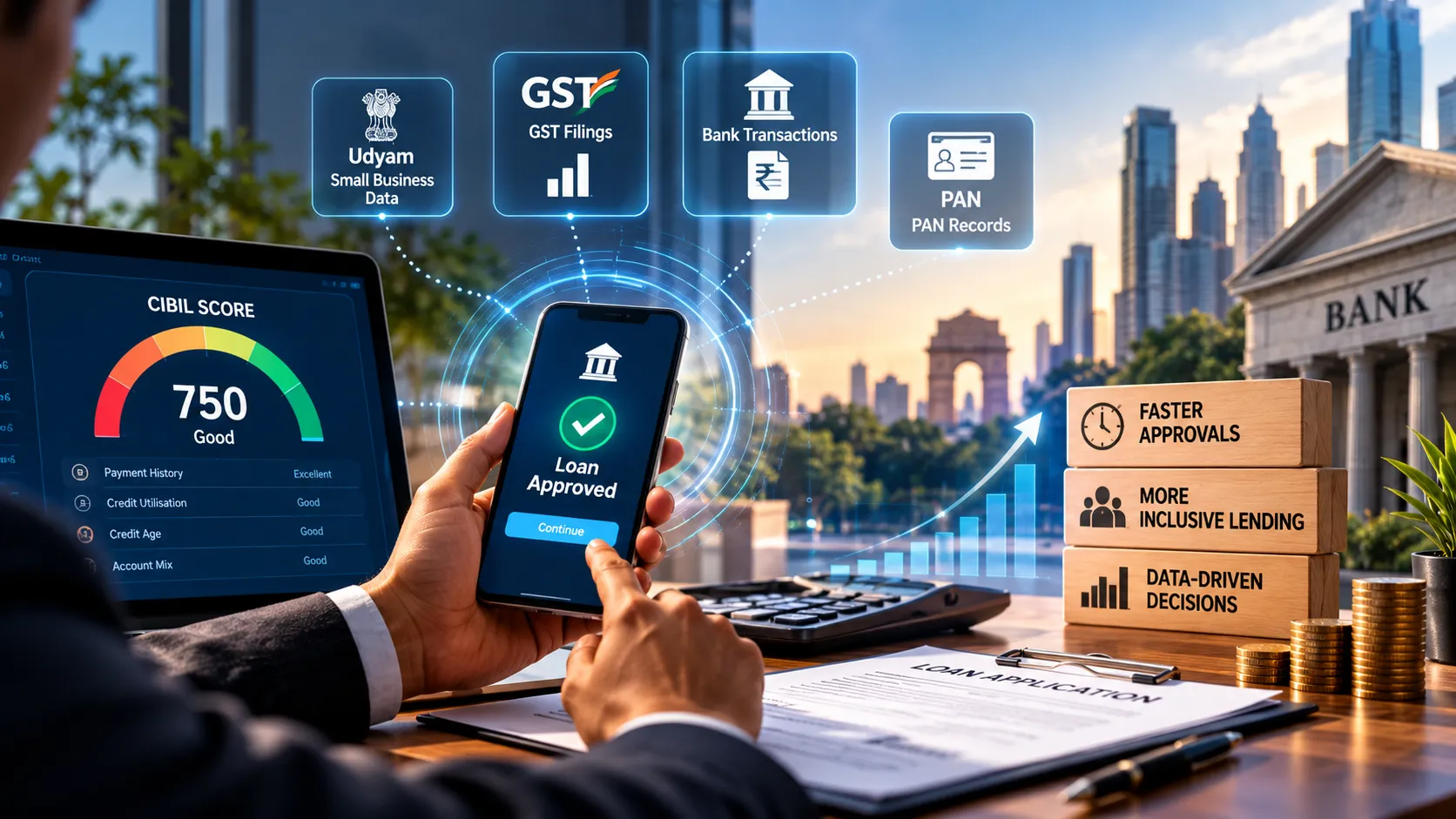
Lenders, he explained, are now combining credit bureau data with information from sources such as Udyam, the government's registration system for small businesses, the Goods and Services Tax network and PAN records. The shift reflects a basic limitation of credit scores: they show how a borrower behaved in the past, not whether they can repay in the future.
Looking forward, not backward
"Credit assessment has to look forward, at whether a customer will repay," Hariharan said. Credit bureaus record past borrowing and repayment behaviour, which remains valuable, but it does not capture a borrower's current financial health, such as whether a small business's sales are growing or falling.
That is where real-time data comes in. "Real-time data, like GST filings and bank transactions shared through account aggregators," shows a borrower's current financial condition, Hariharan said. Lenders will increasingly need to read this data alongside bureau information to make sound decisions.
India's account aggregator framework, part of the country's broader digital public infrastructure, allows individuals and businesses to share their financial data, such as bank statements, securely with lenders and other regulated entities, with their explicit consent. For small businesses and individuals with limited credit histories, the ability to share verified cash flow data can open access to formal credit that would otherwise be out of reach.
The speed trap
Hariharan also highlighted a tension between speed and rigour in digital lending. Many lenders have made loan applications dramatically faster, but kept key checks at the end of the process. That approach contributed to stress in unsecured lending and prompted regulatory action, he said.
In recent years, the Reserve Bank of India has tightened rules on unsecured consumer loans and digital lending, raising risk weights on certain categories of credit and introducing guidelines to protect borrowers from unfair practices. Rapid growth in small-ticket personal loans and credit card debt had raised concerns about over-indebtedness.
But Hariharan cautioned that slow processes carry their own risks. Good borrowers may leave for faster lenders, which can hurt the asset quality of those that remain slow. The challenge is to be both fast and careful, by building checks into each stage of the process rather than leaving them to the end.
Front end transformed, back end lagging
India's lending industry has invested heavily in digital onboarding. Identity verification through Aadhaar, video-based know-your-customer checks and digital document collection have made it possible to apply for a loan from a smartphone in minutes.
Yet behind the scenes, much has stayed the same. "It has changed the front-end a lot and the rest much less," Hariharan said. Back-end processes such as manual document checks, multiple rounds of review and queues have changed little. Repeated requests for the same documents frustrate borrowers and add costs for lenders.
That gap represents both a problem and an opportunity. Companies such as IDfy, which provide verification, fraud detection and onboarding technology to banks, lenders, insurers and other businesses, are betting that automating and integrating those back-end processes will be the next wave of efficiency gains in financial services.
Banks versus digital lenders
Hariharan drew a clear distinction between the strategies of banks and digital lenders. "Banks have mostly gone after larger loans, which are relatively safer," he said. "Digital lenders build their business on smaller loans at high volumes, much of it unsecured."
Banks' main gap, he said, is speed. Their strength lies in low-cost deposits, large balance sheets and customer trust, but their processes are often slower than those of digital-first competitors. Digital lenders, by contrast, excel at speed and user experience but face higher funding costs and greater regulatory scrutiny of their risk practices.
The competition between the two models is shaping India's credit market. Many banks have partnered with fintech companies through co-lending arrangements, combining banks' balance sheets with fintechs' technology and distribution.
The consent challenge
Hariharan also addressed data privacy. "Consent managers are giving consumers greater control" over how their data is shared, he said. But for enterprises, "the larger enterprise challenge may begin after it has been obtained" — tracking where personal data is stored and how it moves across internal systems and external vendors.
That challenge is becoming more pressing as India implements its data protection framework, which requires organisations to obtain consent for processing personal data, use it only for specified purposes and protect it from misuse. Lenders, which handle large volumes of sensitive financial and identity data, will need robust systems to manage consent and data flows.
India's lending stack
India's digital public infrastructure has given lenders tools that few other countries have. Aadhaar provides a unique digital identity for over a billion people, enabling electronic KYC. UPI has created a vast record of digital payments, and the account aggregator framework allows consent-based sharing of financial data. Together, these systems, often referred to as India Stack, have dramatically lowered the cost of reaching new borrowers.
The Open Credit Enablement Network and other initiatives aim to build on that infrastructure to make credit more accessible, especially for small businesses. For companies such as IDfy, the challenge is to help lenders use those tools effectively while managing fraud and compliance risks.
Why it matters
The shift Hariharan describes has important implications for financial inclusion. Millions of Indians, including small business owners, gig workers and women entrepreneurs, have thin or no credit histories. Lending based on real-time cash flow data could help them access formal credit at fair prices.
It also matters for risk management. Microfinance lenders such as Dvara KGFS are already combining bureau reports with account aggregator data, UPI transactions and utility payments to size loans according to repayment capacity, as the sector grapples with legacy defaults and funding pressure.
For India's lending industry, Hariharan's message is that the next phase of digital transformation lies not in faster sign-ups but in smarter, data-driven decisions throughout the lending process. The lenders that combine speed with sound risk assessment are likely to be the winners.