Drones have transformed modern warfare, and the race to counter them is producing a new generation of defence startups. One Indian company has just passed a key milestone in that race.
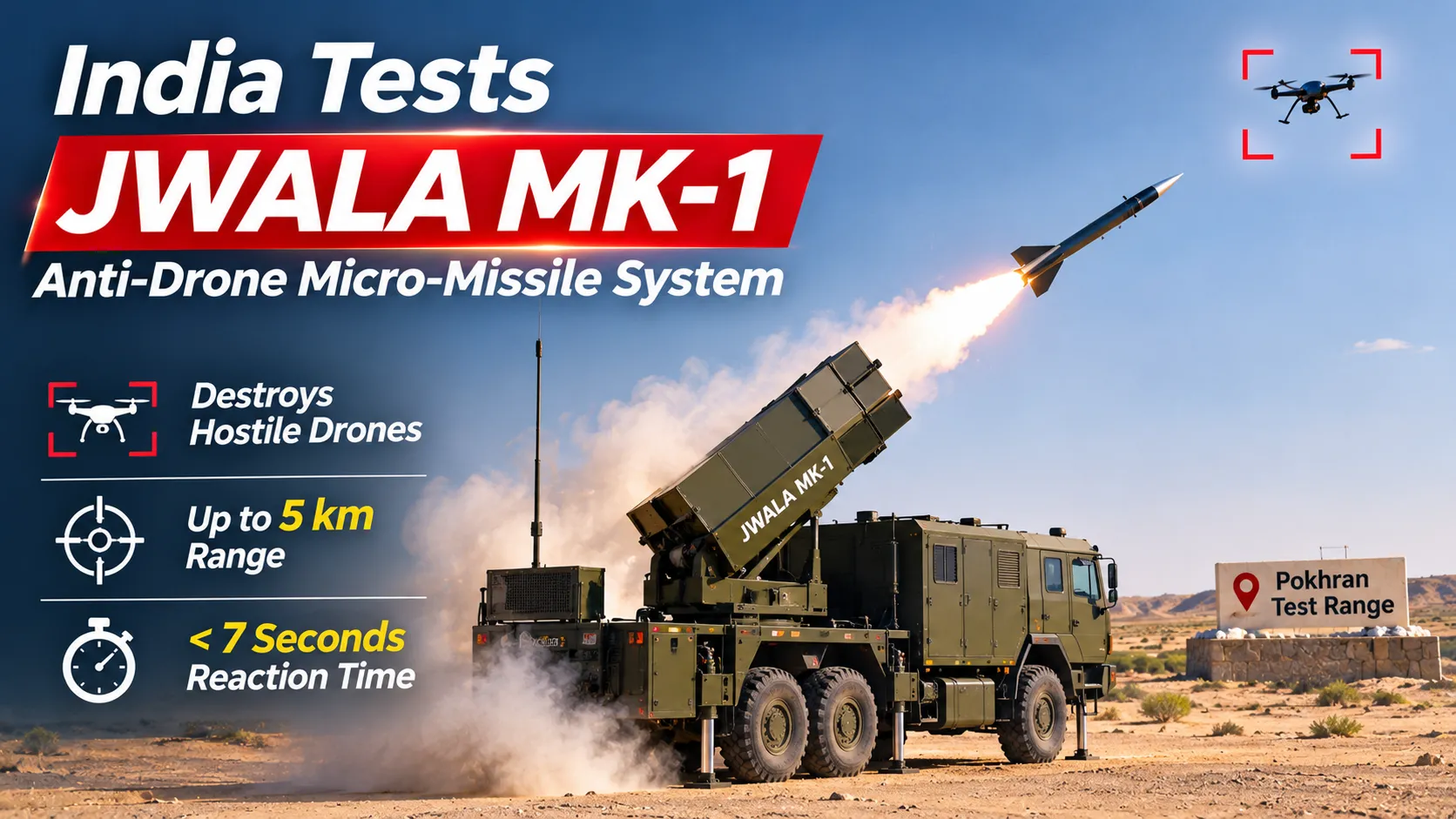
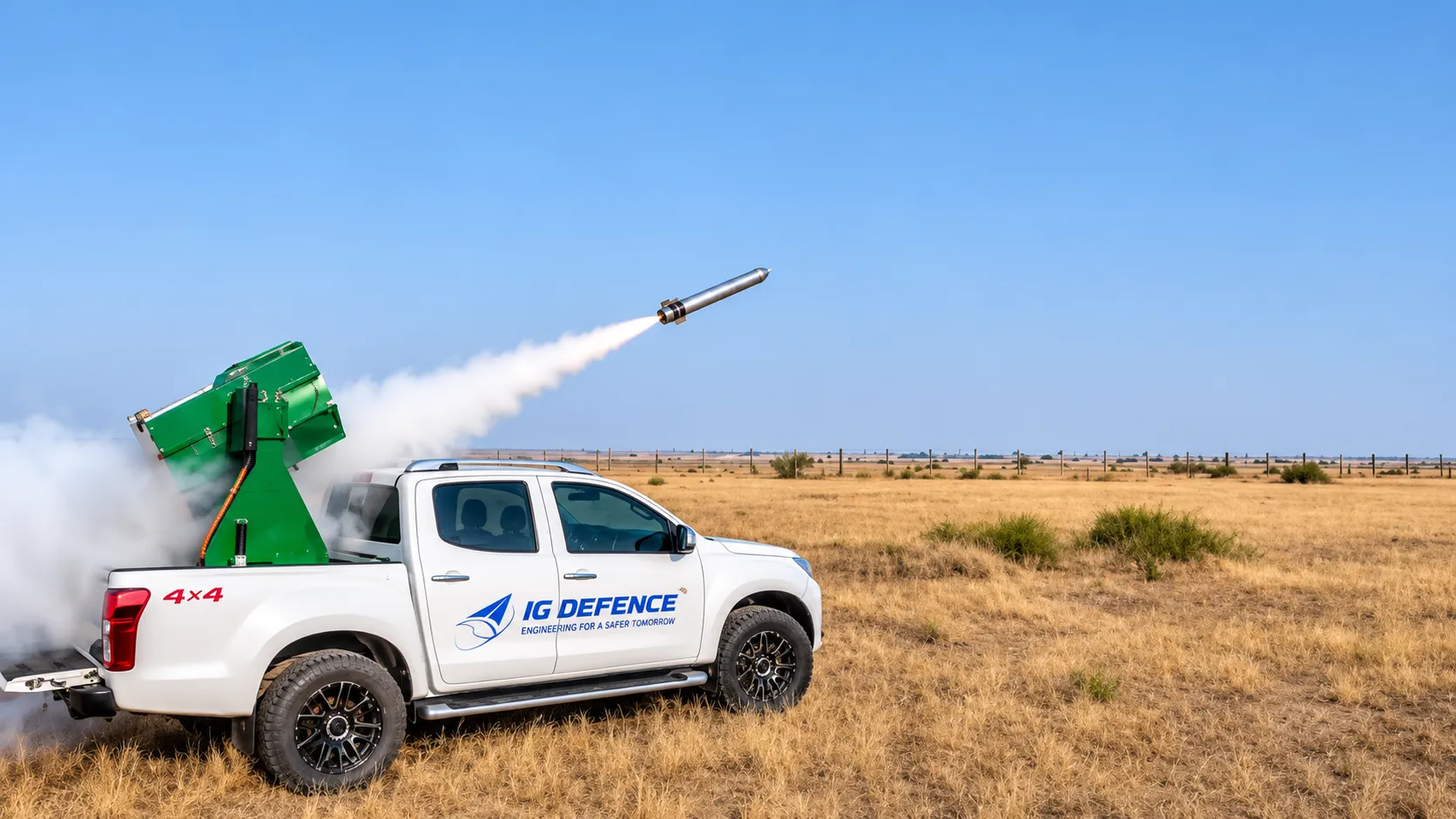
IG Defence, a Noida-based private defence manufacturer, has test-fired JWALA MK-1 at the Pokhran firing range in Rajasthan, India TV News reported on Monday, November 23. The company describes the system as "India's first autonomous Counter-Unmanned Aircraft System (CUAS) Micro-Missile System."
The test marks the first flight trial of the complete missile system, following earlier tests of its rocket motors.
What JWALA MK-1 does
JWALA MK-1 is a ground-launched micro-missile designed to destroy hostile drones by striking them, rather than disabling them through electronic jamming. According to the company, it has an operational range of up to 5 km.
The missile uses a dual-pulse solid rocket motor for propulsion and aerodynamic fin controls for manoeuvrability. It carries a pre-fragmented high-explosive warhead and a proximity fuse, allowing it to detonate near a target instead of requiring a direct hit. The system includes integrated mission autonomy that identifies and classifies potential hostile drones and enables them to be neutralised in the air.
Earlier reporting on the programme said the system is designed to be truck-mounted with multiple launch canisters, with a reported reaction time of under seven seconds from detection to launch, although these specifications have not been independently verified.
From rocket motors to flight
In October, IG Defence conducted two successful test-firings of the solid rocket motors that power the JWALA missile, according to reports at the time. The company said it would then move to experimental trials of the complete system, testing how its components work together.
The Pokhran test represents that next stage. Pokhran, in the Thar desert, is India's main testing range for missiles and artillery and was the site of the country's nuclear tests in 1974 and 1998.
The founder's vision
IG Defence is led by founder and chief executive Bodhisattwa Sanghapriya. The company has described JWALA as the hard-kill "muscle" of a broader counter-drone architecture, with its GRID system acting as the "brain" that detects and tracks threats, according to an interview with Indian Masterminds.
The approach reflects a recognition that countering drones requires a layered system combining sensors, software and multiple types of interceptors.
Why counter-drone systems matter
Drones have become one of the defining weapons of modern conflict. The war in Ukraine has demonstrated how cheap, mass-produced drones can be used for surveillance, artillery spotting and direct attacks. In the Middle East, drones have been used extensively against military bases, ships and infrastructure.
India has faced drone threats along its borders, including drones used to drop weapons and narcotics in Punjab and Jammu and Kashmir. During the May 2025 conflict with Pakistan, drones were used on a significant scale, highlighting the need for effective counter-drone capabilities.
The cost problem
A central challenge in countering drones is cost. Many attack drones cost a few thousand dollars, while traditional air defence missiles can cost hundreds of thousands or millions of dollars. Using expensive interceptors against cheap drones is unsustainable, particularly when an adversary can launch drones in large numbers.
Micro-missiles like JWALA aim to address this imbalance by offering a cheaper interceptor designed specifically for drones. Electronic jamming is another low-cost option, but it does not work against all drones, particularly those using autonomous navigation or fibre-optic control. Kinetic interceptors provide a complementary solution.