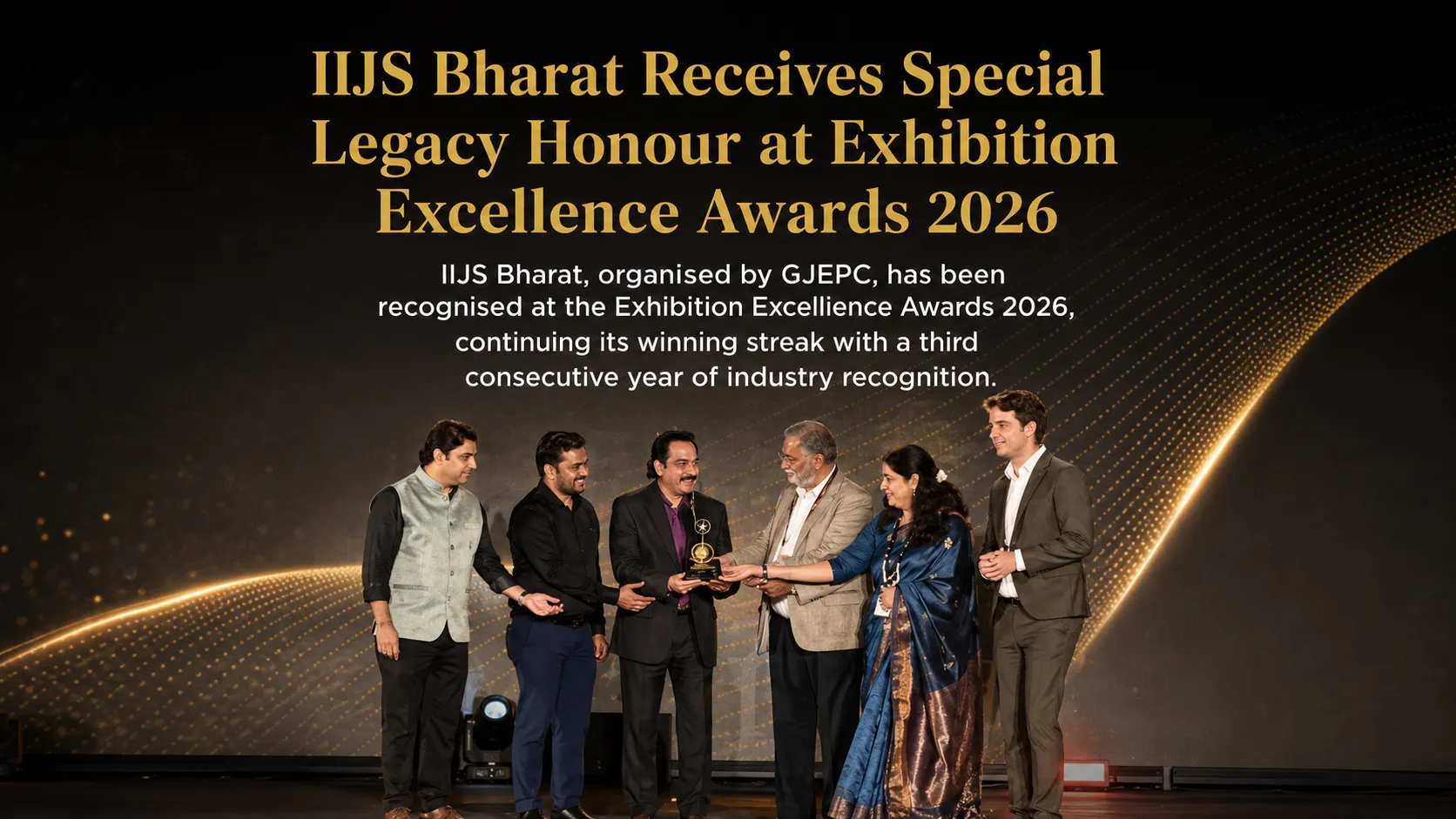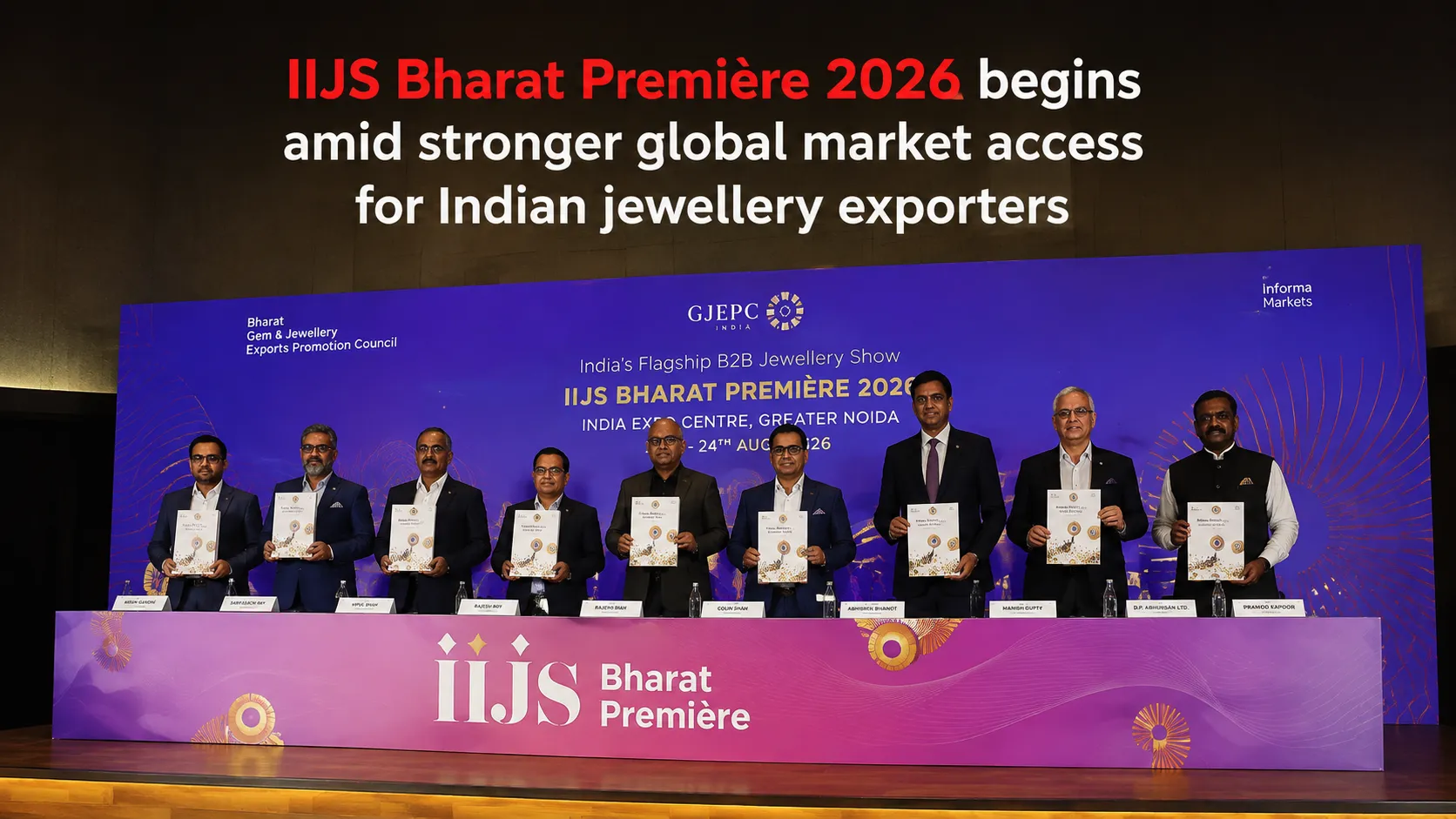
India's flagship gem and jewellery trade exhibition, IIJS Bharat Premiere, opened this week across two venues in Mumbai, marking the twenty-fifth anniversary edition of a show that has grown into one of the world's most influential business-to-business platforms for the global jewellery industry. Spanning more than one hundred thirty-five thousand square metres of exhibition space and featuring upwards of two thousand one hundred exhibitors across roughly three thousand six hundred stalls, the exhibition is expected to draw more than fifty thousand visitors over its run, including more than two thousand seven hundred international buyers representing over eighty countries — a buyer base in which Gulf markets, and the United Arab Emirates in particular, continue to occupy an outsized and strategically important position.
The exhibition runs at the Jio World Convention Centre in Mumbai's Bandra Kurla Complex from August 5 to 9, with a parallel venue at the Bombay Exhibition Centre in Goregaon running from August 6 to 10 hosting the show's continuation alongside the India Gem and Jewellery Machinery Expo, a concurrent event focused specifically on the manufacturing technology and precision engineering equipment that underpins India's jewellery production base. Running the two shows concurrently reflects organisers' recognition that international buyers increasingly want visibility not only into finished jewellery products, but into the manufacturing infrastructure and technological capability that allows Indian producers to deliver at the scale, consistency and price competitiveness that has made the country the preferred sourcing destination for a large share of the world's cut and polished diamonds and finished jewellery.
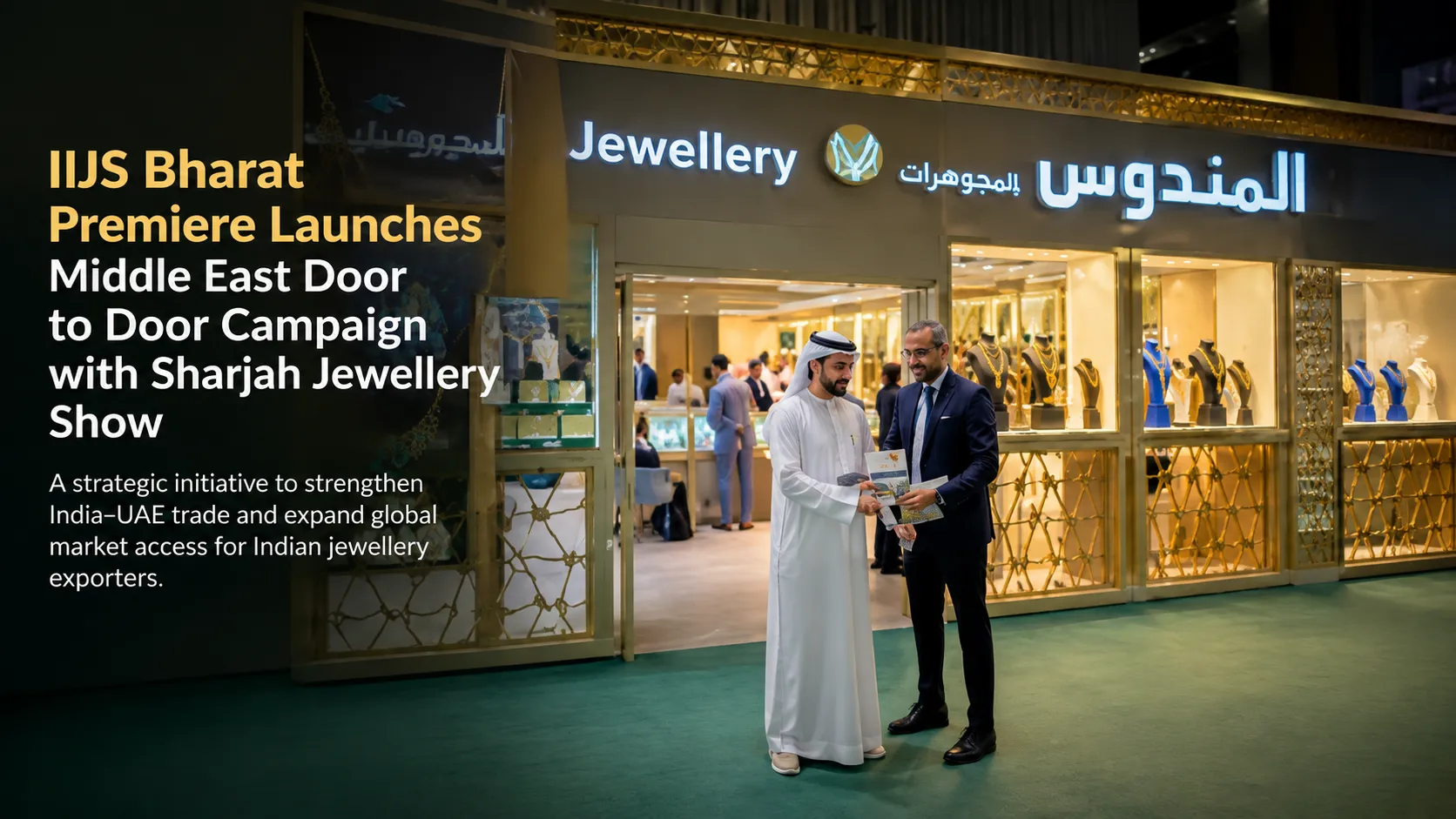
For the UAE specifically, and for the broader community of Indian-origin jewellery entrepreneurs who have built substantial trading and retail operations across the Gulf over recent decades, IIJS Bharat Premiere functions as considerably more than a routine trade show stop on the international exhibition calendar. Dubai in particular has developed into one of the world's most significant jewellery and precious metals trading hubs in its own right, with its Gold Souk and broader jewellery trading district built substantially on the foundations laid by generations of Indian-origin traders and manufacturers who established operations in the emirate as it grew into a regional and eventually global trading centre. The relationship between India's manufacturing base and the UAE's trading and retail infrastructure has become deeply symbiotic over the decades, with a significant share of the raw and semi-finished product flowing through Mumbai's exhibition halls each year ultimately finding its way into Dubai's retail and re-export channels, from where it reaches consumers across the wider Gulf region, Europe and beyond.
Addressing the exhibition's opening, Kirit Bhansali, Chairman of the Gem and Jewellery Export Promotion Council, framed the anniversary edition as reflecting the global industry's continued confidence in Indian craftsmanship, manufacturing scale and innovation capability, while also pointing to India's growing ambitions to move beyond its traditional role as a cutting and polishing centre toward becoming a more significant trading hub for rough diamonds in its own right. Central to that ambition is a proposed fifteen-year tax exemption for rough diamond sales conducted through India's Special Notified Zones, a measure introduced as part of the Taxation and Other Laws (Amendment) Bill, 2026, currently before India's Parliament. Bhansali described the proposed exemption as a landmark structural reform for the industry, noting that India has historically cut and polished the overwhelming majority of the world's diamonds without ever developing a comparable domestic trading market for rough stones — a gap the proposed tax measure is explicitly designed to help close.
If implemented, the tax exemption would carry direct implications for Gulf-based trading networks that have historically routed significant volumes of rough diamond trade through established hubs such as Dubai and Antwerp before those stones ultimately reach Indian cutting and polishing centres, primarily concentrated around Surat in Gujarat. A more competitive domestic trading environment within India's Special Notified Zones could, over time, redirect a portion of that rough diamond trading activity directly into the Indian market, a shift that would carry significant implications for the many Indian-origin diamond and jewellery trading houses that have built substantial operations in Dubai specifically because of its longstanding role as a rough stone trading and re-export hub serving the Indian cutting industry. Industry observers note that any such redirection would likely unfold gradually rather than abruptly, given the deep institutional relationships, financing arrangements and logistical infrastructure that Gulf-based trading houses have built up over decades of operation, but the proposed policy shift nonetheless represents one of the more consequential structural changes under discussion within India's gem and jewellery trade policy in recent years.
Beyond the policy discussion, the exhibition itself continues to serve its core function as the primary annual meeting point connecting India's vast and highly fragmented jewellery manufacturing base — which includes everything from large, vertically integrated export houses to smaller family-run workshops specialising in particular craft techniques or regional design traditions — with the global network of buyers, distributors and retailers who source from India each year. For Gulf-based buyers specifically, the concurrent running of the machinery exposition alongside the main jewellery show offers an additional layer of value, allowing manufacturing-focused buyers and investors to evaluate not just finished product but the underlying production technology, automation capability and precision engineering standards that increasingly differentiate competitive Indian manufacturers from lower-cost but less technologically sophisticated regional competitors.
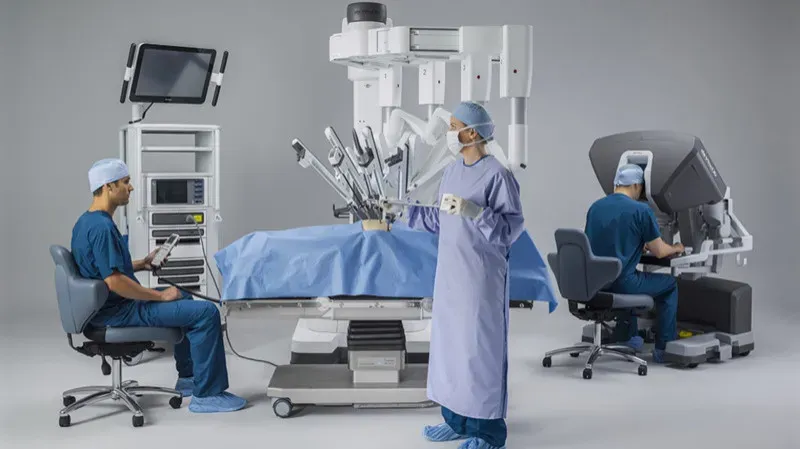
The machinery exposition itself features two hundred forty-nine exhibitors spread across three hundred forty-eight stalls, presenting what organisers describe as the latest advances in jewellery manufacturing automation, precision engineering tooling and production equipment — a segment of the industry that has grown considerably in importance as Indian manufacturers have sought to maintain cost competitiveness against a backdrop of rising labour costs and increasingly stringent quality and sustainability expectations from international buyers, particularly in Western markets where consumer and regulatory scrutiny of jewellery supply chains has intensified considerably over recent years around questions of ethical sourcing, labour conditions and environmental impact.
Speaking at a separate session addressing the exhibition, Chandrashekhar Bawankule, Maharashtra's Minister of Revenue, underscored the state government's continued support for the exhibition's growth, reflecting the significant economic weight the gem and jewellery sector carries within Maharashtra's broader industrial economy, given Mumbai's longstanding role as the commercial and trading headquarters for an industry whose actual manufacturing base is more heavily concentrated in Gujarat but whose trading, exhibition and financial infrastructure has remained centred in Mumbai for generations.