
FundingLatest Deals5 MIN READ

Imprint Raises $130 Million at a $1.9 Billion Valuation as Co-Branded Cards for Kroger, Shell and Fanatics Fuel Rapid Growth

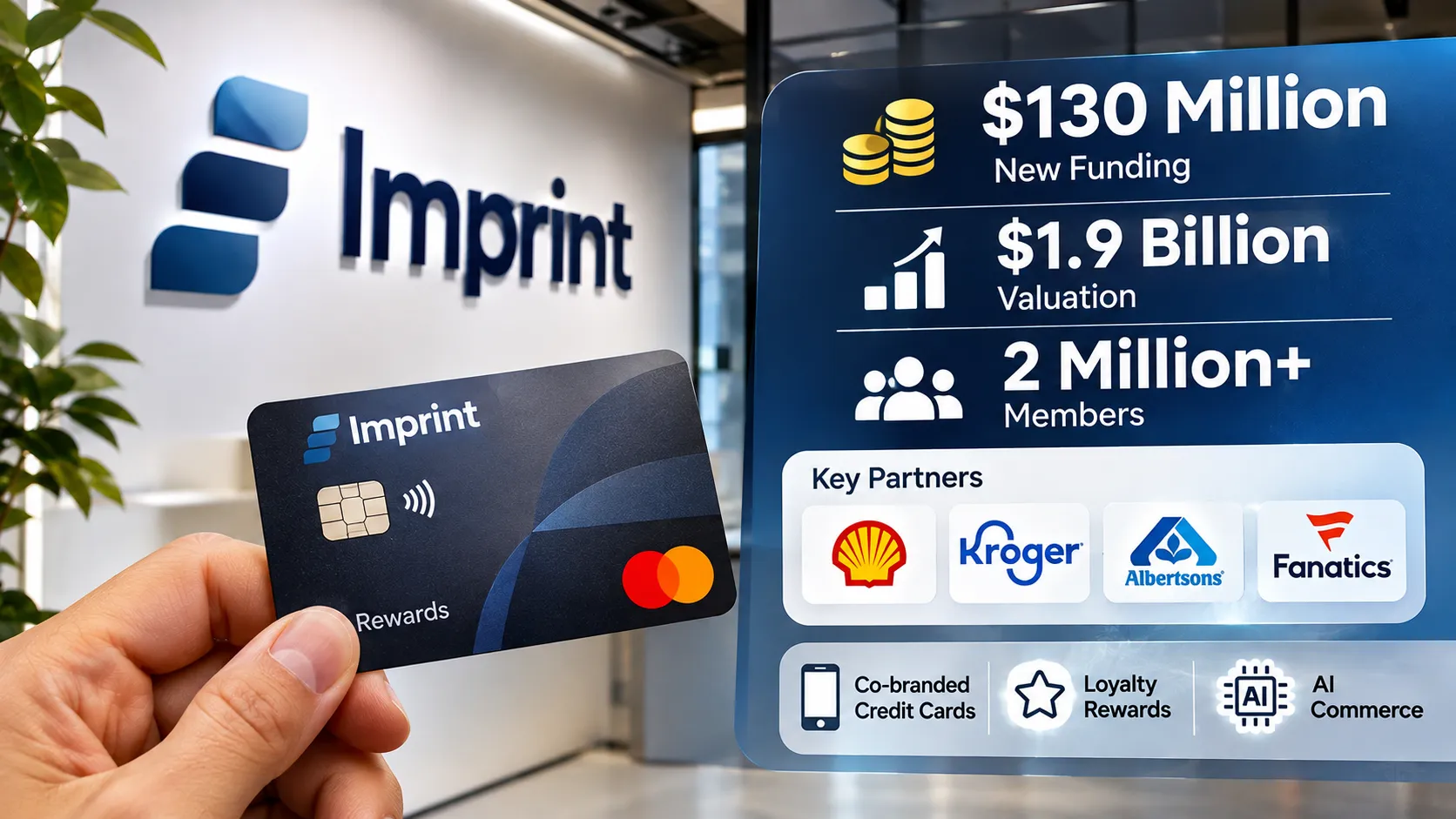
New York-based fintech Imprint, which builds co-branded credit cards and loyalty programmes for brands, said on November 11 it had raised $130 million led by Khosla Ventures at a valuation of about $1.9 billion, up from $1.2 billion. It has more than 2 million members, and founder Daragh Murphy expects GAAP revenue of about $400 million this year.

By Nisha Omkumar · Author12 November 2026New
Imprint Raises $130 Million at a $1.9 Billion Valuation as Co-Branded Cards for Kroger, Shell and Fanatics Fuel Rapid Growth

The humble store credit card is having a technology makeover, and investors are betting heavily that a startup called Imprint can take a large share of the market.

Imprint, which builds co-branded credit cards and loyalty programmes for retailers, airlines and other brands, announced on Wednesday, November 11, that it had raised $130 million at a valuation of about $1.9 billion, according to Securities.io. The round was led by existing investor Khosla Ventures, with participation from Hedosophia, Ribbit Capital, Spice and Thrive Capital, and new investor Positive Sum, the firm co-founded by podcast host Patrick O'Shaughnessy.

The valuation is up from $1.2 billion at the company's previous round, according to Upstarts Media, which first reported the funding, and from $240 million three years ago.

What Imprint does

Co-branded credit cards, which carry a brand's name and offer rewards linked to its products, are a large and lucrative business in the United States. Traditionally, they have been issued by big banks such as JPMorgan Chase, Citi and Synchrony. Imprint offers brands a technology platform to launch and manage these cards, with modern apps, personalised rewards and integration with the brands' own loyalty programmes.

"Imprint helps brands create financial products to earn a place in their customers' everyday lives," founder and chief executive Daragh Murphy said, according to Securities.io. Murphy argues that as more customer interactions become digital and personalised, individual customer relationships become more valuable to brands.

The brand roster

Imprint has signed a string of large partners. It launched the Shell Performance Elite World Mastercard in May 2026, offering rewards on fuel, electric vehicle charging, dining and groceries, according to Securities.io. Kroger, the US supermarket chain, launched its Rewards World Elite Mastercard with Imprint in September, and Albertsons launched the Albertsons forU American Express Card in October, offering rewards at more than 2,200 Albertsons stores.

On November 9, Fanatics, the sports merchandise and collectibles company, unveiled a co-branded American Express card powered by Imprint, with a US waitlist and invitations to apply expected later in 2026. The card offers FanCash rewards and more than 500 designs inspired by athlete trading cards.

Imprint's earlier partners include H-E-B, the Texas supermarket chain, according to Upstarts Media.

Rapid growth

Imprint's growth has been rapid. The company has more than 2 million members, up from about 15,000 cardholders three years ago, according to Upstarts Media. Murphy expects year-end GAAP revenue of about $400 million, up 150%, while headcount has grown by only about 30%.

"I don't think there's another fintech beyond Ramp that's growing at the speed and scale that we're growing at," Murphy told Upstarts Media.

Imprint's partner brands represent more than $500 billion in annual US consumer spending, according to Securities.io. Total cardholder spending across its portfolio more than doubled between 2025 and 2026, and the share of spending on Imprint cards at partner checkouts tripled over the past year.

Funding the cards

Issuing credit cards requires large amounts of capital to fund customer balances. Imprint has secured $1.5 billion in incremental warehouse capacity, a form of credit facility used to fund card receivables, and its second AAA-rated asset-backed securitisation was priced with investor demand nearly five times the offering size, according to Securities.io. Strong demand for its asset-backed securities suggests institutional investors are comfortable with the credit quality of Imprint's card portfolio.

“Imprint helps brands create financial products to earn a place in their customers' everyday lives.”
— Daragh Murphy, Founder and CEO, Imprint

AI and agentic commerce

Imprint plans to use the new funds to support more payment options and AI capabilities. It has released a Model Context Protocol (MCP) server that allows AI agents to securely access members' rewards, virtual cards and transaction history, with tools for members to review and authorise purchases initiated by agents, according to Securities.io.

So-called agentic commerce, in which AI assistants shop and make purchases on behalf of consumers, is a growing area of interest for payments companies. Imprint is positioning its cards to work within this emerging ecosystem, so that brand loyalty programmes remain relevant when AI agents make buying decisions.

The company also said its internal AI platform had tripled its engineering velocity over the past 18 months.

Serving new-to-credit customers

Alongside the funding, Imprint launched Imprint Access, a product for customers who are new to credit or rebuilding their credit, according to Securities.io. It is backed by a refundable deposit, offers the same ongoing rewards as participating brands' unsecured cards, and is designed to help customers progress towards an unsecured card.

The competitive landscape

Imprint competes with large banks that dominate the co-branded card market, as well as other fintech companies. Winning partners such as Kroger, Albertsons and Shell suggests that brands are willing to move away from traditional bank issuers in search of better technology and more flexible programmes.

However, credit card lending carries risks. If the US economy slows and unemployment rises, credit losses could increase. Rising interest rates, which the Federal Reserve may push higher, also affect the cost of funding card balances.

3b656635-1e12-414f-9bfe-83754e0cbd83.png

Lessons for India

India's credit card market is much smaller than that of the United States, but co-branded cards are growing rapidly. Banks have partnered with e-commerce platforms, airlines, fuel retailers and fintech companies to launch co-branded cards, such as those linked to Amazon, Flipkart, Swiggy and Tata Neu. Indian fintech companies have also built platforms that help banks and brands launch cards.

Imprint's model, in which a technology platform partners with brands to deliver integrated loyalty and payments, offers a template for Indian fintech companies, although India's regulatory framework requires card issuance to be done by regulated banks and non-banking financial companies.

Why brands want their own cards

For retailers and consumer brands, co-branded cards are a powerful loyalty tool. Customers who carry a brand's card tend to shop more often and spend more, and the card provides rich data on spending patterns. Brands also share in the revenue generated by the card, including interchange fees and interest.

Historically, brands have had limited control over the design and technology of their cards, which were managed by bank partners. Imprint's pitch is that brands can have a modern, integrated product that feels like part of their own app and loyalty programme, while Imprint and its bank partners handle the regulatory and financial complexity.

What comes next

Imprint will focus on launching the Fanatics card, expanding Imprint Access and building its AI capabilities. Investors will watch whether its rapid growth in members and spending translates into sustainable profitability, and whether it can continue to win large brands from established banks.

TagsImprintDaragh Murphyco-branded credit cardsloyalty programmesfintechKhosla VenturesRibbit CapitalThrive CapitalPositive SumKrogerShellAlbertsonsFanaticsAmerican Expressagentic commerceModel Context Protocolunicornventure capitalconsumer creditinvestors

Reader reviews

Sign in to rate and review this article.
Loading reviews…