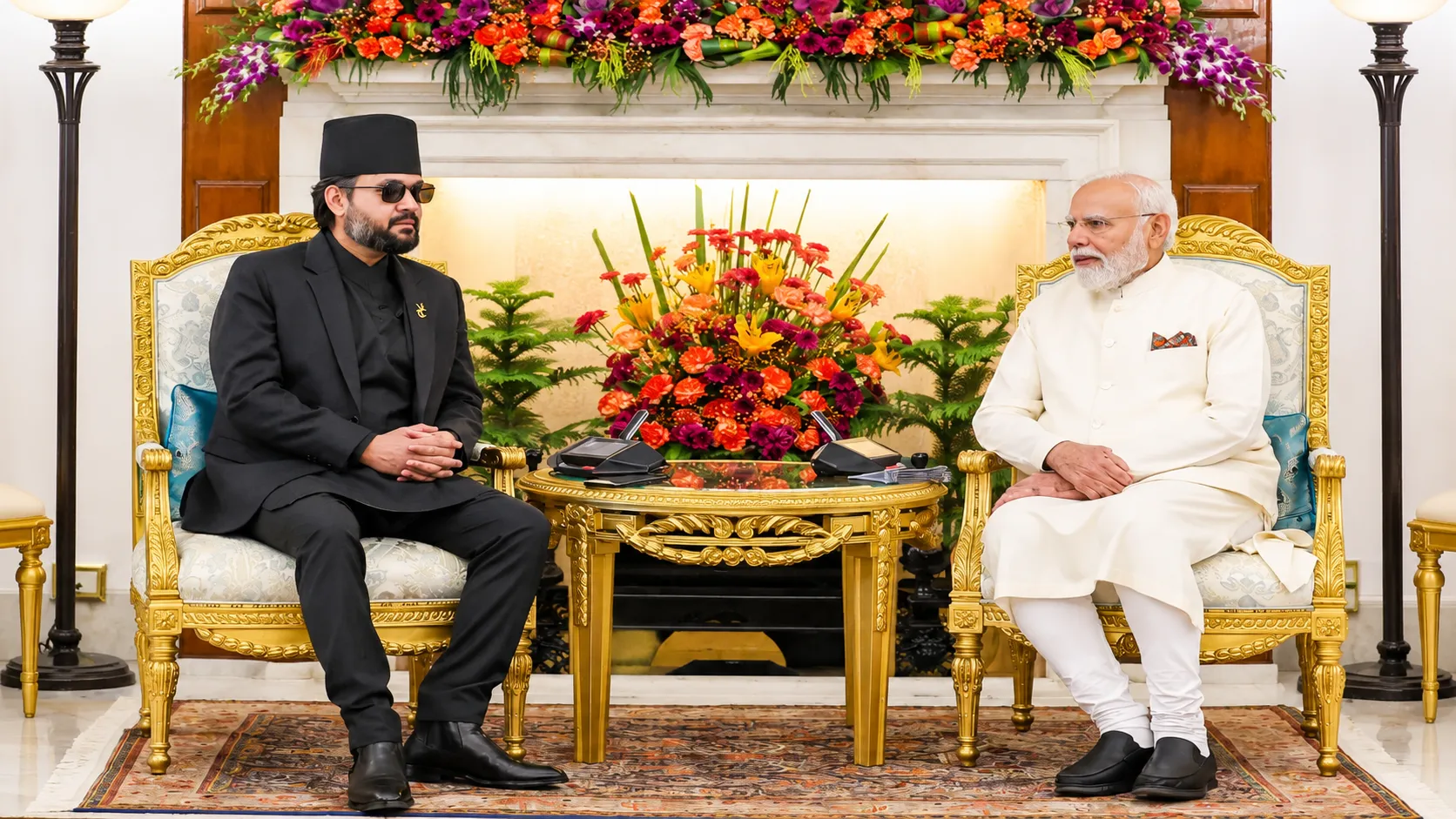
India has made one of its largest financial commitments to a neighbouring country in recent years, as it moves to deepen economic ties with Nepal following a devastating flood season.
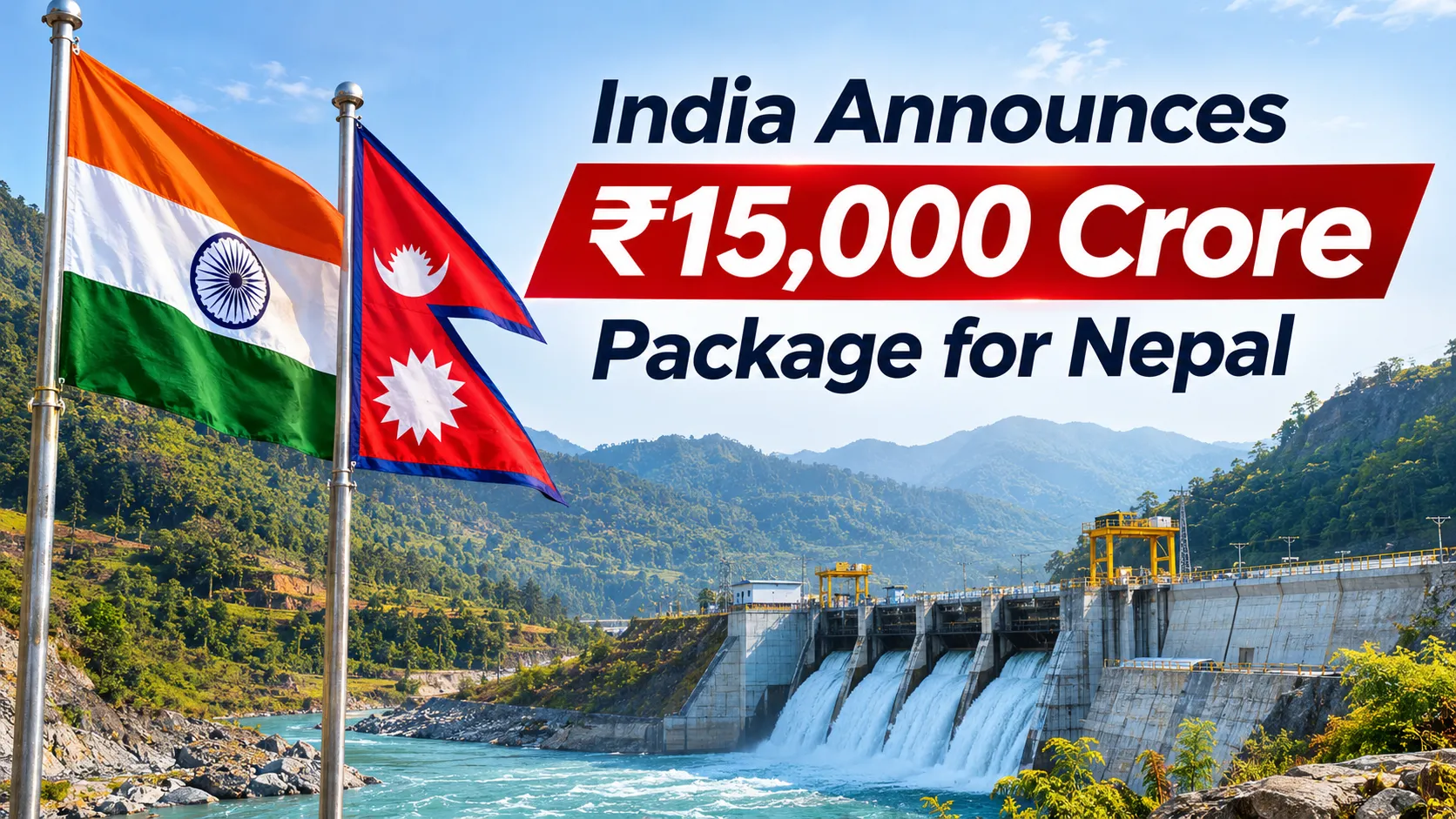
India announced a ₹15,000 crore, or roughly NPR 24,000 crore, economic cooperation package for Nepal on Monday, November 23, as Nepal's Prime Minister Balendra Shah concluded a state visit to New Delhi. The package includes a ₹3,500 crore grant for reconstruction after the August 2026 floods along the Rasuwa and Bhote Koshi rivers and for new infrastructure projects, and an ₹11,500 crore line of credit for energy sector projects.
The line of credit is denominated in Indian rupees, allowing Nepal to repay in rupees and avoid exchange rate risk, since the Nepali rupee is pegged to the Indian currency.
A wide-ranging visit
The visit ended with the adoption of a joint vision document titled "Viksit Bharat and Samunnat Nepal," built on ten pillars including economic partnership, connectivity, energy, water, governance, technology, education, health and agriculture.
The two sides agreed that the 1950 Treaty of Peace and Friendship, which has long been a sensitive issue in Nepal, may be revised by mutual consent. They also set up a high-level monitoring group that will meet at least every six months to track implementation.
Energy at the centre
Energy cooperation was the most significant economic outcome. The two prime ministers laid the foundation stone for the 669 MW Lower Arun Hydroelectric Project, one of several large hydropower projects being developed in Nepal with Indian participation.
Nepal has enormous hydropower potential because of its Himalayan rivers, but has historically struggled to develop it due to limited capital, infrastructure and access to markets. India has become the main buyer of Nepal's surplus electricity, and power exports have grown into one of Nepal's most important sources of foreign exchange.
For India, imports of hydropower from Nepal help meet growing electricity demand with clean energy, supporting its renewable energy targets. Cross-border transmission lines and power trade agreements have expanded in recent years, and the new line of credit for energy projects is expected to accelerate this trend.
Connectivity and trade
The visit also produced several connectivity outcomes. The leaders flagged off an Ayodhya–Janakpur rail service, linking two cities of great religious significance, and opened a motorable bridge over the Mahakali river.
Nepal received transit access through Deendayal Port at Kandla in Gujarat. As a landlocked country, Nepal depends on Indian ports for most of its overseas trade, and access to additional ports gives its traders more options and potentially lower costs.
India also agreed to establish an offshore IIT campus and an agro-industrial park in Nepal.
Space and other agreements
India and Nepal exchanged eight memorandums of understanding during the visit. One, between the Indian Space Research Organisation and Nepal's Ministry of Information and Communication, covers a satellite communication network using the South Asia Satellite, GSAT-9. Others cover forensic science, police training, governance, Ayurveda and urban development.
The flood context
The August 2026 floods along the Rasuwa and Bhote Koshi rivers caused significant damage in northern Nepal, affecting infrastructure, homes and livelihoods. The ₹3,500 crore grant is intended to support reconstruction, reflecting India's role as a first responder in disasters in its neighbourhood.
Nepal had sought more than $2 billion in loans and grants from India ahead of the visit, according to reports in the Kathmandu Post. The package announced on Monday is in line with those expectations.
A new leader in Kathmandu
Balendra Shah, widely known as Balen, rose to prominence as the mayor of Kathmandu, where he gained a reputation as an independent, reform-minded politician with a strong following among young Nepalis. His visit to India as prime minister was closely watched for signals of how he would manage relations with Nepal's two giant neighbours, India and China.
The outcome suggests both sides are keen to build a pragmatic, economically focused relationship.
Strategic significance
Nepal occupies a strategic position between India and China. Beijing has expanded its economic presence in Nepal in recent years through infrastructure projects and investment under its Belt and Road Initiative. India's package can be seen in part as an effort to remain Nepal's most important economic partner.
The commitment to revisit the 1950 treaty is also significant. Many in Nepal view the treaty as outdated, and its revision has been discussed for years without progress. Agreement to revise it by mutual consent could remove a long-standing irritant in the relationship.
What it means for Indian businesses
The package and agreements create opportunities for Indian companies in construction, power generation and transmission, engineering and infrastructure. Indian public sector companies such as SJVN and NHPC are already involved in hydropower projects in Nepal, and private companies may find openings in new projects funded by the line of credit.
Improved connectivity and transit arrangements could also support trade between the two countries, benefiting exporters in sectors such as consumer goods, pharmaceuticals, steel and petroleum products.
The diaspora connection
Millions of Nepalis live and work in India, and the open border between the two countries allows free movement of people. Remittances from Nepali workers in India are an important source of income for many families in Nepal. Stronger economic ties could create more opportunities on both sides of the border.
Challenges ahead
India's development projects in Nepal have faced delays in the past, due to land acquisition, environmental approvals, political changes and coordination issues. The high-level monitoring group is intended to address implementation bottlenecks, but its effectiveness will be tested over time.
Hydropower trade economics
Nepal has been exporting surplus electricity to India during the monsoon months, when river flows are highest, earning valuable foreign exchange. India has approved Nepali power for sale in its electricity exchanges and agreed to import increasing volumes over the coming decade, creating a predictable market that makes new hydropower projects more bankable for investors and lenders.
Watching the implementation
Analysts say the success of the package will depend on how quickly funds reach projects on the ground. Past lines of credit to neighbouring countries have sometimes been slow to disburse, and the monitoring mechanism agreed during the visit is intended to avoid such delays.
What comes next
Attention will now turn to implementation, including the disbursement of the flood reconstruction grant, the identification of energy projects under the line of credit and progress on the Lower Arun project. The first meeting of the high-level monitoring group will offer an early indication of whether the ambitions of the visit translate into results.