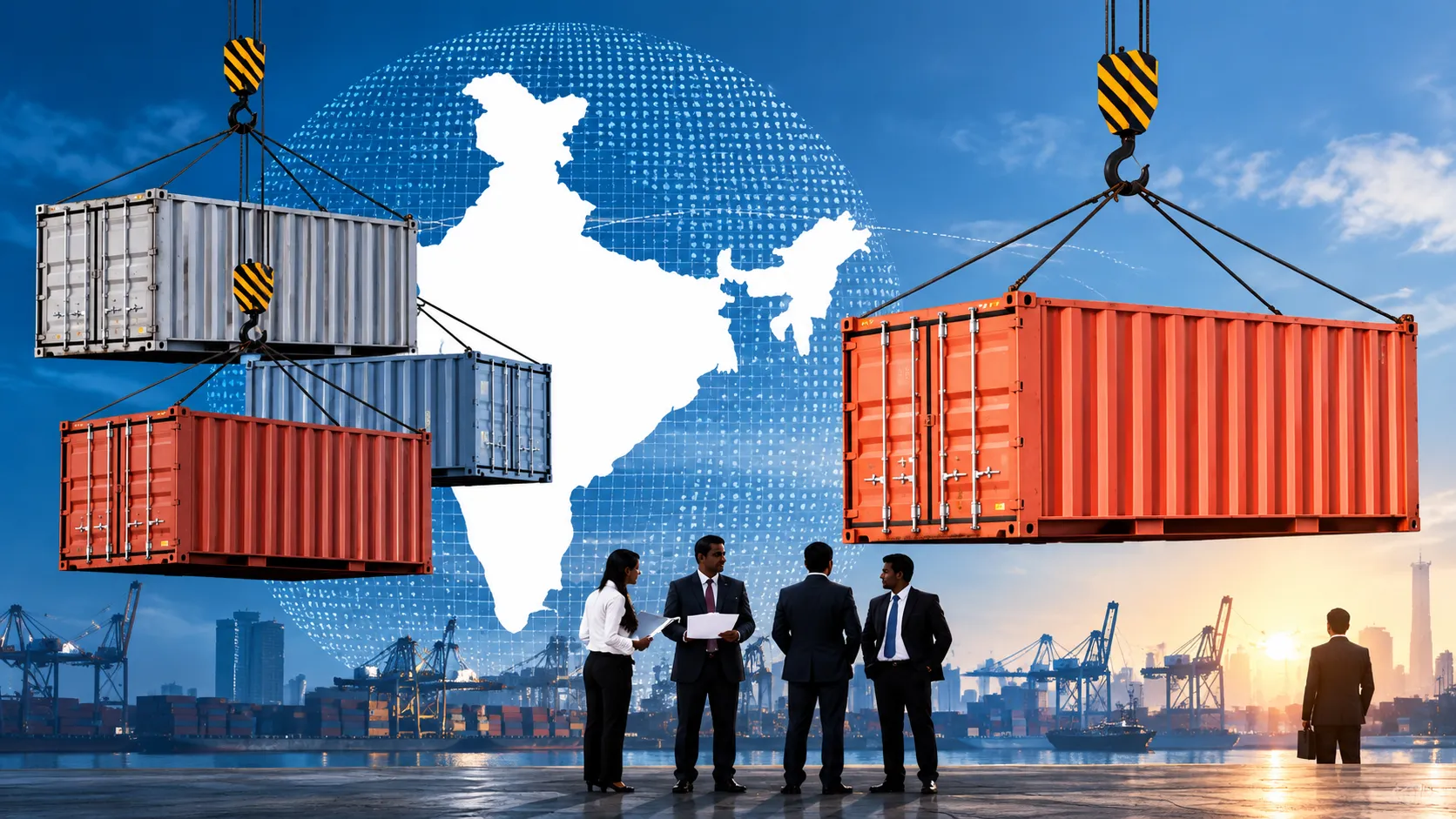
Almost every product that crosses the oceans, from smartphones and textiles to auto parts and pharmaceuticals, travels in a steel shipping container. India, despite its ambitions to become a global manufacturing and export hub, makes very few of them. The government now wants to change that.
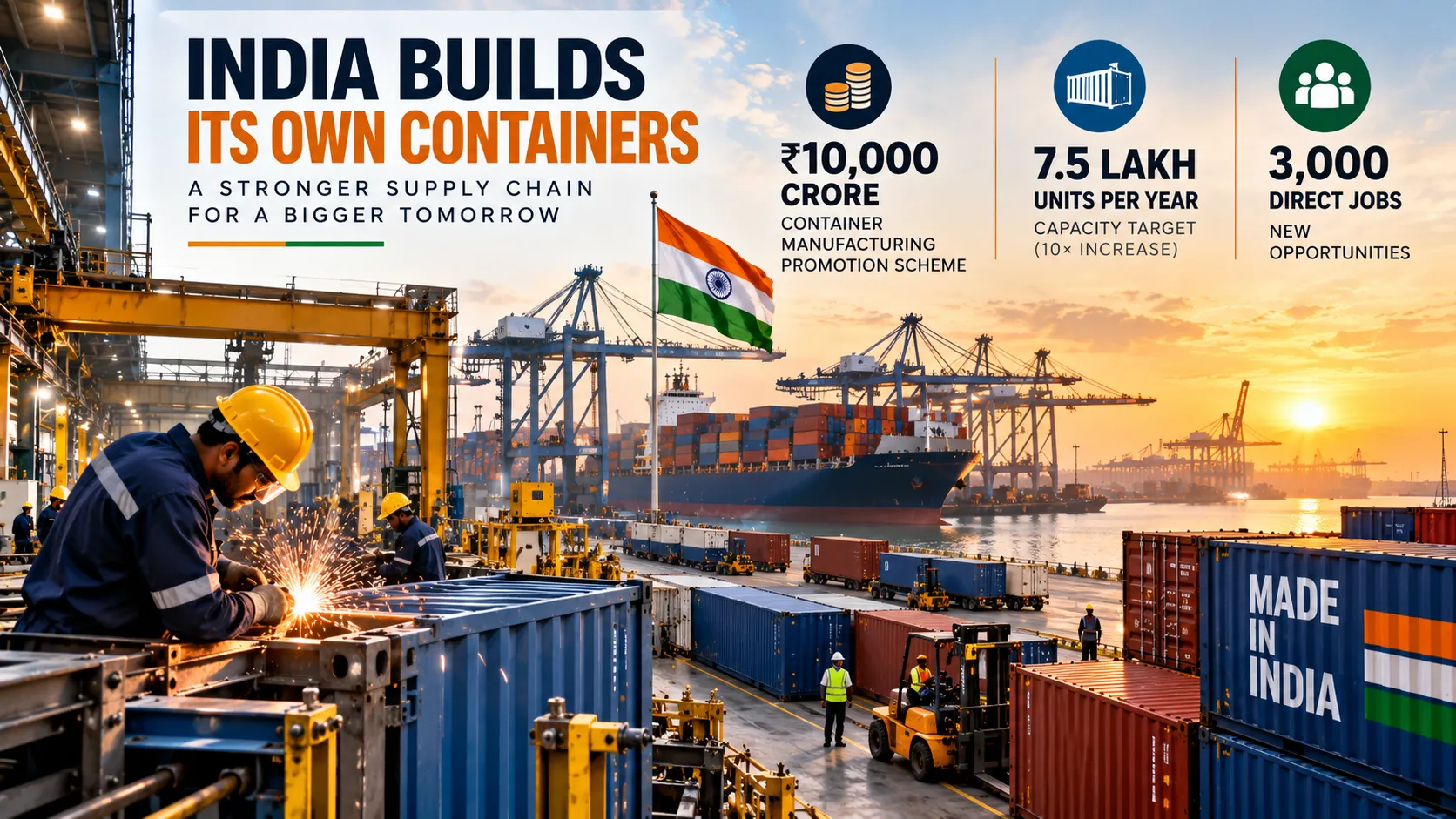
The Union Cabinet has approved a ₹10,000 crore Container Manufacturing Promotion Scheme that will run until the financial year 2039-40, according to StartupTalky on Thursday, October 29. The scheme offers interest support on loans for new container factories and helps manufacturers close the price gap with imported containers.
The government aims to raise India's container manufacturing capacity about tenfold, to 7.5 lakh units a year, and expects the scheme to create about 3,000 direct jobs.
Why containers matter
Shipping containers are the backbone of global trade. Standardised steel boxes, typically 20 or 40 feet long, they can be moved seamlessly between ships, trains and trucks, dramatically reducing the cost and time of transporting goods. The global container fleet numbers tens of millions of units, and demand rises and falls with the volume of world trade.
The vast majority of the world's shipping containers are manufactured in China, which has built a dominant position over decades through scale, low costs and integrated supply chains for steel and components. A small number of Chinese manufacturers account for most global production.
Lessons from the pandemic
India's dependence on imported containers became painfully clear during the Covid-19 pandemic. In 2020 and 2021, disruptions to global shipping created a severe shortage of containers. Empty containers piled up in some parts of the world while exporters elsewhere could not find boxes to ship their goods. Freight rates soared, and Indian exporters faced long delays and sharply higher costs.
The experience highlighted the strategic risk of relying on a single country for critical logistics equipment. It prompted Indian policymakers to consider how to build domestic manufacturing capacity, both to reduce dependence on China and to ensure that Indian exporters have reliable access to containers.
How the scheme works
The scheme provides two main forms of support. First, it offers interest subvention, reducing the cost of loans that companies take to build new container factories. Lower financing costs make it easier for manufacturers to invest in capacity, particularly given the scale required to compete with established producers.
Second, it helps close the price gap between domestically manufactured containers and imports. Chinese manufacturers benefit from economies of scale and established supply chains, allowing them to produce containers at lower cost. Support to bridge this gap is intended to make Indian containers commercially viable while domestic manufacturers build scale and efficiency.
The long duration of the scheme, running until 2039-40, is designed to give investors confidence that support will be available for long enough to justify building factories.
A tenfold expansion
Raising capacity to 7.5 lakh units a year would represent a major expansion of India's container manufacturing industry. Current domestic production is limited, with a few companies producing containers in relatively small volumes. Building capacity on this scale would require significant investment in factories, equipment and skilled labour, as well as reliable supplies of steel and components.
India's steel industry, one of the largest in the world, can provide the primary raw material. Companies such as Tata Steel, JSW Steel and Steel Authority of India produce the types of steel used in containers, though specialised grades may require further development.
Part of a broader maritime push
The container scheme is part of a broader government effort to strengthen India's maritime sector. The government has announced policies to support shipbuilding, ship repair and port development, aiming to make India a major maritime nation. Initiatives include financial assistance for shipbuilding, the creation of a maritime development fund and investments in major ports.
India's ports have expanded significantly in recent years, with new terminals and deep-water ports being developed on both coasts. The Vizhinjam port in Kerala, developed by the Adani Group, is India's first deep-water transshipment port, aimed at capturing cargo that currently passes through Colombo, Singapore and Dubai.
The China-plus-one opportunity
As global companies diversify their supply chains away from China, India hopes to attract manufacturing investment across sectors. Domestic container production would support this strategy by ensuring that exporters have reliable access to containers and by reducing logistics costs.
However, building a competitive container manufacturing industry will be challenging. Chinese manufacturers have decades of experience, massive scale and efficient supply chains. Indian manufacturers will need to achieve comparable quality and efficiency to compete, even with government support.
Jobs and investment
The expected creation of about 3,000 direct jobs is modest relative to the scale of the scheme, reflecting the capital-intensive nature of container manufacturing. However, the scheme could create additional indirect jobs in steel, components, logistics and services. The government will hope that the scheme attracts investment from both domestic companies and international manufacturers seeking to establish production in India.
Logistics costs
India's logistics costs have historically been higher than those of many competing economies, weighing on the competitiveness of its exports. The government's National Logistics Policy aims to reduce these costs through better infrastructure, digitisation and integration of transport modes. Reliable, affordable access to containers is an important part of efficient logistics, particularly for exporters in sectors such as textiles, engineering goods and agriculture.
Container Corporation of India (CONCOR), the state-owned rail logistics company, and private logistics firms operate large container fleets, and domestic production could reduce their equipment costs over time.
The fiscal question
At ₹10,000 crore over more than a decade, the scheme represents a relatively modest fiscal commitment compared with production-linked incentive schemes in sectors such as electronics and automobiles. Its success will depend on whether it can attract sufficient private investment and whether domestic manufacturers can become cost-competitive before support ends.
Critics of industrial subsidy schemes argue that they can lead to inefficient industries that depend on government support. Supporters argue that strategic industries require initial support to overcome the advantages of established competitors, and that the long-term benefits in supply security justify the cost.
What it means for exporters
For Indian exporters, the scheme offers the prospect of more reliable access to containers, particularly during periods of global disruption. With conflict in the Middle East affecting shipping routes and freight costs, supply chain resilience has become a priority for businesses and governments alike.
What comes next
The government is expected to issue detailed guidelines for the scheme, setting out eligibility criteria, application processes and the level of support available. Industry participants will study these guidelines to assess the commercial viability of investing in container manufacturing. The response from domestic and international manufacturers will determine whether India can achieve its ambition of a tenfold increase in capacity and reduce its dependence on imported containers.