FundingAnalysis5 MIN READ

India and Egypt Move Towards a Trade Pact as Goyal Pitches the Suez Canal Zone as a Gateway to Africa, the Middle East and Europe

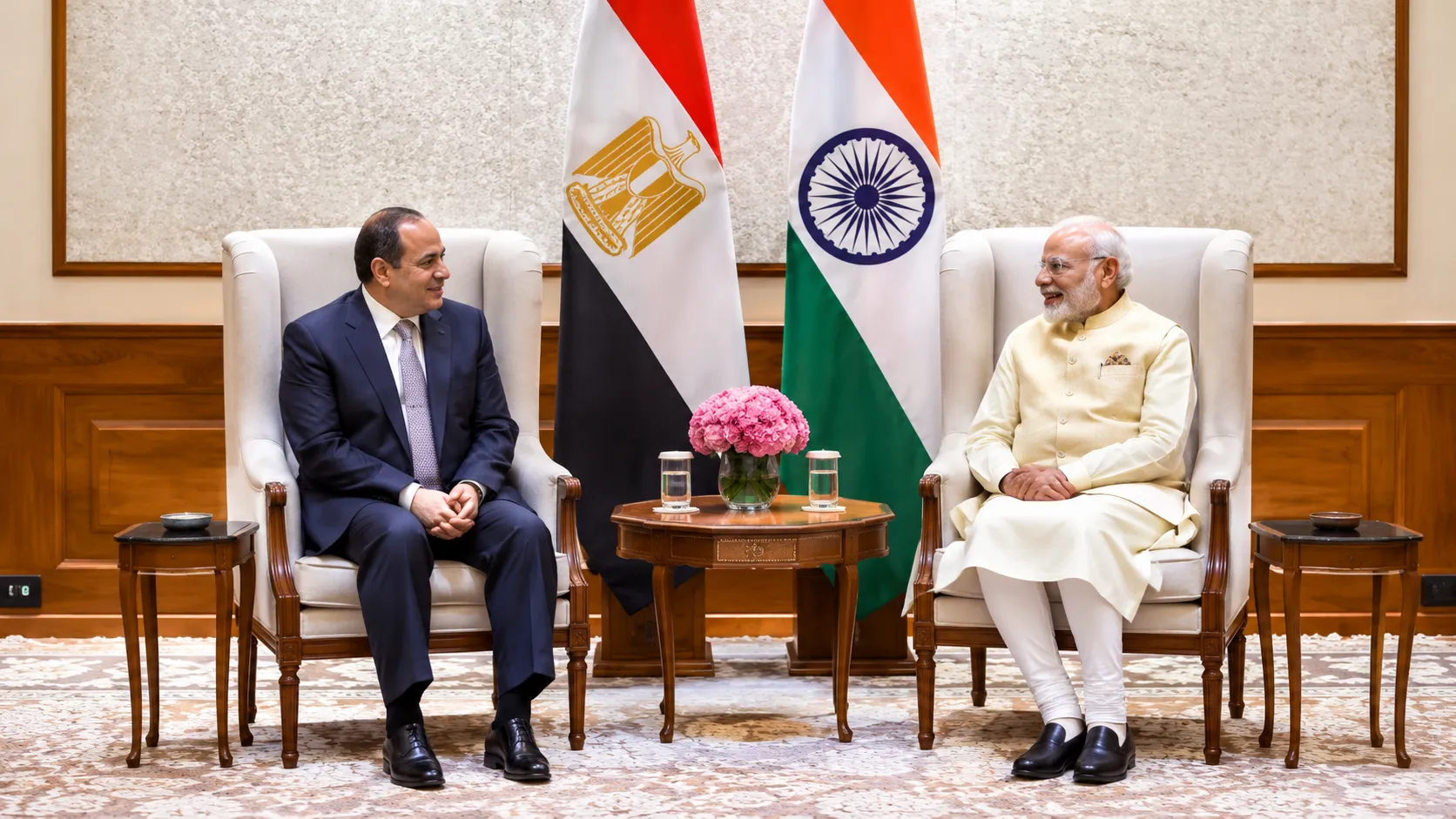
India and Egypt agreed in Cairo on November 15 to have officials draw up terms of reference for a possible preferential or free trade agreement, Commerce Minister Piyush Goyal said. Bilateral merchandise trade rose 64% to $5.04 billion in April-September 2026. Egypt offered land for a dedicated Indian business zone, and the two countries are holding their first startup forum.

By Shaym Kumar · Author16 November 2026New
India and Egypt Move Towards a Trade Pact as Goyal Pitches the Suez Canal Zone as a Gateway to Africa, the Middle East and Europe

India is looking to deepen its economic footprint at one of the world's most strategic crossroads.

India and Egypt agreed on Sunday, November 15, to have officials draw up terms of reference to assess a preferential trade agreement or a free trade agreement between the two countries, Commerce and Industry Minister Piyush Goyal said in Cairo, according to Punjab Kesari. Goyal was speaking at the India-Egypt Business Forum after the seventh meeting of the two countries' Joint Trade Committee.

Goyal said a trade agreement could improve market access and competitiveness for businesses in both countries. The two sides also plan to improve customs cooperation and explore mutual recognition agreements for testing agencies, which would allow products certified in one country to be accepted in the other.

Trade is booming

Bilateral merchandise trade between India and Egypt rose 64% year on year to $5.04 billion in April-September 2026, according to Punjab Kesari. In the 2025-26 financial year, India exported $3.87 billion of goods to Egypt and imported $2.60 billion.

Machinery and petroleum products were among India's major exports to Egypt, while crude petroleum and fertilisers were among its major imports. The surge in trade reflects growing demand for Indian goods in Egypt and India's need for energy and agricultural inputs.

A gateway to three continents

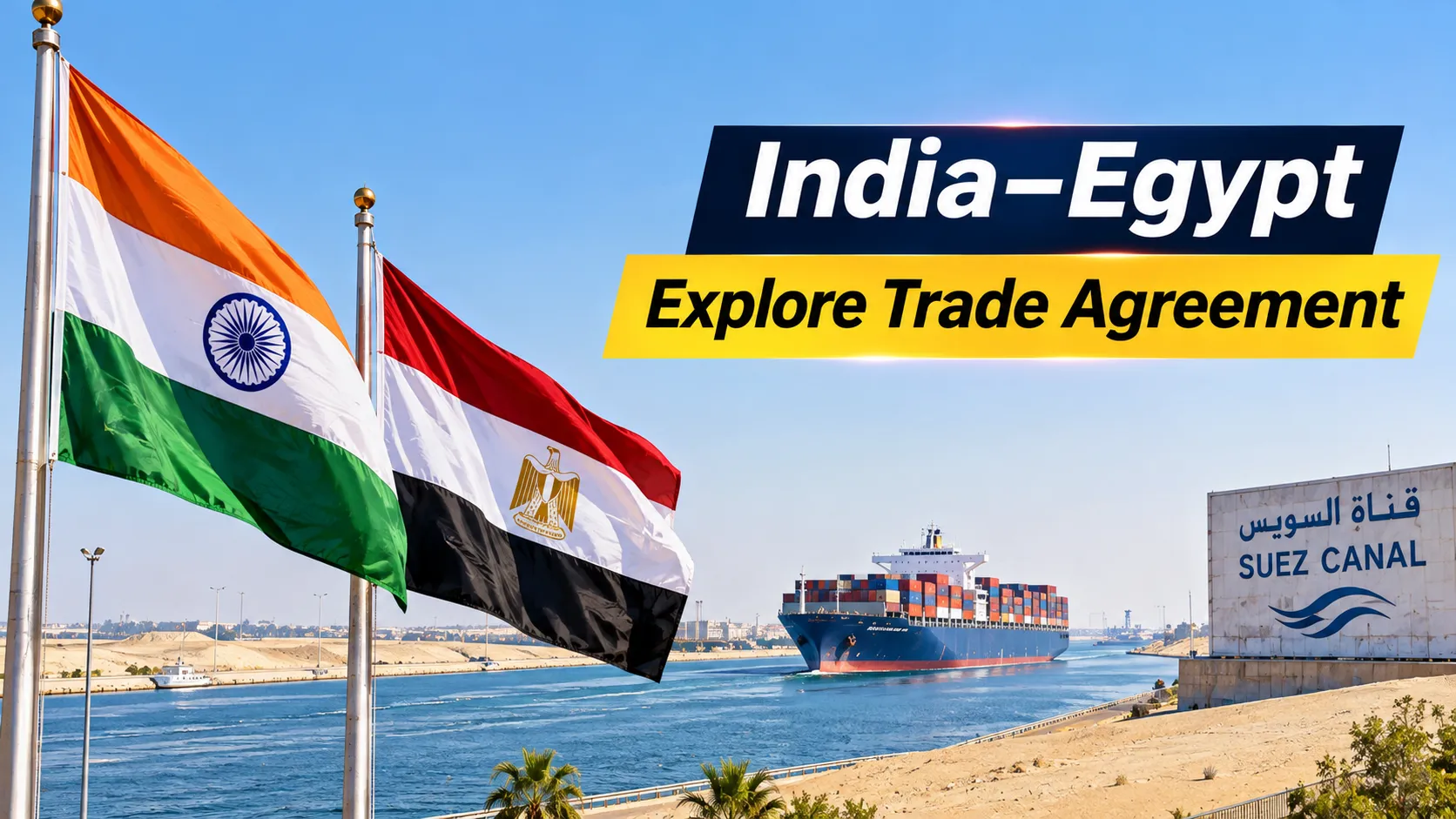
Goyal urged Indian companies to use Egypt as a base to reach markets in Africa, the Middle East and Europe. "Visit the Suez Canal Economic Zone," he told the business forum.

The Suez Canal Economic Zone, located along one of the world's busiest shipping routes, offers investors tax incentives, infrastructure and access to Egypt's trade agreements. Egypt has trade agreements with the European Union, Arab countries and African nations, which could allow goods made in Egypt to reach these markets on preferential terms.

Egypt's Minister of Investment and Foreign Trade, Mohamed Farid Saleh, proposed a dedicated zone for joint business operations between the two countries, according to Punjab Kesari. Egypt offered land in the Suez Canal Economic Zone, the Golden Triangle mining and industrial area, or elsewhere.

Startups join the agenda

A startup partnership agreement is set to be signed on Monday, November 16, alongside the first Egypt-India Startup Forum, according to Punjab Kesari. The initiative aims to connect founders, investors and innovation ecosystems in the two countries.

India has one of the world's largest startup ecosystems, with more than 100 unicorns, while Egypt has emerged as one of Africa's leading startup hubs, particularly in fintech, logistics and e-commerce. Collaboration could help Indian startups expand into Africa and the Middle East, and give Egyptian startups access to India's technology talent and large market.

Why Egypt matters to India

Egypt is a strategically important partner for India. Its location at the junction of Africa, Asia and Europe, and control of the Suez Canal, through which a significant share of global trade passes, make it a key link in supply chains connecting India with Europe.

The two countries have strengthened ties in recent years, elevating their relationship to a strategic partnership in 2023, when Egyptian President Abdel Fattah el-Sisi was chief guest at India's Republic Day celebrations. Cooperation has expanded in defence, energy, food security and infrastructure.

Indian companies already have a significant presence in Egypt, in sectors including chemicals, textiles, pharmaceuticals, automobiles and information technology.

“Visit the Suez Canal Economic Zone.”
— Piyush Goyal, India's Commerce and Industry Minister

India's trade agreement push

The talks with Egypt are part of a broader push by India to sign trade agreements with key partners. In recent years, India has concluded agreements with the United Arab Emirates, Australia, the European Free Trade Association and the United Kingdom, and has been negotiating with the European Union and others.

These agreements aim to boost Indian exports, attract investment and integrate India more deeply into global supply chains, particularly as companies diversify production away from China.

c13ca91b-ddb6-489d-9d4a-03275ce6bafd.png

The challenges

Negotiating a trade agreement can take years and requires balancing the interests of different industries. Egypt faces economic challenges, including high inflation, currency pressures and significant external debt, which could affect its capacity to increase imports. India, for its part, typically seeks to protect sensitive sectors such as agriculture.

Disruptions to shipping through the Red Sea and the Suez Canal, linked to regional conflicts, have also affected trade routes in recent years, raising costs and delays for companies shipping goods between Asia and Europe.

What it means for businesses

For Indian businesses, a trade agreement with Egypt could lower tariffs and simplify trade procedures, making Indian goods more competitive. The offer of a dedicated industrial zone could encourage Indian manufacturers to set up operations in Egypt to serve African and European markets.

For the Indian diaspora in Egypt and the wider Middle East and Africa, closer economic ties could create new business and employment opportunities.

What it means for the Global South

The India-Egypt partnership also reflects a broader trend of deepening economic cooperation among developing countries. Both are members of the BRICS group, which Egypt joined in 2024, and both have sought to strengthen economic ties with other emerging economies.

Energy and fertiliser security

Egypt's exports of crude petroleum and fertilisers to India matter for India's energy and food security. India is one of the world's largest importers of fertilisers, which are critical for its agriculture, and diversifying sources of supply reduces its vulnerability to disruptions in any single market.

For Egypt, India is a large and growing market for its natural resources and an important source of investment, technology and manufactured goods.

Pharmaceuticals and services

Indian pharmaceutical companies see Egypt and Africa as significant growth markets for affordable generic medicines. Indian IT and engineering services firms are also expanding in the Middle East and North Africa. A trade agreement with provisions on services and mutual recognition of standards could make it easier for these companies to operate.

Business groups in both countries have welcomed the renewed focus on trade, saying clearer rules and lower barriers would encourage more companies to invest. Indian firms already operating in Egypt have pointed to the country's location, labour costs and access to regional markets as advantages, while citing currency volatility and bureaucratic procedures as challenges.

What comes next

Officials from both countries will draft terms of reference to study the feasibility of a trade agreement. Progress on the startup partnership, the proposed industrial zone and customs cooperation will indicate how quickly the relationship can translate into concrete economic gains.

TagsIndia Egypt tradePiyush Goyalfree trade agreementpreferential trade agreementSuez Canal Economic ZoneCairoMohamed Farid SalehIndia-Egypt Business ForumstartupsAfricaMiddle EastEuropeexportspetroleumfertilisersmachinerymutual recognition agreementstrade policyglobal southinvestors

Reader reviews

Sign in to rate and review this article.
Loading reviews…

