NEW DELHI, Oct 8 — The Indian government has rejected Elon Musk's claim that his Starlink satellite internet service is being deliberately kept out of the country, describing the allegation as "baseless and misconceived" and insisting that its satellite communications framework is fair and non-discriminatory.
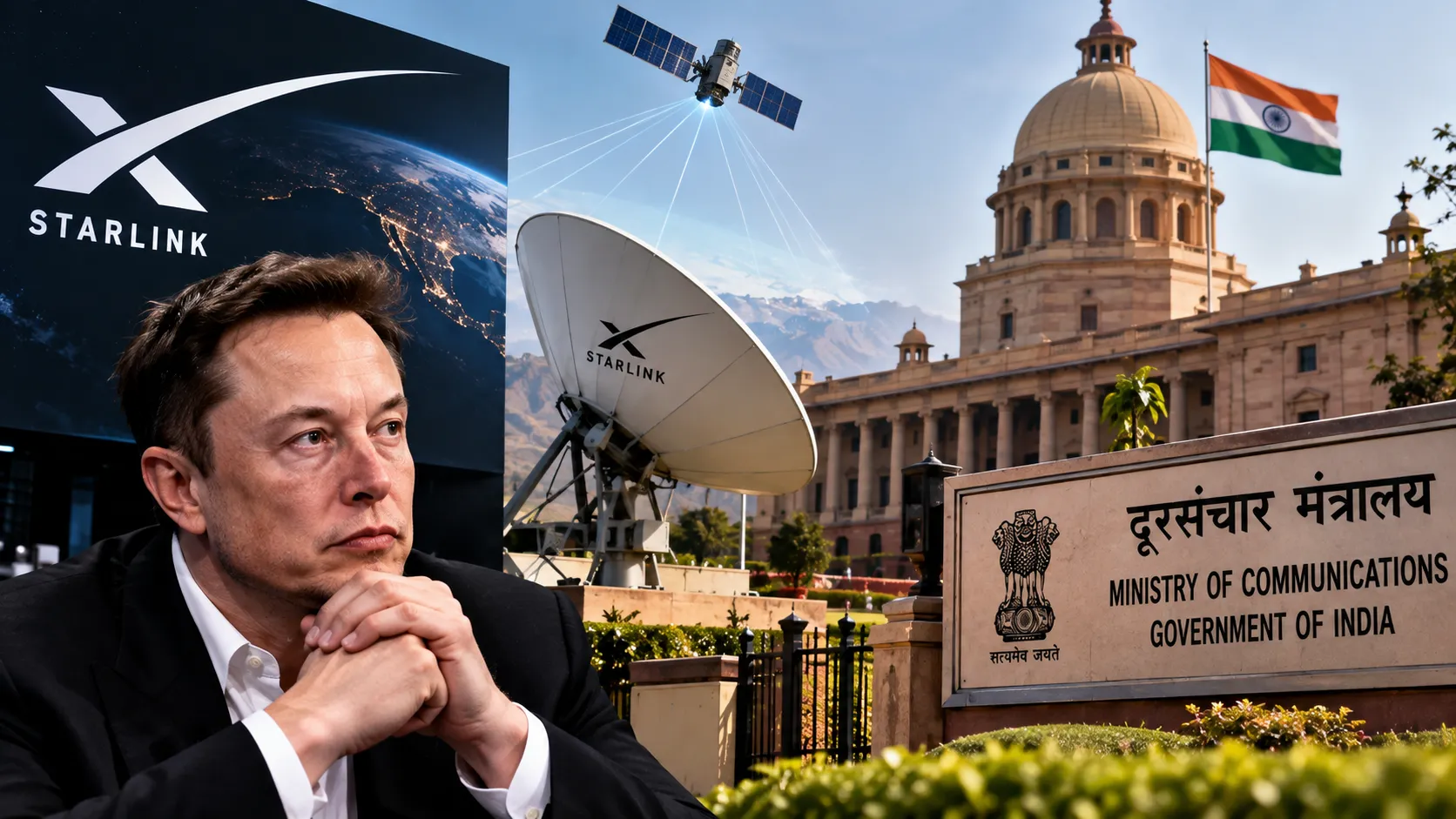
The response from the communications ministry came after Musk wrote on X that Starlink was being "blocked by certain oligarchs" seeking to maintain a "monopolistic chokehold" on India. He did not name anyone, adding only: "You can guess who they are." He called the obstruction "a crime against the people of India".
The exchange has turned a slow-moving regulatory process into a high-profile public dispute, and it comes at a sensitive moment for India's satellite broadband sector, where three licensed operators are waiting for the final clearances that would allow them to start commercial service.
Key facts at a glance
• Musk's claim: Starlink is being "blocked by certain oligarchs" seeking a "monopolistic chokehold" on India
• Government response: claim "baseless and misconceived"; framework fair and non-discriminatory
• Licensees: Starlink, Jio Satellite Communications, Eutelsat OneWeb (backed by Bharti Enterprises)
• Licence type: GMPCS licence for non-geostationary satellite systems
• Current stage: security assessments under way for all three; spectrum assignment follows clearance
• OneWeb: sought urgent clearance in September, more than 18 months after its January 2025 compliance demonstration
• Starlink: reportedly reapplied to IN-SPACe for a second-generation constellation of nearly 30,000 LEO satellites with direct-to-device capability; 20 gateway sites in India
What Musk said
Musk made the remarks in reply to a post calling for Starlink to be allowed to fill gaps in rural internet coverage. He argued that the service could offer affordable, high-speed internet to people who either cannot afford current options or have no connection at all.
He also addressed a separate controversy, denying claims that Starlink terminals had been used by insurgents in Manipur. "Starlink beams are turned off over India," he wrote — a statement that the service is not active in the country while it awaits regulatory approval.
The government's response
The ministry said all three licensees — Starlink, Reliance's Jio Satellite Communications and Eutelsat OneWeb, which is backed by Bharti Enterprises — are undergoing security assessments and are at broadly the same stage of the regulatory process.
Each holds a Global Mobile Personal Communication by Satellite (GMPCS) licence for non-geostationary satellite systems. To proceed, licensees must demonstrate compliance with security conditions that include safeguards for user data and the ability of authorities to carry out lawful monitoring. Only once a licensee clears that assessment can it apply for spectrum assignment. The ministry said the assessments are still under way for all three operators.
In effect, the government's position is that Starlink is not being singled out: none of the three operators has yet completed the process.
A long road to launch
The ministry's account is supported by the experience of other operators. Eutelsat OneWeb sought urgent security clearance in September, having waited more than 18 months since its security compliance demonstration in January 2025.
Starlink, for its part, has reportedly reapplied to IN-SPACe, India's space regulator, for approval of a second-generation constellation of nearly 30,000 low-Earth-orbit satellites, including direct-to-device capability that would allow ordinary smartphones to connect to satellites without special terminals. At the recent India Mobile Congress, Starlink executive Lauren Dreyer said the company has 20 gateway sites with hundreds of antennas in India and is ready to serve the market.
That readiness on the ground underlines the frustration that has built up. Infrastructure is in place; what remains is the regulatory sign-off.
The commercial stakes
India is one of the largest untapped markets for satellite broadband. Despite rapid growth in mobile and fibre connectivity, millions of people in remote, hilly and border areas still lack reliable internet access. Satellite services can reach places where laying fibre or building towers is uneconomical, and they can provide backup connectivity for businesses, disaster response and defence.
The competitive landscape is unusual. Starlink, Jio and OneWeb are rivals in satellite broadband, but India's terrestrial telecom leaders have also signed distribution arrangements with Starlink, reflecting the view that satellite internet will complement rather than replace existing networks. How spectrum is priced and assigned, and how quickly each operator can start service, will shape the economics of the market for years.
How satellite broadband works
Low-Earth-orbit (LEO) systems such as Starlink and OneWeb use thousands of satellites circling a few hundred to just over a thousand kilometres above the Earth, much closer than traditional geostationary satellites. The shorter distance allows lower latency, making services suitable for video calls, online gaming and business applications. Users connect through a small dish or terminal, while ground stations, known as gateways, link the satellite network to the terrestrial internet.
Direct-to-device technology goes further, allowing standard smartphones to connect to satellites in areas without mobile coverage. If approved, it could help fill gaps in India's mobile network, particularly in remote mountain, desert, forest and island regions, and during disasters when ground infrastructure fails.
The pricing question
Affordability will be decisive. Satellite broadband has typically been more expensive than mobile data in India, which is among the cheapest in the world. Operators will need to price competitively, possibly through partnerships with telecom companies, government connectivity programmes and enterprise customers, to reach the rural households that Musk says Starlink wants to serve.
Security first
India's emphasis on security reflects its geography and history. Satellite services can operate across borders and in sensitive regions, and the government has insisted that operators meet the same standards for data localisation, lawful interception and network control that apply to terrestrial telecom companies. The Manipur controversy highlighted how quickly satellite equipment can become a security issue.
For Musk, a public broadside carries risks. Starlink has spent years working through India's regulatory process, and a confrontational approach could complicate relations with officials whose approvals it still needs.
For investors, policymakers and rural communities, the more important question is timing. The government says the process is fair; operators say it is slow. Until security clearances are granted and spectrum is assigned, India's satellite broadband market — and the connectivity it could bring to underserved regions — remains on hold.