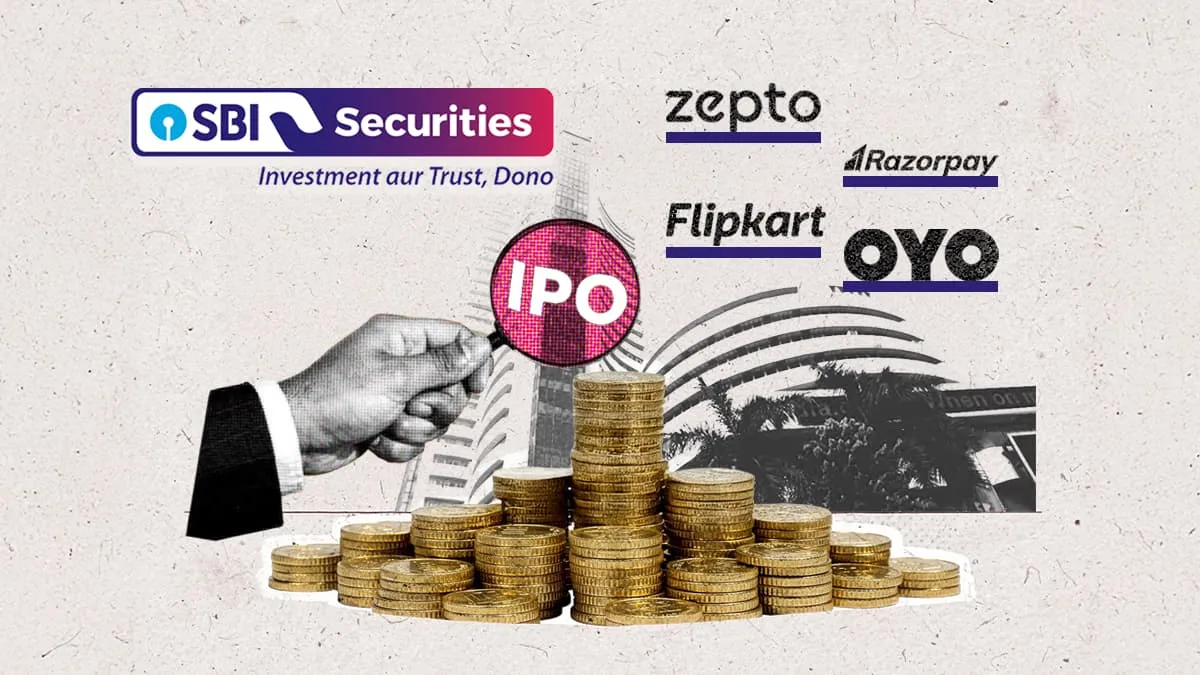
India's startup initial public offering pipeline has continued to swell through the middle of 2026, with 28 companies having already filed draft red herring prospectuses with the Securities and Exchange Board of India and another 24 in various stages of finalising their own listing plans, according to the latest update to Inc42's closely watched IPO tracker, published August 9. Taken together, the figures point to a public market pipeline of more than 50 venture-backed companies at some stage of the listing process — a scale that would have been difficult to imagine just three years ago, when Indian startups were still processing the post-2021 correction in venture valuations.
But the sheer size of the pipeline masks a more interesting story beneath the surface: a growing divergence in strategy between startups racing toward public markets while conditions remain favourable, and others choosing to delay, restructure, or quietly shelve their listing timelines in response to investor scrutiny that has grown considerably more exacting than it was during the IPO boom of 2021.
Razorpay's position in the tracker illustrates the first camp. Founded in 2014 by IIT-Roorkee alumni Harshil Mathur and Shashank Kumar, the fintech major has evolved from a straightforward payment gateway into what it now describes as an omnichannel financial services platform spanning payments, banking, SME payroll, lending and insurance, with an annualised total payment volume the company puts above $180 billion. Its path to the Indian public markets began in earnest in May 2025, when it completed a reverse-flip, merging its US-domiciled holding entity back into its India-based operating company, Razorpay Software Pvt Ltd — a structural move that has become almost a prerequisite for any Indian startup with global cap table complexity that wants to list domestically.
By February 2026, Razorpay had brought on Axis Capital, Kotak Mahindra Capital, JP Morgan and Citi as investment bankers to run its IPO process, and in June 2026 the company filed its DRHP with SEBI through the confidential pre-filing route — a mechanism that allows issuers to keep early-stage financial disclosures out of public view while regulators review the filing. Bankers involved in the process have indicated Razorpay is targeting a raise of between $500 million and $700 million, at a valuation range of $5 billion to $6 billion — notably below the $7.5 billion mark the company commanded in its last private funding round, an implicit acknowledgment of how public-market investors are pricing fintech platforms more conservatively than late-stage venture rounds once did.
Razorpay's financial trajectory has been uneven in the run-up to listing. Net profit surged 365% to ₹33.5 crore in FY24, up from ₹7.2 crore the year prior, even as operating revenue grew a comparatively modest 9% to ₹2,475 crore. The company then reported a loss in FY25, which it has attributed to a one-time ESOP expense of ₹1,209 crore and tax obligations tied to the reverse-flip transaction — both non-recurring items that the company will need to explain clearly to prospective public shareholders. Underlying operating revenue, by contrast, is reported to have grown a stronger 65% year-on-year to ₹3,783 crore in FY25, a number that will likely feature prominently in the company's roadshow pitch once the DRHP is made public.
Zepto occupies the opposite end of the spectrum. The quick-commerce major, which had been widely expected to list in 2026 alongside peers Zomato and Swiggy, has now pushed its IPO timeline out to May 2027. In its place, the company is pursuing a $105 million pre-IPO funding round intended to shore up its balance sheet and reduce cash burn ahead of a public listing — a sequencing decision that suggests Zepto's leadership judged the current window less favourable for a quick-commerce IPO than initially hoped, even as rivals in adjacent categories continue to press ahead.
The broader pipeline reflects a similarly mixed picture. The first half of 2026 already saw several new-economy names complete their public listings — Turtlemint, Fractal, Shadowfax and Kissht among them — while further up the funnel, edtech platform Klassroom's SME IPO reportedly drew strong demand, with its issue subscribed 73% on the first day of bidding, a signal that retail and institutional appetite for smaller, profitable new-age listings remains intact even as headline mega-IPOs face a more discerning market.
That distinction — between smaller, profitable issuers finding a receptive market and larger, cash-burning platforms recalibrating their timelines — is likely to define India's startup IPO landscape through the remainder of 2026. With India's benchmark indices posting a second consecutive week of gains as of early August and the Reserve Bank of India holding rates while upgrading its FY27 growth forecast, the macro backdrop for new listings remains constructive. But bankers and investors tracking the pipeline caution that constructive market conditions alone will not compress the growing gap between how public investors and late-stage venture investors price growth, profitability and governance — a gap that companies like Razorpay are now being forced to close in real time as they move from private boardrooms to public scrutiny.
For India's broader startup ecosystem, the tracker's expansion to more than 50 companies is, on balance, a marker of maturity: a critical mass of venture-backed businesses has now reached the scale, governance readiness and revenue visibility required to even contemplate a public listing. Whether that pipeline converts into a wave of successful debuts, or a longer queue of deferred plans, will depend less on the number of companies filing paperwork and more on how each issuer — from Razorpay's fintech scale to Zepto's quick-commerce economics — chooses to time its entry into a public market that has grown considerably more selective about what it is willing to reward.