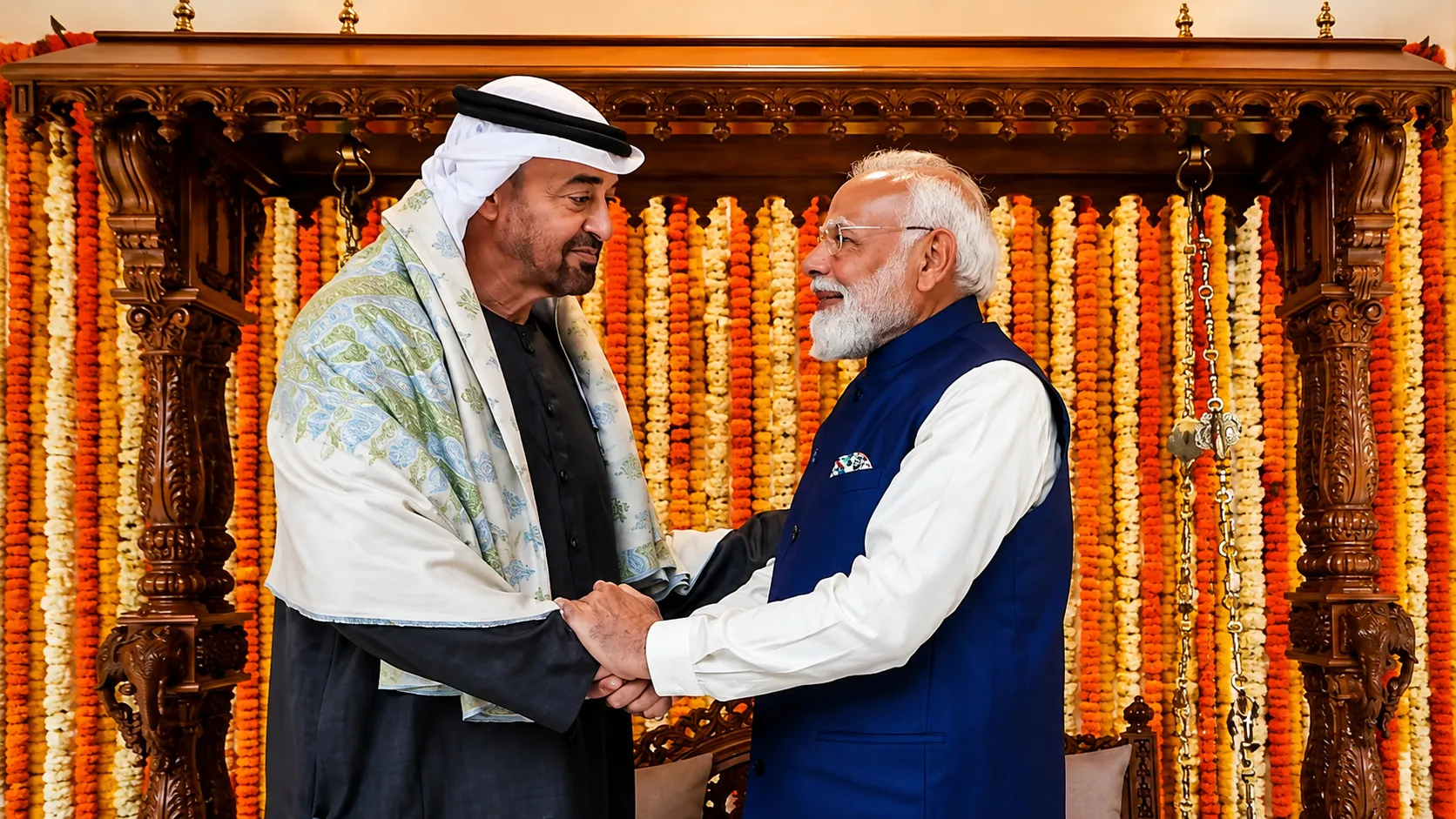
The economic corridor between India and the United Arab Emirates, long anchored in trade and remittances, has evolved into a considerably more sophisticated relationship spanning technology, finance, defence, infrastructure, security and sustainability, according to a detailed feature published this week examining the depth of the bilateral business relationship.
The analysis, which draws on decades of cultural and economic exchange between the two countries, frames the current phase of the relationship as fundamentally different in character from its historical roots, driven now by landmark agreements that are opening new markets for UAE businesses and investors while simultaneously giving Indian talent and enterprise a genuinely global platform from which to operate.
Industry participants tracking the relationship describe the current period as qualitatively different from previous decades, characterised less by episodic large infrastructure or trade deals and more by continuous, multi-sector engagement across both public and private capital channels.
For decades, the India-UAE relationship was defined primarily by labour migration, trade in commodities and a steady flow of remittances from the millions of Indian workers based across the Emirates. That foundation remains substantial, but it has increasingly been layered with a more sophisticated set of economic ties involving venture capital flows, cross-border technology partnerships and joint investment in emerging sectors that were barely conceivable a generation ago, when the relationship was still overwhelmingly defined by construction, hospitality and trading businesses.
Opportunities are now emerging across a specific set of priority sectors identified by both governments and by private-sector participants: artificial intelligence, food security, fintech, healthcare, clean energy and sustainable technologies. Each of these categories reflects areas where India possesses deep technical talent pools and the UAE offers capital, regulatory openness and a strategic gateway position between Asian, European and African markets, a combination that has proven particularly attractive to Indian entrepreneurs and executives building regionally scalable businesses.
Healthcare has emerged as a particularly active area of bilateral cooperation, with Indian pharmaceutical and diagnostics companies increasingly establishing UAE operations both to serve the substantial resident Indian population and to access the broader Gulf healthcare market, while UAE healthcare investors have shown growing interest in India's rapidly digitising health-technology sector, spanning telemedicine platforms, diagnostic networks and health insurance technology.
Food security cooperation, another priority area highlighted in the analysis, reflects the UAE's structural dependence on food imports and its strategic interest in diversifying and strengthening supply chain resilience, an area where India's agricultural production scale and increasingly sophisticated export infrastructure position it as a natural long-term partner.
The scale of Indian entrepreneurial presence in the UAE has grown considerably over the past several years, with Indian investors consistently ranking among the leading sources of new company registrations in emirates including Dubai. This entrepreneurial density has, in turn, created a self-reinforcing ecosystem in which successful Indian-origin founders mentor newer arrivals, Indian-run venture and advisory firms provide capital and guidance to emerging businesses, and Indian professional networks across banking, law and consulting provide the connective infrastructure that allows new entrants to navigate the UAE's regulatory and commercial environment more efficiently than they otherwise could.
Bilateral trade between the two countries has continued to expand strongly even amid periods of regional geopolitical tension, with both governments now working toward deepening existing trade arrangements further. For UAE-based companies, India's continued rapid economic growth, expanding middle class and improving ease-of-business metrics have made the country an increasingly attractive investment destination in its own right, reversing what was historically a largely one-directional flow of Indian capital and talent toward the Gulf.
Sector-specific momentum has been particularly pronounced in fintech and digital infrastructure, where Indian-origin founders and executives have played an outsized role in building payment, lending and digital banking platforms serving both the UAE's resident population and its broader role as a regional financial hub. Clean energy has emerged as another area of accelerating cooperation, with Indian renewable energy expertise and UAE capital increasingly combining on joint ventures spanning solar, green hydrogen and broader sustainability infrastructure projects across the wider region.
Education and skills development represent a further, less visible but increasingly important dimension of the relationship, with a growing number of Indian universities and training institutes establishing partnerships or satellite presences in the UAE aimed at serving both the resident diaspora population and the broader Gulf region's demand for internationally recognised qualifications delivered closer to home.
Defence and security cooperation, while typically operating through more formal government-to-government channels than the commercial sectors highlighted elsewhere in the relationship, has also expanded steadily, reflecting both countries' shared interest in regional stability and, increasingly, joint defence-technology development initiatives that draw on India's expanding domestic defence manufacturing base.
For the substantial Indian diaspora resident in the UAE, spanning multiple generations of migration from labour-intensive sectors through to today's technology and finance professionals, this deepening and diversifying economic relationship offers an increasingly broad range of professional and entrepreneurial opportunities that extend well beyond the traditional sectors historically associated with Indian presence in the Gulf.
As the relationship continues to mature beyond its historical foundations in trade and labour migration, the current phase of India-UAE economic engagement increasingly resembles a genuine two-way technology and capital partnership, one that industry observers expect will continue deepening as both countries pursue diversification strategies that place innovation, sustainability and digital infrastructure at the centre of their respective economic futures.
Analysts tracking the relationship expect this diversification trend to continue, with artificial intelligence and clean energy in particular likely to represent the fastest-growing components of bilateral economic engagement over the coming several years, building on the foundational trade and remittance relationship that has anchored India-UAE ties for generations.
Financial institutions on both sides have increasingly developed specialised advisory and banking services catering specifically to the growing volume of cross-border India-UAE transactions, a further sign of how mainstream and structurally embedded this bilateral economic relationship has become within both countries' broader financial services industries.
Cross-border professional mobility has also benefited from incremental easing of visa and work-permit processes on both sides in recent years, a trend that industry participants say has made it progressively easier for Indian entrepreneurs and executives to establish and scale UAE operations without the administrative friction that characterised earlier phases of the relationship, when regulatory navigation alone could consume the better part of a founder's first year in market.