On a day when the broader Indian market surged, one of its most important sectors moved in the opposite direction.
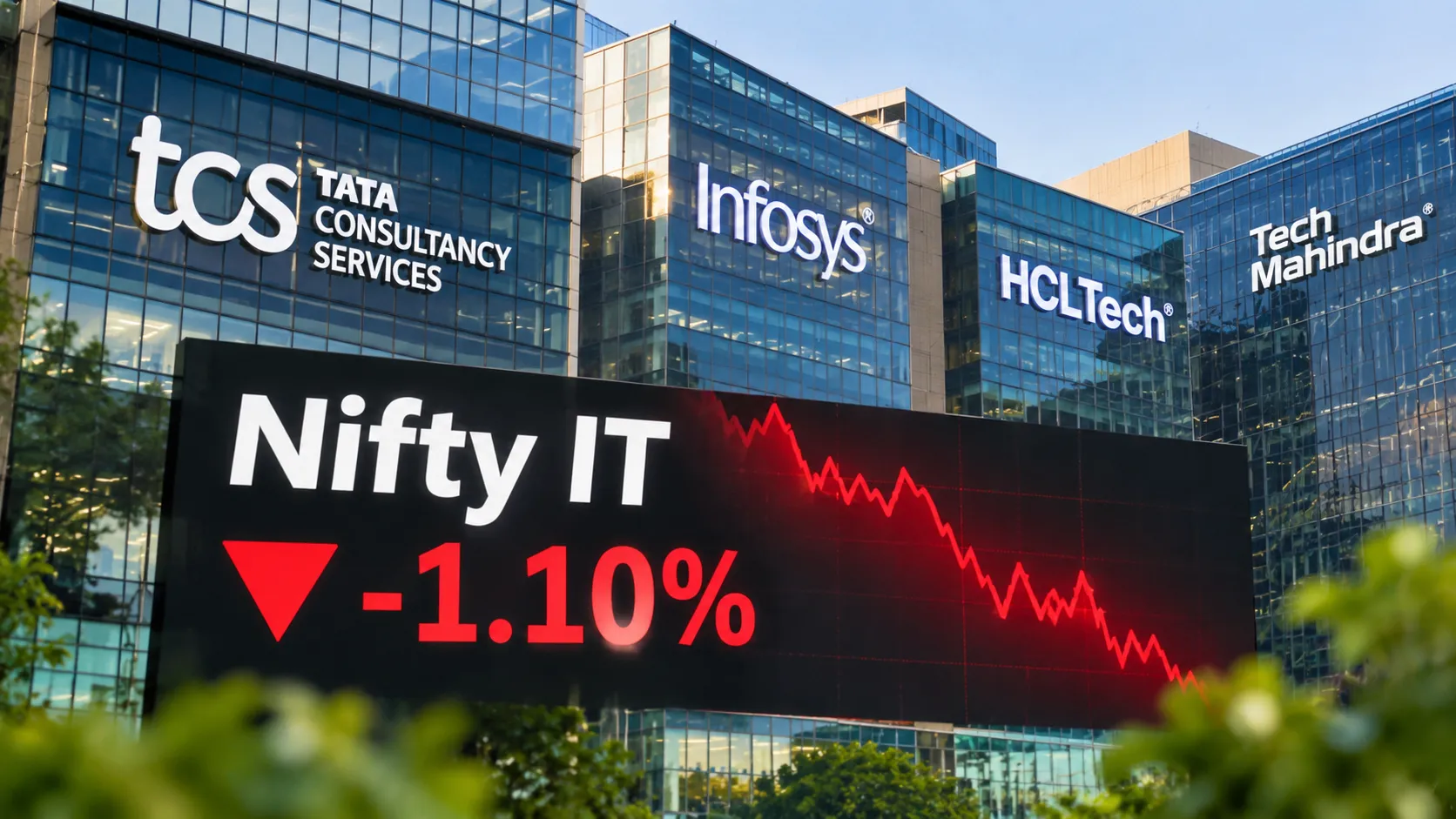
The Nifty IT index fell 1.10% on Thursday, November 19, its third consecutive decline, according to Business Standard and Kotak Securities data. The index has lost about 6.5% over three sessions. Tata Consultancy Services, Tech Mahindra, Infosys and HCLTech were among the losers.
The fall stood in contrast to the wider market. The Sensex jumped nearly 990 points to close above 83,000, and the Nifty 50 closed above 25,500 for the first time since February.
The AI question
The main concern weighing on IT stocks is the potential impact of artificial intelligence on the traditional IT services business model. Indian IT companies earn most of their revenue from providing software development, maintenance, testing and business process services to global clients, much of it billed by the number of people working on a project.
Generative AI tools can automate many of these tasks, including writing and testing code, handling customer queries and processing documents. If clients can achieve the same results with fewer people, IT companies could see lower revenue from existing contracts, even as they win new AI-related work.
Investor anxiety has been heightened by the rapid progress of AI coding tools and AI agents from companies such as Anthropic, OpenAI and Google, as well as statements from global companies about using AI to reduce costs.
Higher US interest rates
The second factor is the outlook for US interest rates. Markets have increasingly priced in the possibility of a rate increase by the Federal Reserve in December, as inflation remains elevated. Higher US rates can slow economic growth and reduce corporate spending, including on technology projects.
The US is the largest market for Indian IT companies, accounting for more than half of revenue for many of them. Any slowdown in US corporate spending directly affects their growth prospects.
A sector under pressure
Indian IT stocks have underperformed the broader market for much of 2026. Revenue growth has been slow, as clients have delayed discretionary projects and focused on cost savings. Many companies have reported modest growth, with large deals often focused on cost reduction rather than new spending.
Companies have responded by investing heavily in AI capabilities, training employees, building AI platforms and forming partnerships with AI companies. This week, HCLTech announced a partnership with Cohere, while other companies have partnered with OpenAI, Anthropic, Google and Microsoft.
The bull case
Not all analysts are pessimistic. Some argue that AI will create new opportunities for IT services companies, as businesses need help implementing AI, integrating it with existing systems, managing data and ensuring security and compliance. Large enterprises often lack the in-house skills to deploy AI at scale, creating demand for external partners.
Indian IT companies also have deep relationships with global clients, extensive knowledge of their systems and large, skilled workforces that can be retrained. Historically, they have adapted to previous technology shifts, including cloud computing and digital transformation.
Engineering services stand out
The divergence within the technology sector was visible on Thursday. Tata Technologies, an engineering services company, rose more than 9% after its investor day, where it set ambitious growth targets. Engineering services companies, which work on physical products such as cars and aircraft, are often seen as less exposed to AI disruption than traditional IT services.
What it means for India
The IT services industry is one of India's most important sectors, employing millions of people and generating significant export revenue. A prolonged slowdown would affect employment, particularly for entry-level graduates, as well as consumption in technology hubs such as Bengaluru, Hyderabad, Pune and Chennai.
The industry's response to AI will shape India's economy for years. Companies that successfully transition to AI-led services could thrive, while those that fail to adapt could struggle.
The diaspora connection
Many members of the Indian diaspora work in technology roles in the US and other countries, often for clients or partners of Indian IT companies. Changes in the industry, including immigration policy, AI adoption and onshore hiring, affect both sides of the relationship.
What investors will watch
Investors will watch upcoming deal announcements, management commentary on AI's impact on revenue, hiring trends and the December Federal Reserve meeting. The next round of quarterly results in January will provide more evidence of whether demand is recovering or AI is eroding traditional revenue.
A look at valuations
Indian IT stocks have historically traded at premium valuations, reflecting their strong cash generation, high dividends and share buybacks, and steady growth. The recent decline has brought valuations down from their peaks, leading some analysts to argue that much of the bad news is already priced in.
Others caution that if AI permanently reduces the growth rate of the industry, lower valuations may be justified. The debate is likely to continue until there is clearer evidence of how AI affects revenue over several quarters.
The rupee factor
A weaker rupee typically benefits Indian IT companies, because they earn revenue in dollars and other foreign currencies but pay most of their costs in rupees. Higher US interest rates tend to strengthen the dollar against emerging market currencies, which could provide some support to IT company margins.
However, currency gains are often offset by pricing pressure from clients, and companies generally hedge a significant portion of their currency exposure, limiting the near-term benefit.
Hiring and jobs
Indian IT companies have slowed hiring significantly over the past few years, with several large companies reporting net reductions in headcount in some quarters. Entry-level hiring, which once absorbed hundreds of thousands of engineering graduates each year, has been particularly affected.
The industry is shifting its hiring towards skills in AI, data, cloud and cybersecurity, and companies are investing in retraining existing staff. How quickly this transition happens will have significant implications for India's job market.
What companies are saying
Indian IT company executives have generally argued that AI will expand the market for technology services over time, even if it reduces the effort required for some traditional tasks. They point to growing demand from clients for help with AI strategy, data platforms, cloud modernisation and the integration of AI agents into business processes.
Several companies have begun reporting revenue from AI-related projects and have signed large deals that include AI-led productivity commitments, where they promise clients cost savings through automation. Investors will look for evidence that these new revenue streams are large enough to offset any decline in traditional work.
What comes next
For now, the market is signalling caution on Indian IT. Whether the sell-off is an overreaction or the start of a deeper re-rating will depend on how quickly companies can show that AI is adding to their revenue rather than replacing it.