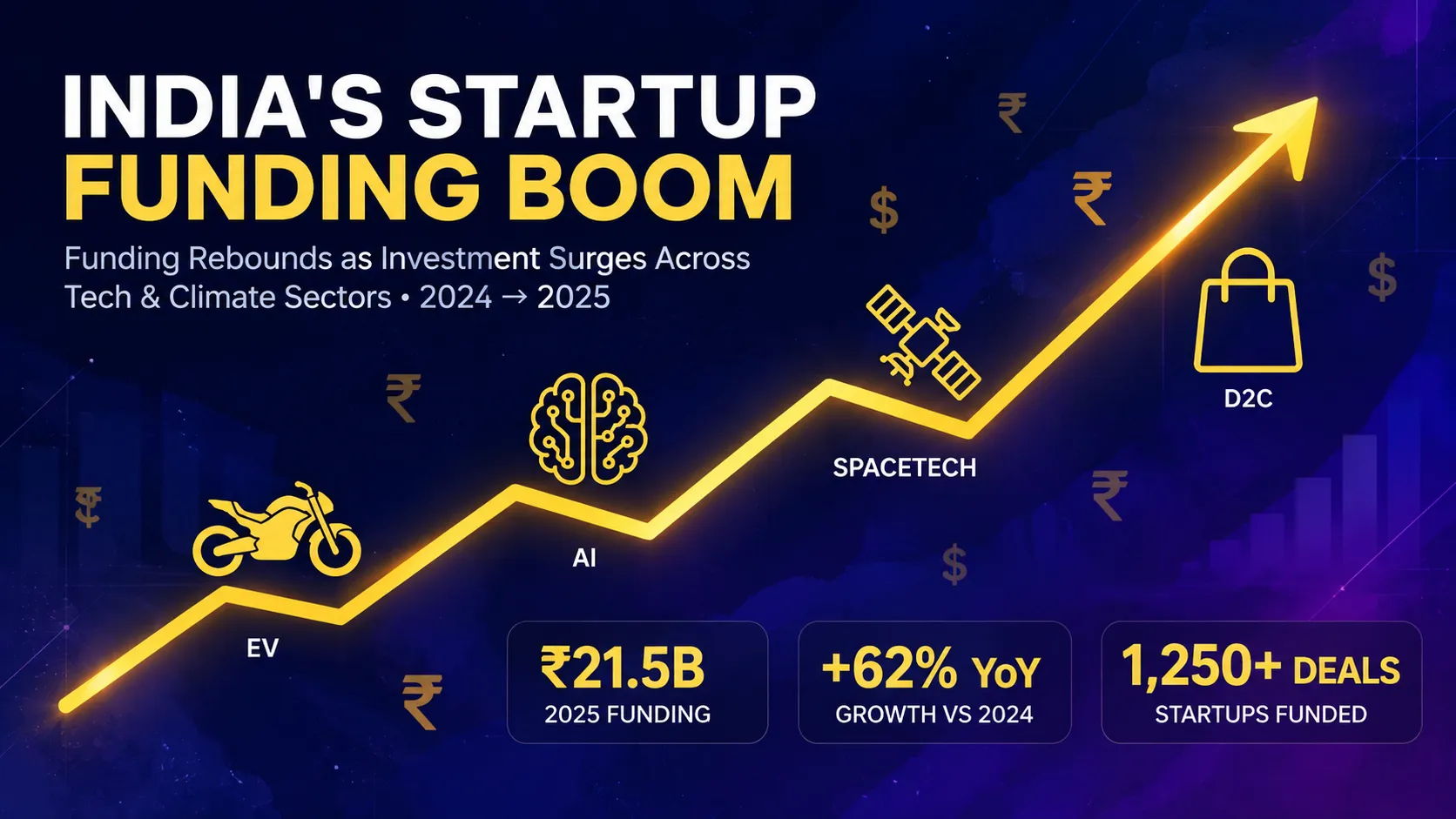
India's startup funding market bounced back sharply last week. Startups raised $203.4 million across 21 deals in the week of 21 to 25 September, according to data compiled by Inc42, up 3.4 times from $58.9 million the previous week. Deal count rose 50 per cent. Two large rounds, in electric motorcycles and enterprise artificial intelligence, accounted for most of the capital, but early-stage activity was also healthy, with seed-stage companies raising $20.3 million across five deals.
The rebound offers some relief to founders after a volatile few months in Indian capital markets, where listed technology stocks have been hit by foreign selling and a sharp sell-off in insurance distribution platforms. It also underlines how concentrated venture funding has become: a handful of large rounds now determine whether a given week looks strong or weak.
The big rounds
Bengaluru-based Ultraviolette Automotive, which makes high-performance electric motorcycles, raised $85 million in a round led by deep-tech fund Yali Capital and TDK Ventures, the venture arm of the Japanese electronics group. The company also brought on Lip-Bu Tan, chief executive of Intel, as an adviser, and Tan invested in the round. Ultraviolette has been expanding into export markets in Europe and beyond, positioning itself as a premium Indian EV brand rather than a volume player.
Enterprise AI startup Ema raised $77 million in a Series B round led by Creaegis. Ema builds AI agents designed to automate work across enterprise functions such as customer support, sales operations and human resources. Its round alone accounted for about 86 per cent of the $89.3 million raised by five AI startups during the week, making AI the most-funded sector.
Seed-stage activity
Among early-stage deals, social discovery and dating platform Rivet raised $10.5 million in a seed round led by Peak XV Partners, with Shine Capital and Blume Ventures participating. The company plans to scale in the United States. Rivet's round alone accounted for more than half of the week's seed funding.
Dextr AI, which builds AI agents for the hospitality industry, raised $6.7 million in a seed round led by Elevation Capital. Sol Foundry, another AI startup, raised $4 million from General Catalyst. Spacetech startup GalaxEye received ₹63.8 crore, about $6.7 million, from the government's Research, Development and Innovation (RDI) fund to support its multisensor satellite technology. Quick-commerce health startup Rio Health raised $4.5 million in a pre-Series A round led by Version One Ventures.
E-commerce led on deal count, with six direct-to-consumer brands raising a combined $3.8 million. Peercheque and Sauce.VC were the most active investors of the week, each backing two startups.
New pools of capital
Beyond individual deals, several developments point to fresh capital entering the ecosystem. IIT Madras and Unicorn India Ventures announced the first close of the IITM Unicorn Frontier Fund I at ₹450 crore. The deep-tech fund has a base corpus of ₹600 crore with a greenshoe option of ₹400 crore, targets a final close by December 2026, and has already deployed about ₹55 crore across four startups. It plans to back 25 startups in defence technology, spacetech, semiconductors, robotics and AI, with cheques of ₹15 crore to ₹25 crore.
Lightspeed is targeting $250 million for a new India fund focused on early-stage AI, according to TechCrunch. Nykaa and BOLD, L'Oréal's venture fund, announced a partnership to invest in Indian beauty and personal care startups. The government is also reported to be considering an anchor investment of ₹15,000 crore to ₹20,000 crore in a proposed National Frontier AI and Compute Fund.
In secondary markets, private equity firm True North acquired a 2 to 3 per cent stake in IPO-bound adtech company InMobi for $50 million to $60 million. InMobi, which operates the Glance lock-screen platform and Roposo, is redomiciling to India from Singapore ahead of a potential $1 billion listing.
The sector mix is also telling. Clean mobility, enterprise AI, consumer social, spacetech and health commerce all featured in a single week, suggesting that investor interest is broad even if cheque sizes are uneven. Geographically, deals were spread across Bengaluru, Mumbai, Delhi NCR, Hyderabad and Chennai, reflecting the maturing of multiple startup hubs rather than dominance by a single city.
The concentration question
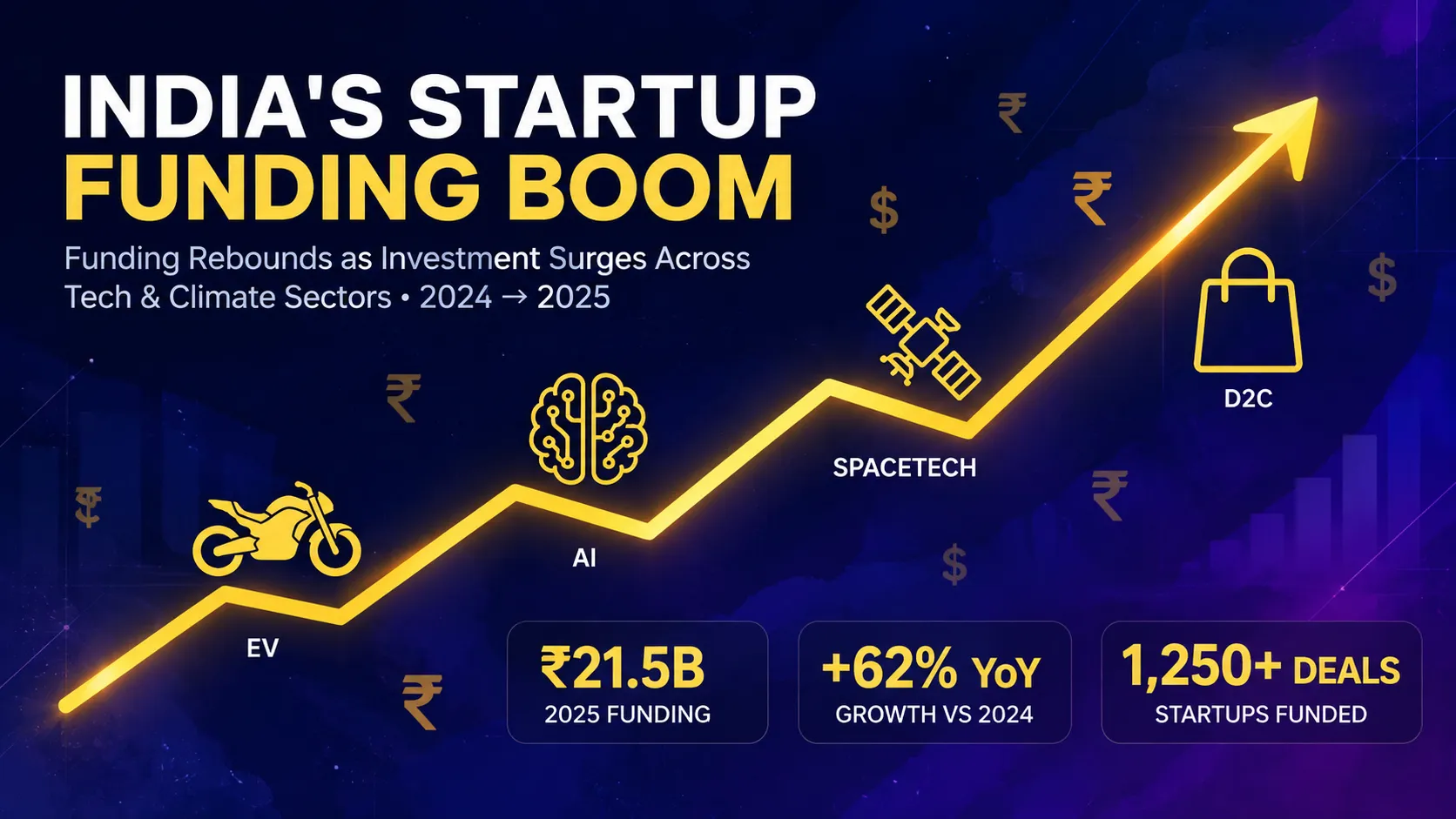
The headline figure hides a structural pattern. Two rounds, Ultraviolette and Ema, accounted for $162 million of the $203.4 million total, or about 80 per cent. Remove them, and the remaining 19 deals raised around $41 million, an average of just over $2 million each. That is consistent with the broader trend in Indian and global venture capital: fewer, larger bets on companies that investors view as category leaders, and more selective funding at the early stage.
According to Tracxn, Indian startups raised $17.1 billion across about 1,530 equity rounds in 2026 up to September, compared with $15.2 billion across roughly 2,440 rounds in the same period of 2025. Total funding is up about 12 per cent, but the number of rounds has fallen by more than a third. Capital is flowing, but to fewer companies.
Reading the signals
For founders, the week's data carry mixed messages. AI remains the most reliable way to attract investor attention, but investors are concentrating capital in companies with clear enterprise revenue, such as Ema, or in vertical applications with defined customer bases, such as Dextr AI in hospitality. Hardware and climate-linked businesses can still raise large rounds when they demonstrate product differentiation and export potential, as Ultraviolette has.
For limited partners and fund managers, the launch of new vehicles focused on deep tech and AI suggests confidence that India can produce globally competitive companies in those areas, supported by government funds such as the RDI programme and the proposed frontier AI fund. The involvement of institutions like IIT Madras reflects the growing role of university ecosystems in company formation.
For the public markets, the private funding picture matters because it shapes the IPO pipeline two to four years out. Several late-stage companies, including Moneyview, Snapdeal parent AceVector and Spinny, are in various stages of listing now. Companies raising growth rounds today are the listing candidates of 2028 and beyond.
The week's rebound is welcome, but one strong week does not make a trend. With listed tech stocks under pressure, US interest rates elevated and geopolitical risk high, investors are likely to remain selective. The next few weeks of deal data, and the performance of the IPOs now in the market, will offer a clearer read on whether risk appetite in Indian venture capital is genuinely returning.