FundingMarket Data8 MIN READ

Indian Equities Log Second Straight Weekly Gain As RBI Holds Rates And PSU Banks Surge Amid New Closing Auction Debut

The Nifty 50 gained 187 points over the week of August 3–7, 2026, its second consecutive weekly advance, as the RBI's rate hold, a PSU banking rally and NSE's new Closing Auction Session shaped a volatile but ultimately constructive week for Indian equities.

By Shaym Kumar · Author10 August 2026New
Indian Equities Log Second Straight Weekly Gain As RBI Holds Rates And PSU Banks Surge Amid New Closing Auction Debut

Indian equity markets closed the week of August 3–7, 2026 with their second consecutive weekly gain, as the Nifty 50 added 187 points, or 0.77%, to finish at 24,570, while the Sensex settled near 78,500. The headline advance, however, understated a genuinely volatile week beneath the surface — one shaped by the Reserve Bank of India's closely watched August policy decision, the debut of the National Stock Exchange's new Closing Auction Session mechanism, and a fresh bout of Iran-linked crude oil volatility that rippled through sentiment across sectors from aviation to information technology.

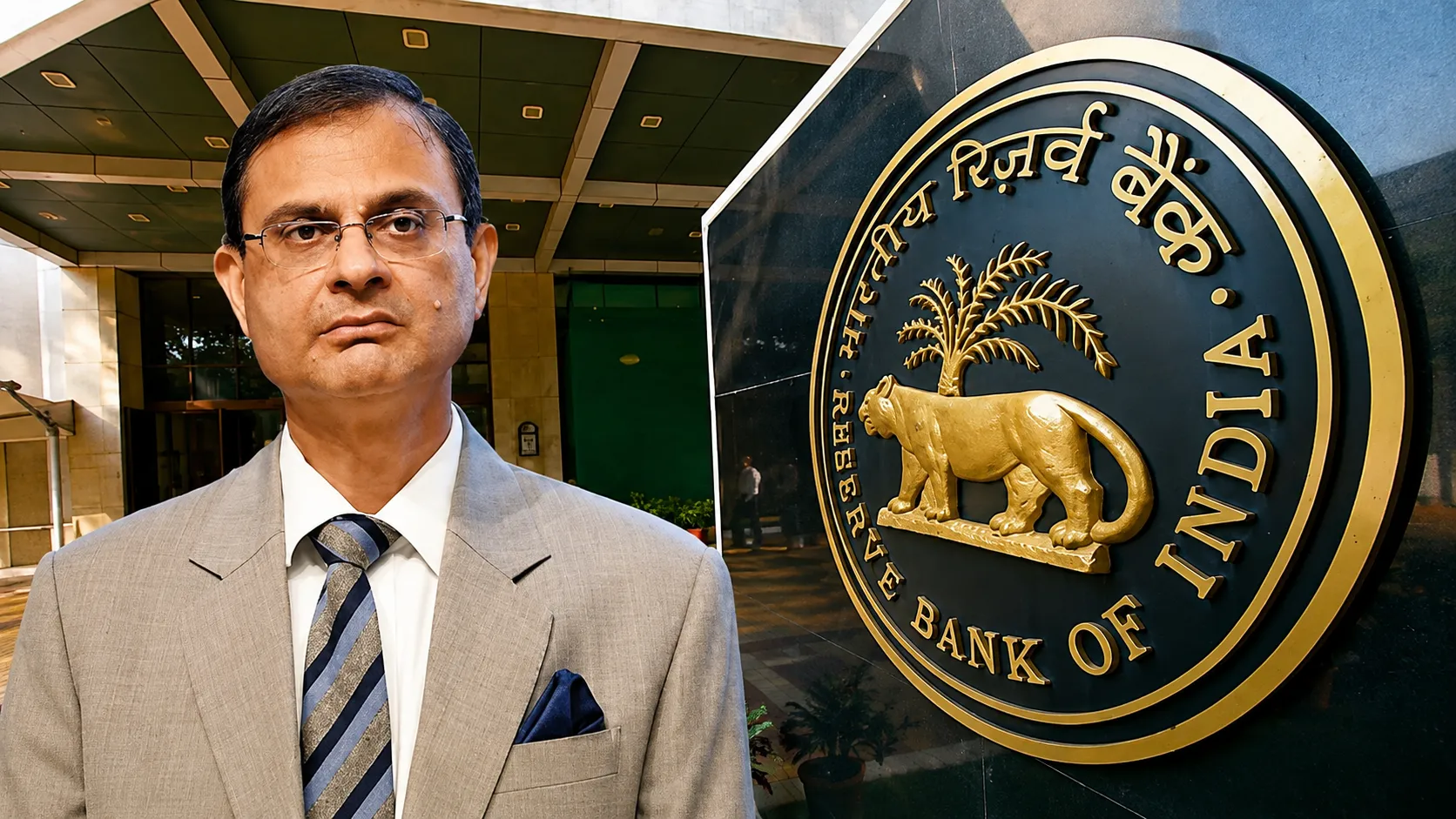
The week's defining event was the RBI's Monetary Policy Committee decision on Wednesday, August 5, when the central bank unanimously voted to hold the repo rate at 5.25% while maintaining a neutral stance. Governor Sanjay Malhotra cited heightened global uncertainty — Iran-linked crude volatility, an uneven southwest monsoon under El Niño conditions, and broader global trade uncertainty — as the rationale for holding rather than cutting. Crucially, the committee simultaneously upgraded its FY27 GDP growth forecast to 6.7%, from 6.6% previously, and cut its CPI inflation forecast to 5%, from 5.1%. That combination — a hold paired with an upgraded growth outlook and a lowered inflation projection — read as constructively as markets could reasonably have hoped for short of an outright rate cut.

The week's trading sessions told a story of their own. Monday, August 3 delivered the week's strongest single-day performance: the Nifty surged 391 points, or 1.60%, to 24,774, while Bank Nifty gained 983 points, or 1.72%, to 58,248, as Brent crude eased sharply below $85 a barrel and triggered broad-based buying across sectors. Nifty IT was the standout, surging 3.28% in its best single-day performance in three weeks, led by TCS, Infosys and Axis Bank, while aviation stocks including IndiGo rallied directly on the back of lower fuel-cost expectations tied to cheaper crude.

That momentum reversed sharply on Tuesday, August 4, as profit-booking set in ahead of the RBI's policy announcement: the Nifty fell 159 points, or 0.64%, to 24,615, while the Sensex shed 210 points, or 0.27%. Fifteen of sixteen major sectoral indices closed lower that day, with only metals — led by Hindalco — bucking the trend. The session also marked the first full trading day under NSE's newly implemented Closing Auction Session, a market-structure change that replaced the exchange's previous 3:30 pm closing mechanism with a separate post-market auction window for F&O-eligible stocks, in which buy and sell orders are matched to determine the official closing price. The new mechanism produced a notable, unusual divergence between intraday and closing prices, and traders spent much of the week visibly recalibrating to the altered dynamics.
ChatGPT Image Aug 10, 2026, 11_15_56 AM.png

Wednesday's RBI decision, as noted, produced a near-flat close for the Nifty, up just 0.04% to 24,625, with Nifty Realty and Nifty Auto gaining while banking stocks lagged; India's volatility gauge, the VIX, eased 3.12% to 12.01, a constructive signal that markets were not pricing in additional near-term shocks. Thursday, August 6 belonged decisively to public sector banks: the Nifty PSU Bank index surged 2.2%, the best-performing sector of the week, as investors re-rated state-owned lenders on the view that a rate pause supports stable net interest margins. State Bank of India, Bharat Electronics and Reliance Industries led Nifty gainers that day, while PowerGrid, Tata Steel and Bajaj Auto declined. Institutional flows on the day were notably lopsided: foreign institutional investors were roughly flat, net selling a marginal ₹0.27 crore, while domestic institutional investors bought a robust ₹4,013.60 crore, the single largest daily DII inflow of the week.

A rate hold paired with an upgraded growth forecast and a lowered inflation projection is, in market terms, the most dovish possible outcome short of an actual cut — and Indian equities read it that way.
Editorial analysis, The Impactful Global Indian

The week closed on a subdued note Friday, August 7, with the Nifty easing 0.27% to 24,570 and Bank Nifty down 0.55% to 57,746, though nine of twenty-four tracked sectors still finished in positive territory. TCS, Grasim and Hindalco were the session's key result-driven movers, as India's Q1 FY27 corporate earnings season continued to shape individual stock performance even as broader indices consolidated.

Individual stock performance over the week underscored the sectoral rotation underway. Shriram Finance led all Nifty constituents with an 8.34% weekly gain, supported by strong quarterly momentum, stable borrowing costs and continued strength in commercial vehicle financing. Hindalco followed closely with an 8.14% weekly advance, driven by rising aluminium prices and improving global demand. State Bank of India rounded out the top three gainers, up 6.72% on the back of a strong Q1 print, improving asset quality and healthy loan growth. On the losing side, PowerGrid fell 5.13% for the week as investors rotated out of defensive utility names and into cyclicals; Max Healthcare declined 4.97% as fading geopolitical risk reduced demand for defensive healthcare positioning; and Sun Pharma slipped 3.54% as its own defensive premium unwound ahead of upcoming quarterly results and pending US FDA updates.

Institutional activity for the week, taken as a whole, was strongly supportive. Foreign institutional investors were net buyers on three of five trading sessions, with cumulative weekly inflows of approximately ₹2,887.69 crore — the strongest single-day buying came Tuesday at ₹2,446.47 crore, while the heaviest selling came Wednesday at an outflow of ₹943.42 crore. Domestic institutional investors provided even firmer support, registering total net weekly inflows of roughly ₹7,767.37 crore, with Thursday's ₹4,013.60 crore the standout figure and Tuesday the only day of net DII selling, at ₹936.14 crore. Combined institutional inflows across the week totalled approximately ₹10,655 crore — a healthy signal of participation from both foreign and domestic capital, with DIIs providing the clearly stronger hand.

Taken together, the week of August 3–7 offered a case study in how Indian markets are currently processing a genuinely complex mix of signals: a supportive but not stimulative central bank, a structurally significant change to market microstructure via the new closing auction mechanism, continued volatility in crude oil tied to unresolved Iran-related geopolitical tensions, and a corporate earnings season that is rewarding some sectors — public sector banks and metals prominently among them — while punishing others, healthcare and select defensives in particular. With the Nifty closing the week comfortably above both its 20-day and 50-day moving averages, market attention now turns to whether that momentum can carry the index through its next, more difficult technical test.

TagsNifty 50SensexRBI Monetary PolicyPSU BanksStock Market IndiaWeekly Market ReviewFII DII FlowsClosing Auction Session

Reader reviews

Sign in to rate and review this article.
Loading reviews…