MUMBAI, Oct 8 Inner Sky Labs, the Mumbai-based company best known for Miko, its AI-powered companion robot for children, has launched a suite of foundation models designed to give robots the ability to see, hear, feel and act — a move that positions one of India's better-known consumer robotics companies as a contender in the global race to build "physical AI".
The company is also closing a funding round of ₹300 crore (about $30.9 million) from existing backer YourNest, IT industry veteran Keshav R Murugesh and new global investors. Once completed, the round would take Inner Sky Labs' total funding to about $100 million.
The launch marks a strategic pivot. Having spent a decade shipping robots into homes, the company now wants to sell the intelligence layer that powers robots of all kinds — from warehouse machines to service robots and humanoids — to other manufacturers and enterprises.
Key facts at a glance
• Company: Inner Sky Labs, maker of the Miko companion robot
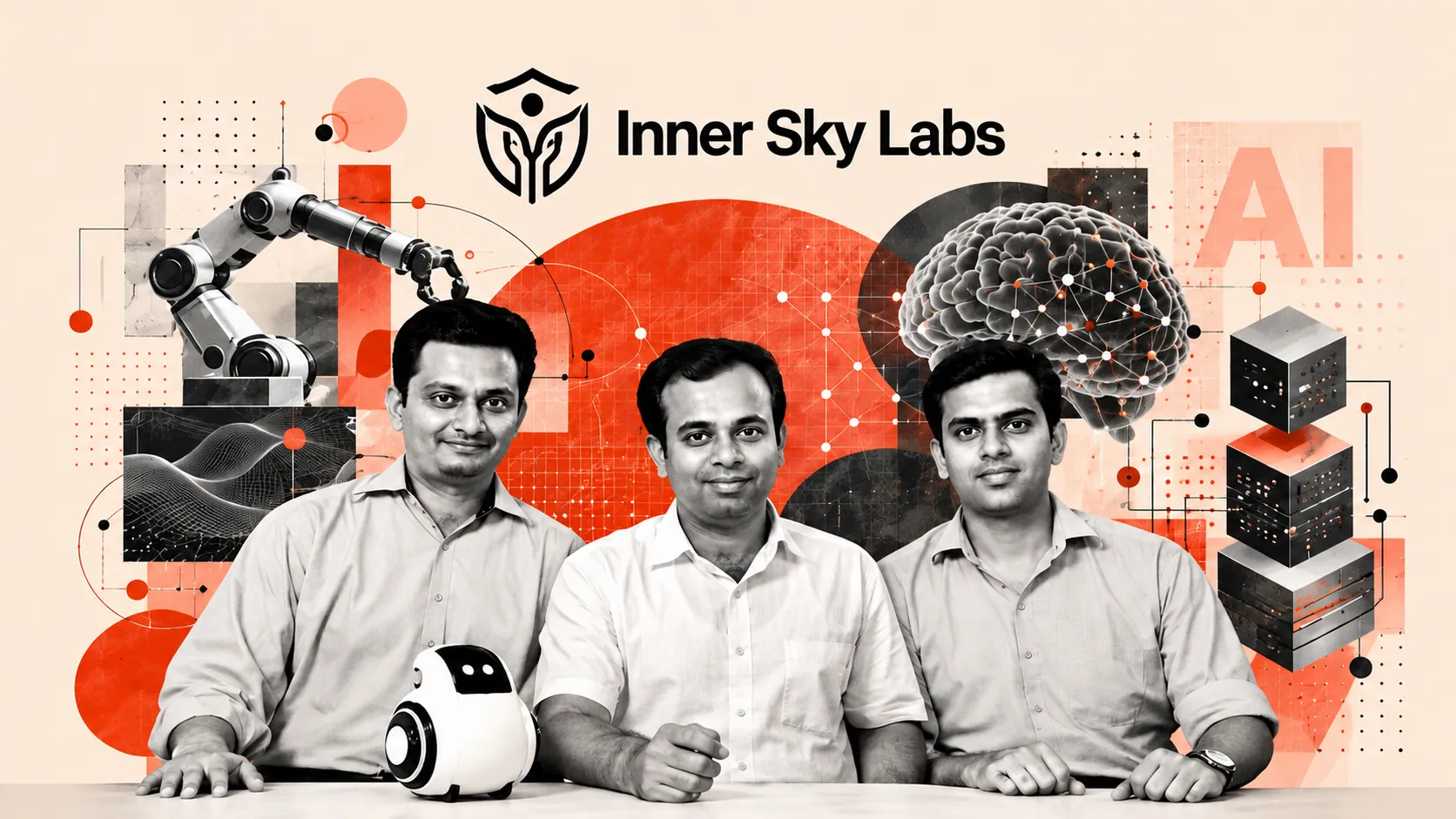
• Founded: 2015, by IIT Bombay alumni Sneh Vaswani (CEO), Prashant Iyengar and Chintan Raikar
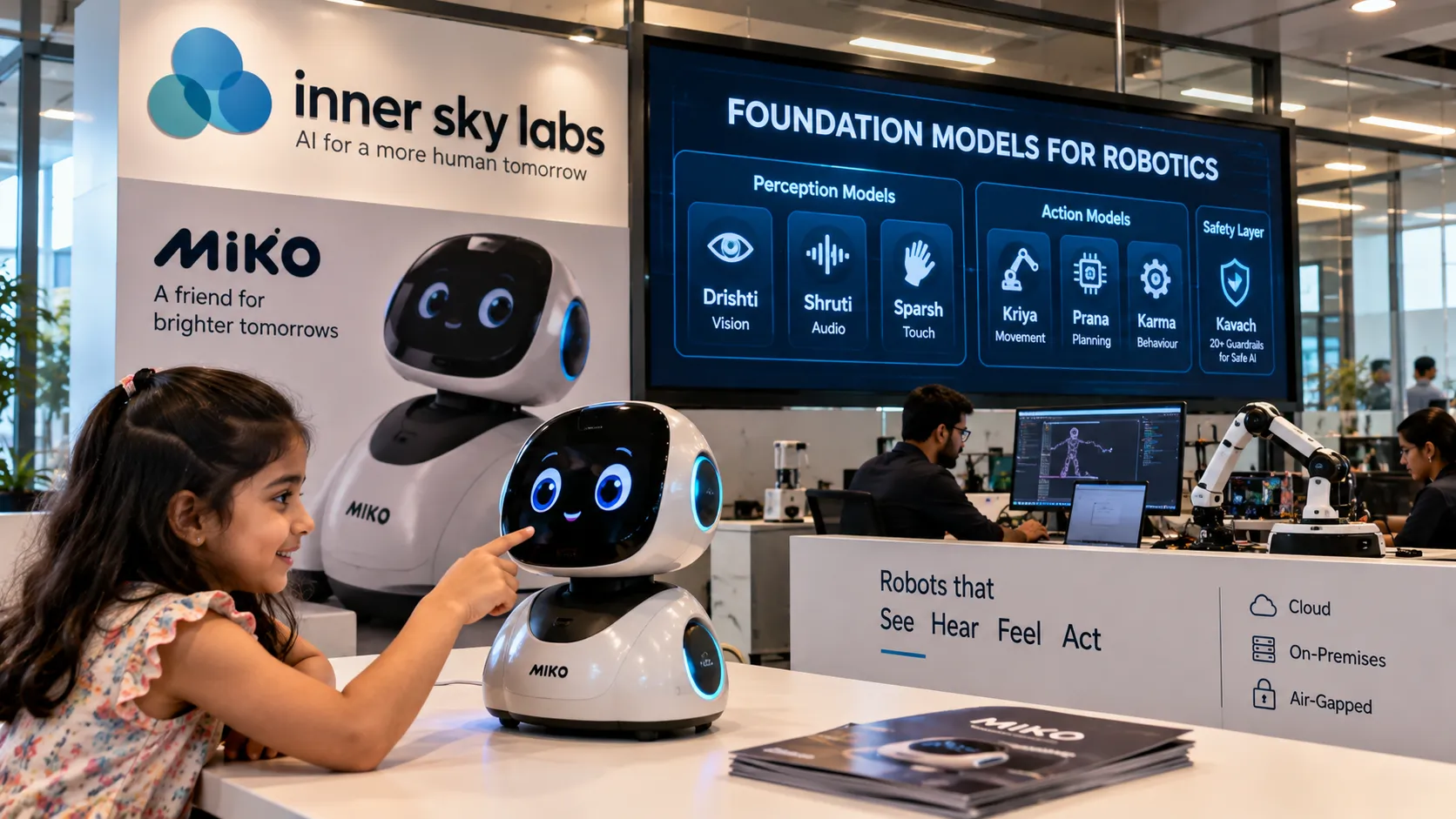
• Perception models: Drishti (vision), Shruti (audio), Sparsh (touch)
• Action models: Kriya, Prana, Karma
• Safety layer: Kavach, with more than 20 guardrails
• Deployment: cloud, on-premises or air-gapped; hardware-agnostic
• Funding: closing ₹300 crore (about $30.9 million) from YourNest, Keshav R Murugesh and new global investors, taking the total to about $100 million
• Traction: four to five large deployments across the US, Europe and Africa
A family of models for the physical world
Inner Sky Labs has organised its models into three layers. The perception layer includes Drishti for vision, Shruti for audio and Sparsh for touch, allowing a robot to interpret its surroundings through multiple senses. The action layer — Kriya, Prana and Karma — is designed to turn that understanding into movement, planning and behaviour. Sitting across both is Kavach, a safety layer with more than 20 guardrails meant to prevent harmful or unpredictable actions.
The names, drawn from Sanskrit, are a deliberate statement of origin. Drishti means sight, Shruti hearing and Sparsh touch; Kriya refers to action and Kavach to armour. In an industry dominated by models built in the United States and China, the branding underlines the company's pitch as an Indian provider of what policymakers increasingly call sovereign AI.
The company has also set out an ambitious scaling roadmap. Kriya is expected to grow from 4 billion to 12 billion parameters, Karma from 4 billion to 16 billion, and Prana from 9 billion to 37 billion. Those sizes are modest compared with the largest language models, but physical-AI models must often run close to the machine they control, where latency, power and cost limits are much tighter than in a data centre.
Built to run anywhere
Inner Sky Labs says the models are hardware-agnostic, meaning they can be deployed on robots made by other companies rather than only on its own devices. Customers can run them in the cloud, on their own premises or in fully air-gapped environments with no internet connection — an option aimed at defence, critical infrastructure and regulated industries that cannot send sensor data to external servers.
The company says it already has four to five large deployments across the United States, Europe and Africa, suggesting that the technology has moved beyond the laboratory and into commercial pilots.
From toy robot to AI platform
Inner Sky Labs was founded in 2015 by IIT Bombay alumni Sneh Vaswani, who serves as chief executive, Prashant Iyengar and Chintan Raikar. Its Miko robots, which converse with children, tell stories and run educational games, have been sold in markets around the world and have given the company years of real-world data on how people interact with machines in their homes.
That experience is the foundation of its new strategy. Building a consumer robot forced the team to solve problems that are central to physical AI: understanding speech in noisy environments, recognising faces and objects, responding safely to unpredictable human behaviour, and operating on low-cost hardware. The company is now packaging those capabilities as general-purpose models.
A crowded, fast-moving field
Physical AI has become one of the most closely watched areas of technology investment. Large AI labs and chipmakers are developing models and simulation tools for robotics, while a wave of humanoid robot companies in the United States and China has raised large sums on the promise that general-purpose robots can eventually work in factories, warehouses and homes.
India's ecosystem is smaller but growing. Noida-based Addverb, part of Reliance Industries, is developing humanoid robots alongside its warehouse automation business, and Mowito has raised capital to expand its robot software business in the US. Inner Sky Labs' decision to focus on models rather than hardware alone sets it apart from many domestic peers.
Why safety is the selling point
Kavach may turn out to be the most commercially important part of the release. For enterprises considering robots in warehouses, hospitals or public spaces, the main worry is not whether a machine can perform a task but whether it can be trusted to behave safely around people and property. A dedicated safety layer that sits across perception and action, and that can be audited, speaks directly to that concern.
The investment case
The ₹300 crore round will give the company runway to train larger models, expand its research team and build commercial partnerships. Backing from Keshav R Murugesh, a long-time leader in India's IT services industry, brings experience in selling technology to global enterprises — a capability that will matter as the company courts manufacturers and system integrators outside its home market.
The challenge is scale. Training and deploying robotics models requires large amounts of data from real and simulated environments, as well as compute that is costly and in short supply. Competitors with far deeper pockets are chasing the same customers.
Yet Inner Sky Labs has something many new entrants lack: a decade of shipping robots that real people use every day. If it can convert that experience into models that other robot makers trust, it could become one of the first Indian companies to supply core AI technology to the global robotics industry. For investors and policymakers keen to see India move up the AI value chain, that would be a significant milestone.