TechFuture Tech6 MIN READ

South Korea's Insera Solution Raises ₩13.5 Billion for Space Laser-Communication Technology

South Korean deep-tech startup Insera Solution has raised ₩13.5 billion in Series A funding to develop precision optical components for satellite laser communication, addressing the growing bandwidth demands of modern space missions.

By Aravind Kumar · Author2 September 2026New
South Korea's Insera Solution Raises ₩13.5 Billion for Space Laser-Communication Technology

South Korea's Insera Solution has raised ₩13.5 billion in Series A financing, the company confirmed on September 1, from a syndicate of new investors including SV Investment, Shinhan Venture Investment and Intervest, alongside existing backers Daegyo Investment, L&S Venture Capital and Innopolis Partners. The round brings Insera's cumulative funding to approximately ₩17.4 billion as the company develops precision technology addressing a critical bottleneck in modern satellite communications.

Insera develops precision steering mirrors and pointing, acquisition and tracking systems designed to direct lasers with extreme accuracy — components with direct applications across inter-satellite laser links, satellite-to-ground communications, broader space optics and defence-related sensing systems. As satellites increasingly transmit far larger volumes of data than earlier generations of spacecraft, the industry has turned toward optical communication as a technology capable of offering dramatically greater bandwidth than traditional radio-frequency communication links.

The technical challenge underlying laser-based space communication is substantial: successfully directing a laser beam between two objects moving at orbital velocities, often separated by vast distances, requires an extraordinary degree of pointing precision that conventional communication hardware simply cannot achieve. Insera's fast-steering mirror technology and integrated pointing-and-tracking systems are specifically engineered to solve this precision challenge, positioning the company within a highly specialised but increasingly strategically important segment of the global space-technology supply chain.

With the new capital, Insera plans to establish dedicated production capacity for its fast-steering mirror technology while continuing to expand development of complete pointing-and-tracking systems suitable for integration into a broader range of satellite platforms. This move from prototype-stage technology toward established manufacturing capacity marks an important inflection point for the company as it transitions from a research-oriented deep-tech venture toward a scaled hardware supplier.

South Korea has positioned itself as an increasingly active participant in the global commercial space sector, with government policy support and a growing ecosystem of specialised deep-tech startups addressing discrete technical challenges within the broader space value chain. Insera's focus on optical communication hardware — rather than attempting to compete directly in the more crowded and capital-intensive satellite-manufacturing or launch-vehicle segments — reflects a strategic positioning choice that allows the company to serve as a specialised supplier across multiple satellite operators and space programmes simultaneously.

The broader shift toward optical satellite communication reflects an industry-wide recognition that radio-frequency spectrum, while historically the backbone of space communications, faces increasing congestion and bandwidth limitations as satellite constellations proliferate globally. Laser communication technology offers a pathway to dramatically higher data-transmission rates, making components like Insera's precision optical systems increasingly critical infrastructure for next-generation satellite networks supporting everything from earth observation to broadband connectivity.

As global investment in space infrastructure continues to accelerate, Insera's Series A round adds to a growing cohort of specialised deep-tech companies developing the precision hardware components that underpin increasingly sophisticated satellite systems — infrastructure that, while largely invisible to end consumers, is becoming foundational to the continued expansion of global space-based communication and observation capabilities.
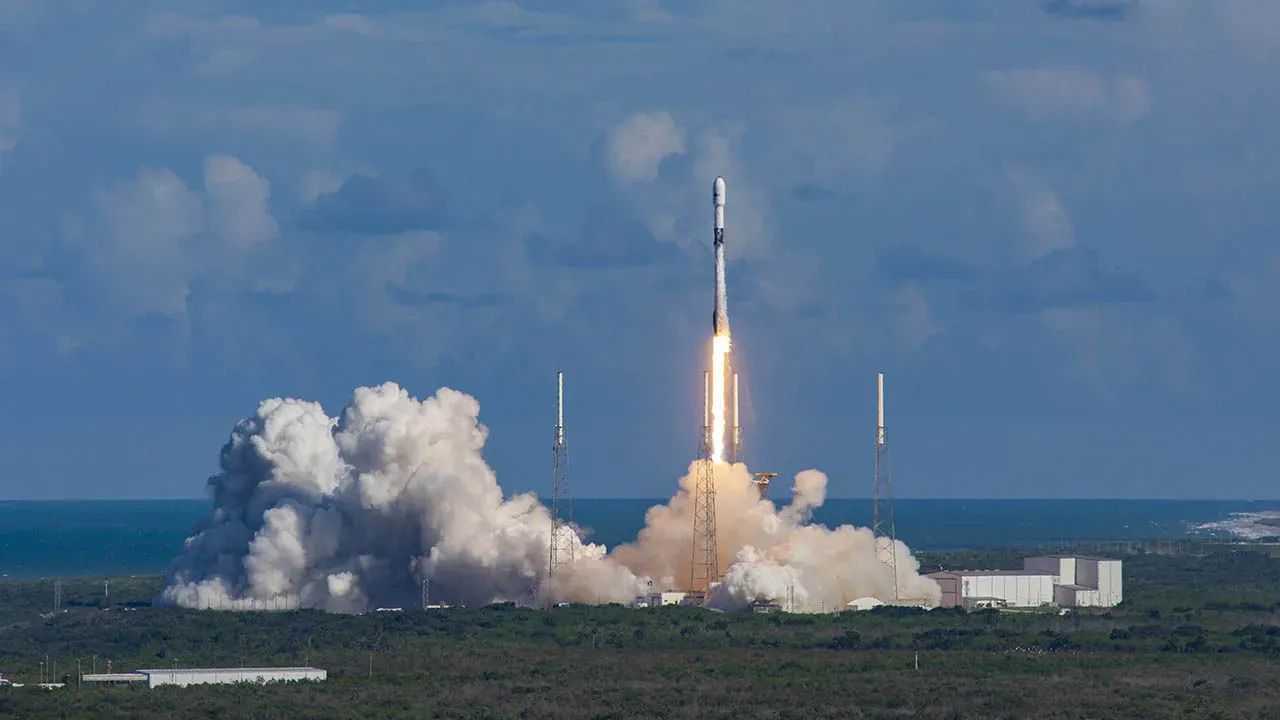

As satellite data volumes explode, the bottleneck isn't the satellites themselves — it's the precision hardware capable of pointing a laser across orbital distances.
TIGI Technology Desk
image.png

South Korea's push into commercial space technology has been substantially bolstered by coordinated government support spanning research funding, procurement commitments and a broader industrial policy that views space capability as strategically important both commercially and from a national-security perspective, given the country's complex regional security environment. Insera's investor syndicate, which includes several Korea-focused venture funds with deep experience backing deep-tech and defence-adjacent startups, reflects the maturing domestic capital base increasingly available to support this national strategic priority.

The company's dual-use technology profile — serving both commercial satellite operators and defence-sector customers — positions Insera to benefit from funding streams across both civilian space-commerce growth and rising defence-technology budgets globally, a combination that has proven attractive to investors seeking exposure to space-technology upside while hedging against the cyclicality that purely commercial space ventures can sometimes experience during broader technology-funding downturns.

Precision optical manufacturing of the kind Insera specialises in also carries meaningfully higher barriers to entry than many other satellite-technology subsectors, given the combination of specialised materials science, ultra-precise mechanical engineering and rigorous space-qualification testing required to produce components capable of reliably operating in the extreme thermal and vibrational conditions of orbital deployment — a technical moat that newer entrants typically require years, rather than months, to credibly replicate.

South Korea's specific position within the global optical-communication supply chain has grown increasingly significant as satellite operators worldwide seek to diversify their component sourcing away from a historically concentrated base of established Western and Japanese suppliers. Insera's emergence as a credible alternative supplier of precision pointing-and-tracking systems reflects broader efforts across multiple space-faring nations to build more resilient, geographically diversified supply chains for critical satellite components, a priority that has taken on additional strategic significance amid heightened geopolitical tensions affecting global technology trade more broadly.

The company's transition toward established manufacturing capacity, rather than continued prototype-stage development, also positions Insera to pursue larger, multi-unit contracts with satellite operators and space agencies that typically require suppliers to demonstrate reliable, repeatable production capability before committing to significant procurement volumes — a threshold that many earlier-stage space-hardware startups struggle to cross convincingly, making this Series A round a genuinely consequential inflection point for the company's commercial trajectory.

As global satellite constellations continue proliferating and data-transmission demands correspondingly increase, component suppliers like Insera occupy an increasingly strategic position within the space-technology value chain, one that is likely to attract sustained investor interest even as broader macroeconomic conditions affect appetite for higher-risk, earlier-stage space ventures elsewhere in the sector.

South Korea's coordinated approach to supporting this segment of its space-technology industry, blending private venture capital with institutional and strategic investor participation, may offer a useful policy template for other nations seeking to build similarly resilient, diversified space-component supply chains of their own.

TagsInsera SolutionSouth KoreaSpace TechnologyOptical CommunicationSeries ASatellites

Reader reviews

Sign in to rate and review this article.
Loading reviews…