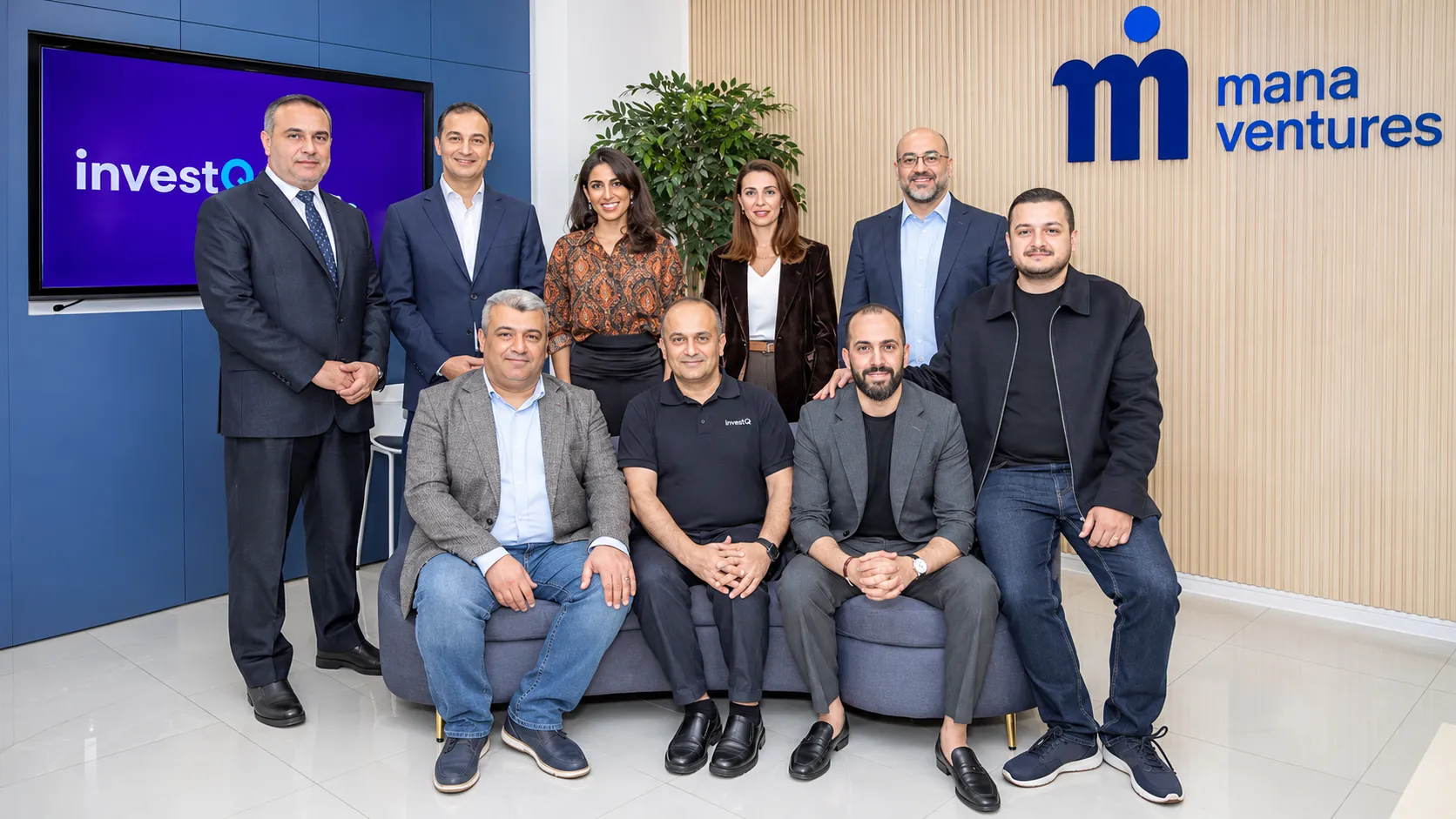
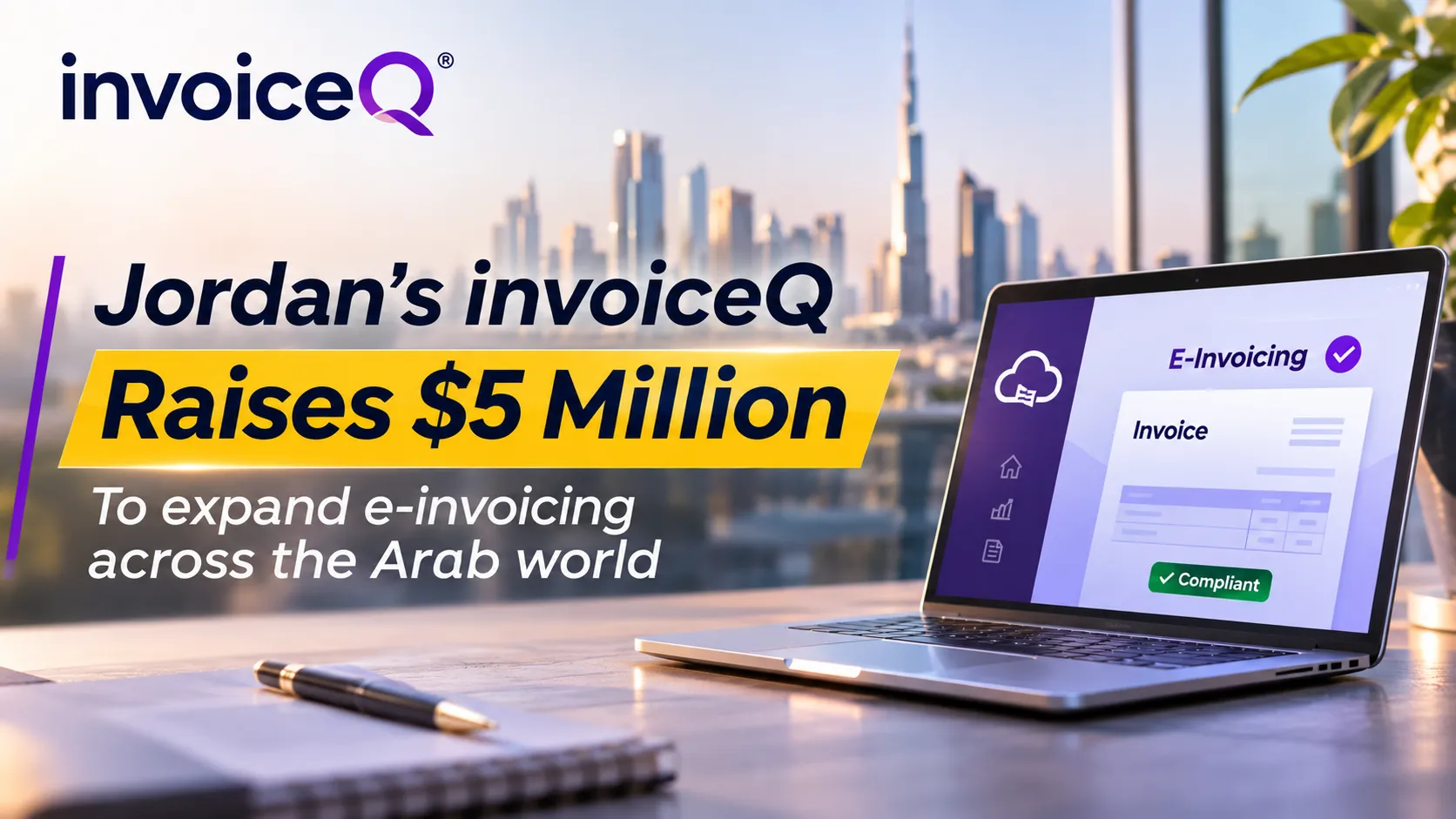
invoiceQ, a Jordanian company that provides electronic invoicing and tax compliance software, has raised $5 million in a Series A funding round. The company plans to expand across the Arab world as governments in the region accelerate the digitisation of their tax systems.
The round, announced on November 22, was co-led by Manara Ventures and Next Ventures. Orange Ventures, the venture arm of the telecom group Orange, and the Jordanian SME Fund also took part.
invoiceQ says it serves more than 1,400 businesses across eight Arab markets: Jordan, Saudi Arabia, the United Arab Emirates, Oman, Qatar, Egypt, Bahrain and Morocco.
The e-invoicing wave
Electronic invoicing is transforming how businesses and governments handle tax compliance. Under e-invoicing systems, invoices are issued in a structured digital format and, in many cases, reported to or validated by tax authorities in real time or near real time.
Governments adopt e-invoicing for several reasons. It helps them reduce tax evasion, particularly for value-added tax (VAT), by giving them direct visibility of transactions. It also improves the accuracy of tax collection, reduces fraud involving fake invoices and simplifies audits.
For businesses, e-invoicing can reduce paperwork, speed up payments and improve record-keeping. However, compliance requires software that can generate invoices in the correct format, integrate with accounting and enterprise systems, and connect to government platforms.
The Middle East and North Africa have become one of the most active regions for e-invoicing adoption. Saudi Arabia was an early mover, rolling out its "Fatoorah" e-invoicing system in phases, with businesses required to integrate their systems with the tax authority's platform. Egypt introduced mandatory e-invoicing for many companies, and the UAE has announced its own e-invoicing programme. Other Gulf states and North African countries are at various stages of planning or implementation.
Where invoiceQ fits
invoiceQ provides software that helps businesses meet these requirements. Its platform generates compliant invoices, connects to tax authority systems and supports related compliance processes. By serving multiple countries, it can help companies with operations across the region manage different national requirements through a single platform.
This multi-country approach could be a key advantage. Regional businesses often operate in several markets, each with its own e-invoicing rules, formats and timelines. A single platform that handles all of them can reduce complexity and cost.
The investors
Manara Ventures and Next Ventures are early-stage investors focused on technology companies in the Middle East. Orange Ventures invests in digital startups across Europe, the Middle East and Africa, and its participation could open doors to partnerships with Orange's business customers in the region. The Jordanian SME Fund supports small and medium-sized enterprises and startups in Jordan.
A $5 million Series A is modest by global standards, but significant for a Jordanian software company. Jordan has a strong pool of technical talent and has produced several successful technology companies, but its startups often face challenges raising capital compared with peers in larger Gulf markets.
Why the region matters
The Gulf economies, led by Saudi Arabia and the UAE, have been investing heavily in digital transformation as part of their economic diversification strategies. Saudi Arabia's Vision 2030 programme places significant emphasis on digitising government services and supporting private sector growth. The UAE has positioned itself as a hub for technology companies and digital services.
As these economies grow and their tax systems mature, demand for compliance software is expected to rise. The introduction of VAT in several Gulf countries over the past decade created a large new compliance market, and e-invoicing adds another layer of requirements.
Competition
invoiceQ operates in a competitive market. Global enterprise software providers, such as large ERP vendors, offer e-invoicing capabilities, as do specialised international compliance companies. Local software providers in each country also compete for customers.
Startups like invoiceQ typically compete on local expertise, ease of use, pricing and responsiveness. Serving small and medium-sized businesses, which may not use large ERP systems, can be a particular opportunity.
The India parallel
For readers in India, the story will feel familiar. India introduced e-invoicing under its Goods and Services Tax (GST) system in phases starting in 2020, gradually lowering the turnover threshold for businesses required to generate e-invoices. The system requires invoices to be registered on a government portal, which issues a unique reference number.
India's experience has created a large market for GST compliance software, with Indian companies such as ClearTax, now Clear, building substantial businesses. Some Indian compliance software companies have expanded into the Middle East, where similar e-invoicing systems are being introduced. The large Indian diaspora in the Gulf, including many finance and accounting professionals, has played a role in this expansion.
Use of funds
invoiceQ is expected to use the new capital to expand across its existing markets, strengthen its technology platform and support the growing compliance requirements of its customers. The company is capitalising on the increasing adoption of e-invoicing and tax compliance requirements across the region.
What to watch
Key milestones for invoiceQ will include growth in its customer base, expansion into new markets as more countries introduce e-invoicing, and the development of additional services such as payments, financing or analytics built on invoice data.
E-invoicing platforms sit on valuable data about business transactions. In other markets, compliance software companies have used that data to offer invoice financing and working capital products to small businesses, creating new revenue streams.
For The Impactful Global Indian's readers, including diaspora entrepreneurs and finance professionals in the Gulf, invoiceQ's funding highlights a growing opportunity at the intersection of regulation, technology and financial services in one of the world's fastest-digitising regions.
Tax digitisation and the informal economy
E-invoicing is also a tool for bringing more of the informal economy into the formal tax system. When invoices are recorded digitally and shared with tax authorities, it becomes harder for businesses to underreport sales or claim false input tax credits. For governments in the region, many of which are seeking to diversify revenue away from oil and gas, stronger VAT collection is an important fiscal priority. That gives compliance software companies a role in broader economic reform, not just in helping individual businesses meet their obligations.