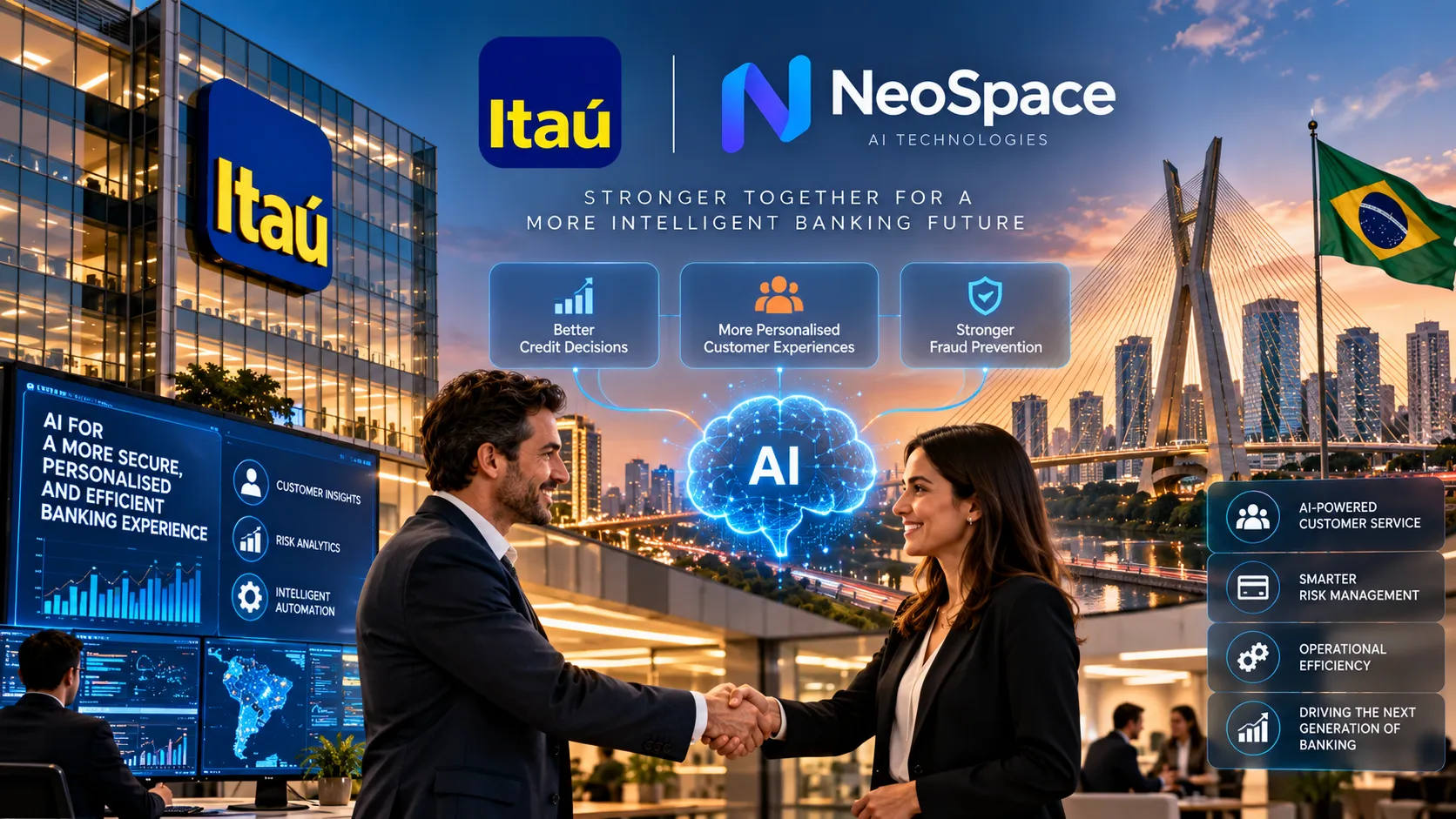
Itaú Unibanco, Latin America's largest private bank by assets, has agreed to acquire NeoSpace, a Brazilian artificial intelligence startup, in a deal that underscores how financial institutions are racing to build proprietary AI capabilities rather than relying solely on technology vendors.
The bank said in a material fact filing dated 26 October that it had agreed to acquire all the shares of NeoSpace A.I. Technologies for 2.925 billion reais, or about $589 million. One instalment will be paid at closing, with the remainder deferred over five years and subject to certain conditions.
The transaction requires approval from Brazil's antitrust authority, CADE, and the Central Bank of Brazil, as well as other customary conditions.
An Existing Partnership
The deal formalises a relationship that has already delivered results. NeoSpace, which builds foundation models trained on large-scale datasets, has worked with Itaú for nearly two years, training models on the bank's proprietary data.
According to Itaú, those models have already produced results in credit, customer relationship management and fraud prevention, three areas central to a bank's profitability and risk management.
Itaú said the acquisition would deepen the existing relationship, strengthen its internal AI capabilities and support its generative AI assistant, known as "ia.i", by enabling more personalised customer experiences. NeoSpace will continue to operate autonomously, and its current team will remain with the company.
Why Banks Want Their Own Models
Most companies adopting generative AI rely on models developed by large technology firms such as OpenAI, Google, Anthropic and Meta, accessed through cloud services or adapted for specific tasks. But some large institutions with vast proprietary datasets have concluded that models trained specifically on their own data can deliver superior results for core business functions.
Banks hold enormous amounts of data on transactions, customer behaviour, credit performance and fraud patterns. Foundation models trained on this information can learn patterns that general-purpose models, trained largely on public internet data, may not capture. In areas such as credit scoring and fraud detection, small improvements in accuracy can translate into significant financial gains.
Owning the technology also gives banks greater control over data security, regulatory compliance and the pace of development, concerns that are particularly acute in a heavily regulated industry handling sensitive customer information.
Brazil's Banking and Fintech Battle
Itaú's move comes amid intense competition in Brazilian banking. The country's traditional banks, including Itaú, Bradesco, Banco do Brasil and Santander Brasil, have faced challenges from digital banks and fintechs, most notably Nubank, which has grown into one of the world's largest digital banks with tens of millions of customers across Latin America.
Brazil's central bank has also driven innovation through initiatives such as Pix, its instant payment system, which has been rapidly adopted and transformed how Brazilians make payments, and Open Finance, which allows customers to share financial data with other institutions.
In this environment, AI has become a key battleground. Banks are deploying AI to personalise services, automate customer support, improve risk models and reduce costs. Itaú's acquisition of NeoSpace signals its determination to lead in this area.
The Value of the Deal
At about $589 million, the acquisition is substantial for a startup, reflecting the premium placed on AI talent and proven technology. The deferred payment structure, spread over five years and subject to conditions, aligns the interests of NeoSpace's founders and team with the bank's long-term goals, helping retain key personnel.