ITC Ltd has completed its acquisition of Sproutlife Foods, the company behind nutrition brand Yoga Bar, taking full ownership of one of India's best-known healthy-snacking labels. The conglomerate bought the remaining 52.5% stake for about ₹645 crore, lifting its holding from 47.5% to 100% and closing a staged buyout that began three years ago.
The transaction, completed on 29 September 2026, marks the end of a carefully sequenced courtship. ITC first invested in Yoga Bar in May 2023, acquiring a 39.42% stake for ₹175 crore, and gradually increased its holding before exercising the final tranche. The structure gave the FMCG major time to understand the brand's economics and gave the founders room to keep scaling before handing over full control.
The numbers explain why ITC chose to complete the deal now. Yoga Bar's turnover rose to ₹452 crore in FY26 from ₹200 crore in FY25, more than doubling in a single year. For a category that many investors had written off as niche only a few years ago, that pace of growth is a strong statement about how quickly Indian consumers are changing what they eat.
A staged buyout built to reduce risk
Staged acquisitions have become a preferred route for Indian consumer conglomerates looking to buy into digital-first brands. Rather than paying a single large cheque upfront, the acquirer takes a meaningful minority stake, agrees a path to majority ownership, and ties later tranches to the brand's performance. The model lets the buyer study distribution, margins and customer behaviour from the inside, while founders keep an incentive to grow the business ahead of each step.
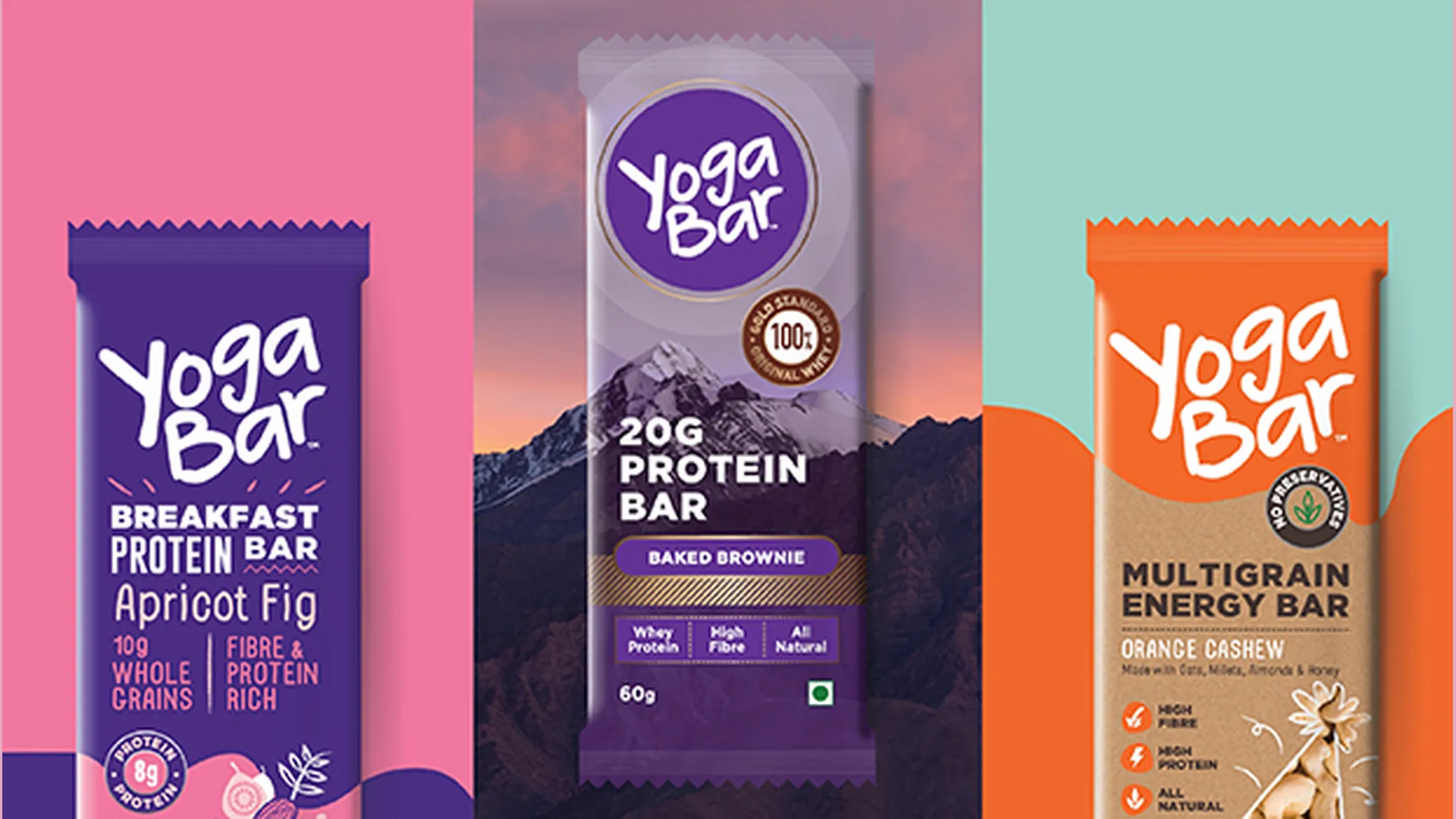
Yoga Bar fits that playbook closely. Founded in Bengaluru by sisters Suhasini and Anindita Sampath, the brand built its early following online with protein bars, muesli, oats and nut butters positioned around clean labels and simple ingredients. It later extended into modern trade, quick commerce and general retail, a shift that required the kind of supply chain and sales muscle a group such as ITC already has.
The implied valuation also merits attention. At about ₹645 crore for 52.5%, the final tranche values the whole of Sproutlife Foods at roughly ₹1,230 crore. That compares with an implied valuation of about ₹444 crore when ITC paid ₹175 crore for 39.42% in 2023. In other words, the value of the business has nearly tripled over the life of the partnership, a return that early investors and the founding team will share.
Why health foods matter to ITC
ITC has spent more than a decade building a food portfolio that now spans staples, biscuits, snacks, noodles, dairy and beverages under brands such as Aashirvaad, Sunfeast, Bingo and B Natural. Much of that growth has come from mass categories where scale and distribution decide winners. Yoga Bar gives the group a premium, digitally native brand in a segment where younger urban consumers are willing to pay more for protein, fibre and ingredient transparency.
Health-led snacking is also a hedge against a structural shift in consumption. As awareness of lifestyle diseases rises and fitness culture spreads beyond the largest cities, conventional snack categories face pressure to reformulate. Owning a brand that was built around nutrition from the start is faster than reinventing a legacy product line, and it brings with it a community of loyal online customers and data on what they buy.
A rare, clean exit for India's D2C ecosystem
For India's direct-to-consumer ecosystem, the deal carries symbolic weight. The sector attracted heavy venture investment during 2020 and 2021, when low interest rates and pandemic-driven online shopping pushed valuations sharply higher. Many of those brands have since struggled with rising customer acquisition costs, thin margins and limited exit routes. Public listings remain available only to a handful of companies with sufficient scale, leaving strategic sales to large consumer groups as the most realistic outcome for most.
Against that backdrop, a fully completed acquisition at a materially higher valuation than the entry price is a useful reference point for founders and investors alike. It shows that incumbents are prepared to pay for brands that have proved repeat purchase, built a credible offline presence and kept costs under control. It also reinforces a lesson that has become clearer since 2022: growth alone is not enough, and acquirers increasingly look for brands whose unit economics can survive inside a larger organisation.
The transaction also stands out for its leadership story. Women-founded consumer brands remain under-represented among Indian exits, and Yoga Bar's journey from a founder-led startup to a fully owned unit of one of the country's largest companies offers a visible example for the next generation of entrepreneurs building in food and wellness.
Integration is the real test
Completing an acquisition is only the start of the harder work. Large conglomerates have a mixed record of preserving the culture and speed that made acquired startups attractive in the first place. The risk is familiar: product decisions slow down, marketing becomes less distinctive, and the brand drifts toward the mass market in pursuit of volume, diluting the premium that justified the purchase price.
ITC's gradual approach may help mitigate some of those risks. After three years as a significant shareholder, it has had time to understand how Yoga Bar operates and where its distribution network can add value without disrupting the brand's positioning. The obvious opportunities lie in expanding reach in smaller cities, using ITC's procurement scale to protect margins, and taking the brand into new formats and adjacent categories.
Competition, however, is intensifying. Protein and better-for-you snacking has attracted a crowd of startups, private labels from quick-commerce platforms, and new launches from established FMCG players. Price sensitivity remains high outside the largest metros, and consumer claims around health benefits face growing regulatory scrutiny. Sustaining growth at anything near the FY26 pace will require continued innovation rather than distribution alone.
What to watch
In the months ahead, investors will watch for three signals: whether Yoga Bar's founders remain involved in running the business, how quickly the brand's products appear across ITC's wider retail network, and whether the group uses the platform to acquire or build further brands in the nutrition space.
The broader message is already clear. India's consumer giants see health-conscious eating as a durable trend rather than a passing fashion, and they are willing to pay a premium to own brands that have earned consumer trust. For the country's D2C founders, ITC's completed buyout of Yoga Bar is both a validation and a benchmark: build a brand people return to, prove it can scale beyond the internet, and the exit door remains open.