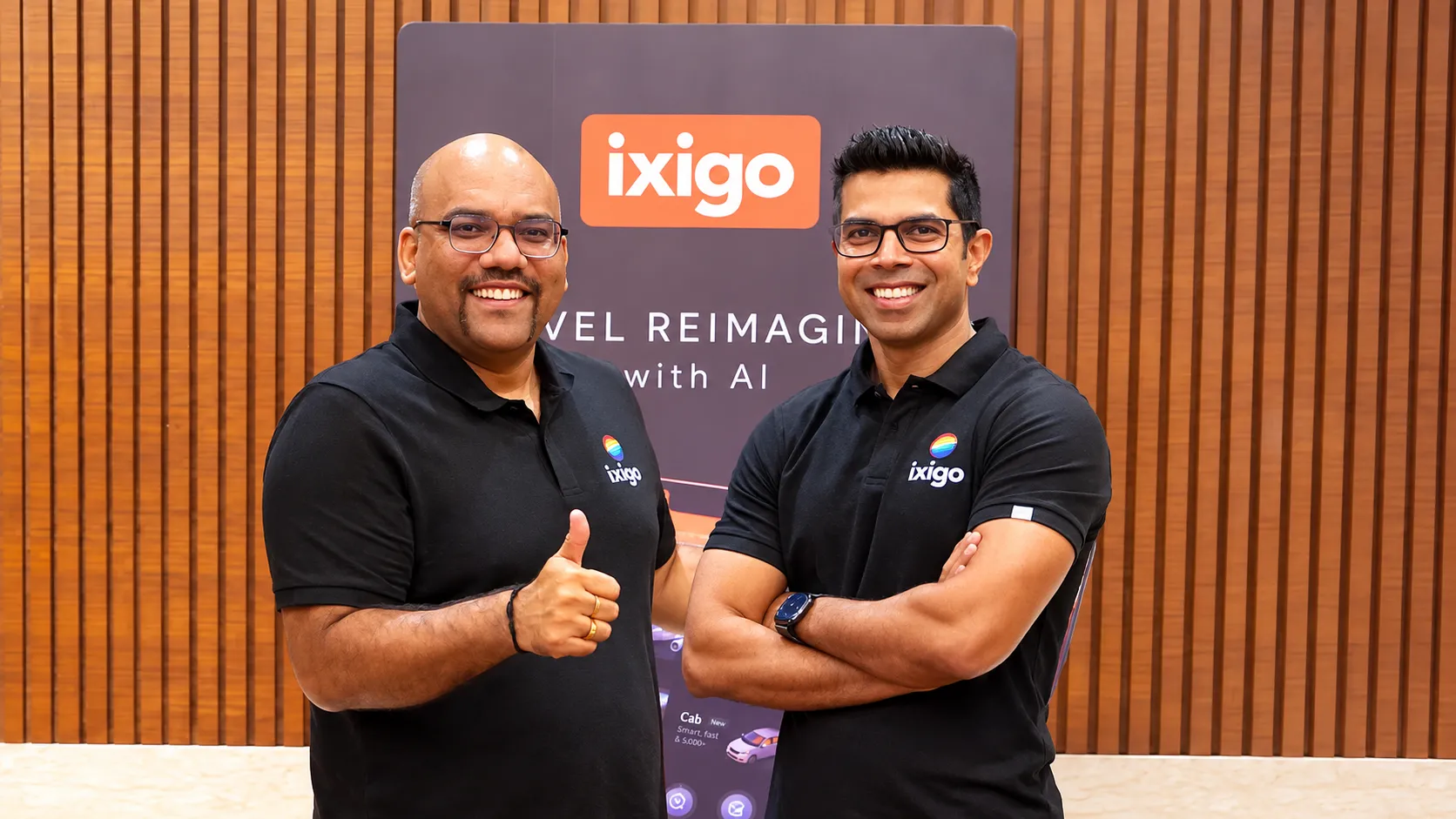
For most global online travel companies, the trophy categories are flights and luxury hotels. ixigo has built its business on something far less glamorous: train tickets, intercity buses and the price-sensitive travellers of India's smaller cities. That focus has turned the Gurugram-based company into one of the few listed Indian consumer internet businesses with a steady, cash-generating core. Now it is using that engine to fund its next bet.
An in-depth analysis published by Inc42 on 2 October lays out the numbers behind the strategy. In the first quarter of FY27, the April to June period, ixigo processed gross transaction value of ₹5,524 crore, up 19% from a year earlier. Revenue from operations grew 13% to ₹356.75 crore, and contribution margin rose 13% to ₹144.94 crore, holding steady at about 40.6% of revenue.
Adjusted EBITDA, however, slipped 7% to ₹29 crore. That decline is not an accident. It reflects money being spent on new categories, most notably hotels, that management expects to take years to mature.
Three engines with different economics
ixigo's three established businesses play distinct roles.
Trains are the largest by volume. In Q1 FY27, the train business handled 2.44 crore passenger segments and GTV of ₹2,138.86 crore. Revenue grew 9% to ₹141.04 crore, while contribution margin jumped 29% to ₹52.74 crore, or 37% of revenue. Its gross take rate was 6.54%. The company's ConfirmTkt app and its own platform help travellers navigate Indian Railways' complex booking system, including waitlists and tatkal quotas, and charge for convenience and assurance features.
Flights generate the highest GTV per transaction but face the toughest competition. The segment recorded GTV of ₹2,341.84 crore from 29 lakh passenger segments, with revenue of ₹104.56 crore and a contribution margin of ₹41.04 crore, or 39%. The gross take rate was 8.41%, and about 31% of air bookings came with an ancillary product attached, such as insurance or seat selection.
Buses are the fastest-growing and most profitable unit. Through AbhiBus, which ixigo acquired in 2021, the segment processed GTV of ₹947.43 crore, up 39%, from 89 lakh passenger segments, up 33%. Revenue rose 34% to ₹102.55 crore, and contribution margin reached ₹54.22 crore, a striking 53% of revenue. Its gross take rate of 11.76% was the highest of the three.
Across the platform, ixigo reported 8.5 crore monthly active users and 3.27 crore app downloads in the quarter.
Why the full-stack model matters
The logic of offering trains, buses and flights together is that Indian travel journeys are often multimodal. A traveller from a tier-3 town may take a bus to a regional hub, a train to a metro and a flight onward. A platform that serves all three can capture more of each trip, cross-sell between categories and lower the cost of acquiring customers because a single user generates repeated, varied bookings.
The FY26 numbers show how that plays out financially. Of total revenue of ₹1,228 crore, ticketing contributed ₹1,129 crore, advertising ₹65.3 crore and other operating revenue ₹33.5 crore. Advertising, in particular, is a high-margin stream that grows with traffic.
Costs, though, are climbing. Advertising and sales promotion expenses rose 48% to ₹324.46 crore in FY26. Customer refunds and cancellation costs grew 44% to ₹260.61 crore, partner support costs 40% to ₹142.76 crore, payment gateway charges 22% to ₹70.50 crore and distribution costs 32% to ₹39.15 crore. Some of this is the natural consequence of growth; some reflects the competitive intensity of Indian travel, where incentives and guarantees are used to win customers.


