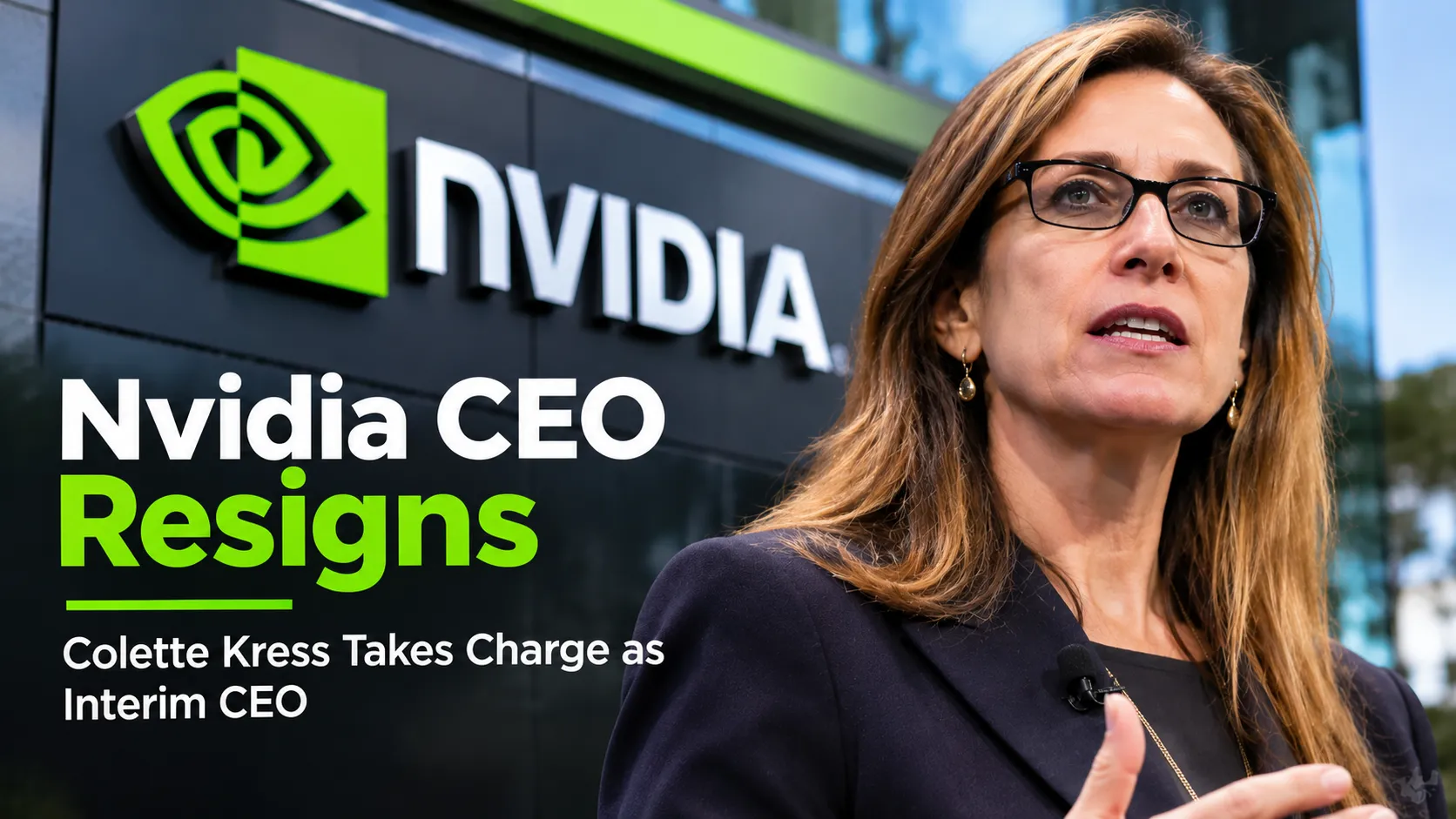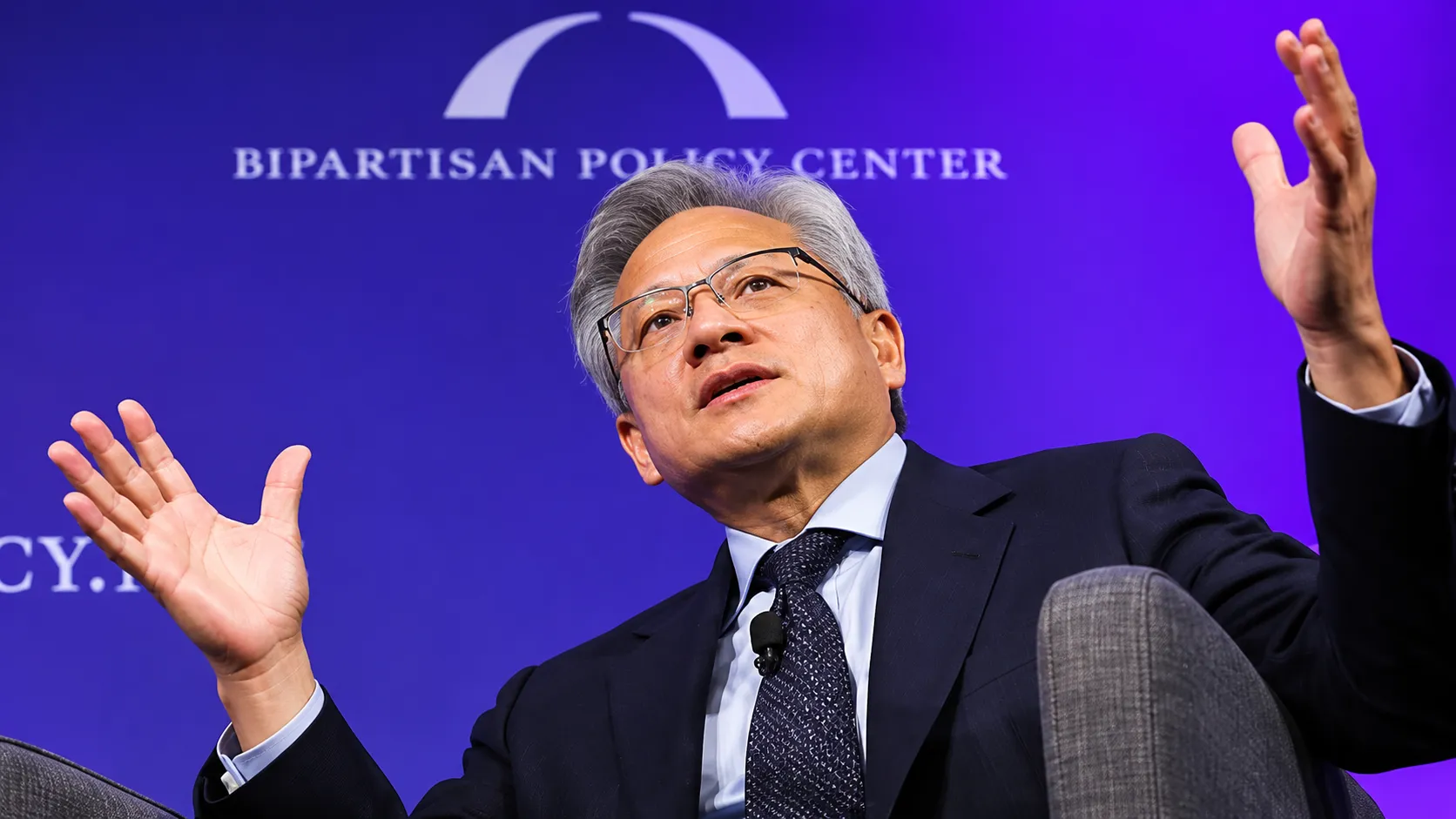
The man who turned a graphics-chip maker into the most important company of the artificial intelligence era has left it. Jensen Huang resigned as president, chief executive and a director of Nvidia on Thursday, November 12, bringing an abrupt end to one of the longest and most consequential tenures in corporate history.
Nvidia said its board had accepted Huang's resignation "effective immediately." Colette Kress, the company's executive vice president and chief financial officer since 2013, will serve as interim chief executive while the board searches for a permanent successor, and will continue as CFO during that period. The board said it would consider both internal and external candidates.
The company also appointed Harvey C. Jones, a director since 1993 and a former chief executive and executive chairman of chip-design software company Synopsys, as the first chair of its board. According to Nvidia's regulatory filing, the board accepted the resignation on November 11, and the company announced it the following morning.
"The Board has full confidence in Colette and the leadership team," Jones said in a statement, adding that "we expect the company's operations, customer commitments and product roadmap to continue without interruption."
A week that changed Nvidia
The resignation caps an extraordinary week. On November 8, Nvidia's board opened an independent investigation after Huang told employees he had been unfaithful to his wife. The probe followed reports that US intelligence agencies had linked him to Alice Huang, a businesswoman whom officials reportedly suspect of ties to Chinese intelligence and of helping move restricted chips to China. The allegations have not been proven, Huang has not been charged with any crime, and the board said it had no reason to believe national security or confidential company information had been compromised.
The pressure intensified when the New York Times reported a separate relationship with Kimberly Powell, Nvidia's vice president of healthcare, and the Wall Street Journal reported on November 11 that directors had met to discuss Huang's position. Huang said he would cooperate with the investigation.
How the market reacted
Nvidia shares fell as much as 14.35% to $148.80 shortly after the opening bell on Thursday, according to StockTitan, before recovering to close down 4.34% at $166.19. Trading volume of about 748 million shares was more than five times the daily average, and the close left Nvidia's market value at roughly $4.01 trillion, according to The Motley Fool.
The stock is now about 31% below its record close of $239.24 on October 6. Rival chipmakers rallied as investors weighed whether the leadership vacuum could open the door to competitors: Advanced Micro Devices rose 5.86% and Broadcom gained 5.54%.
Who is Colette Kress?
Kress, 59, is one of the most recognisable figures on Wall Street's AI beat. She joined Nvidia as CFO in September 2013 after serving as chief financial officer of Cisco's business technology and operations finance unit, and before that spent 13 years at Microsoft, where she was CFO of the server and tools division, according to Fox Business. She has been the company's main voice on quarterly earnings calls throughout the AI boom.
"NVIDIA's strength has always come from its people," Kress said. "I am committed to building on the extraordinary foundation Jensen created over the last 33 years."
Her appointment makes her the first woman to lead the world's most valuable semiconductor company, a milestone that has prompted debate about whether she has been handed the role at a moment of maximum risk.
Analysts weigh the loss
Wall Street's reaction combined respect for Kress with anxiety about life after Huang. KeyBanc analyst John Vinh downgraded Nvidia to sector weight from overweight, warning that replacing Huang's role in technology strategy, product development, customer relationships and culture could create organisational challenges, according to Yahoo Finance.