TechArtificial Intelligence5 MIN READ

Jensen Huang to Face Congress Before Thanksgiving as Lawmakers Press for Answers on Nvidia's China Chip Exports and an Alleged Spy Link

Former Nvidia chief executive Jensen Huang has agreed to testify before Congress, with House Foreign Affairs chairman Brian Mast saying the closed-door hearing will take place before Thanksgiving, Engadget reported on November 12. Lawmakers want answers about his reported ties to a woman suspected of links to Chinese intelligence and about chip diversion to China, while senators asked the administration to preserve documents on Nvidia's exports.

By Aravind Kumar · Author13 November 2026New
Jensen Huang to Face Congress Before Thanksgiving as Lawmakers Press for Answers on Nvidia's China Chip Exports and an Alleged Spy Link

Jensen Huang's resignation as Nvidia's chief executive has not ended his troubles in Washington. If anything, lawmakers are pressing harder for answers.

Huang agreed to testify before Congress on Wednesday, November 11, hours before Nvidia announced his resignation, after lawmakers threatened to subpoena him, according to Engadget. House Foreign Affairs Committee chairman Brian Mast said the hearing would take place before Thanksgiving, which falls on November 26 this year.

The hearing is expected to be held behind closed doors, though Mast said he expected it to be filmed and transcribed. The House Intelligence Committee and the House Select Committee on the Chinese Communist Party are also involved.

"He has some very serious questions to answer," Mast said, according to Engadget, while adding: "I don't want to see anything hurt in NVIDIA."

What lawmakers want to know

Representative John Moolenaar, who chairs the China select committee, said lawmakers' concerns centre on national security, including whether Huang was influenced by a Chinese spy and whether Chinese intelligence gathered information on US technology, according to ABC News. He also cited concerns about the diversion of advanced chips to China.

Before Huang's resignation, Mast, Moolenaar and House Intelligence chairman Rick Crawford had sent him a letter requesting a joint, closed-door briefing. The China committee's Republicans separately requested a briefing on November 18. "We are in discussions with him right now on a date to come and meet with us," Moolenaar said.

Moolenaar said he would support a subpoena if necessary, and that all three committee chairs had indicated they would use subpoena power if a scheduled appearance did not take place, ABC News reported.

The allegations

Huang has admitted to an extramarital affair, but has not publicly said with whom. Congressional Republicans have referred to the woman as Alice Huang, a businesswoman who is not related to him and whom US officials reportedly suspect of ties to Chinese intelligence.

The Justice Department is reportedly investigating whether Alice Huang helped smuggle Super Micro Computer products to China and is leading a probe into her former company, Megaspeed International, according to Engadget. Singapore has barred her from re-entering the country after police found she knowingly gave inaccurate information about her role at Megaspeed, although police found insufficient evidence that she committed offences related to the company's declarations. The investigation into Megaspeed and six others is ongoing.

None of the allegations against Huang has been proven, and he has not been charged with any crime. President Donald Trump has said the FBI is also investigating.

Senators target the administration

The scrutiny extends beyond Huang. Senators Elizabeth Warren and Chris Coons sent a letter on Wednesday to Commerce Secretary Howard Lutnick, Secretary of State Marco Rubio and White House chief of staff Stephen Miller, asking them to preserve documents related to Nvidia's exports of advanced AI chips to China, according to ABC News. They also requested a briefing for members of Congress.

Their letter followed reports that some senior officials knew that Huang may have been a target of a Chinese spying operation. Senate Minority Leader Chuck Schumer said Congress must still demand answers from Huang and others at Nvidia.
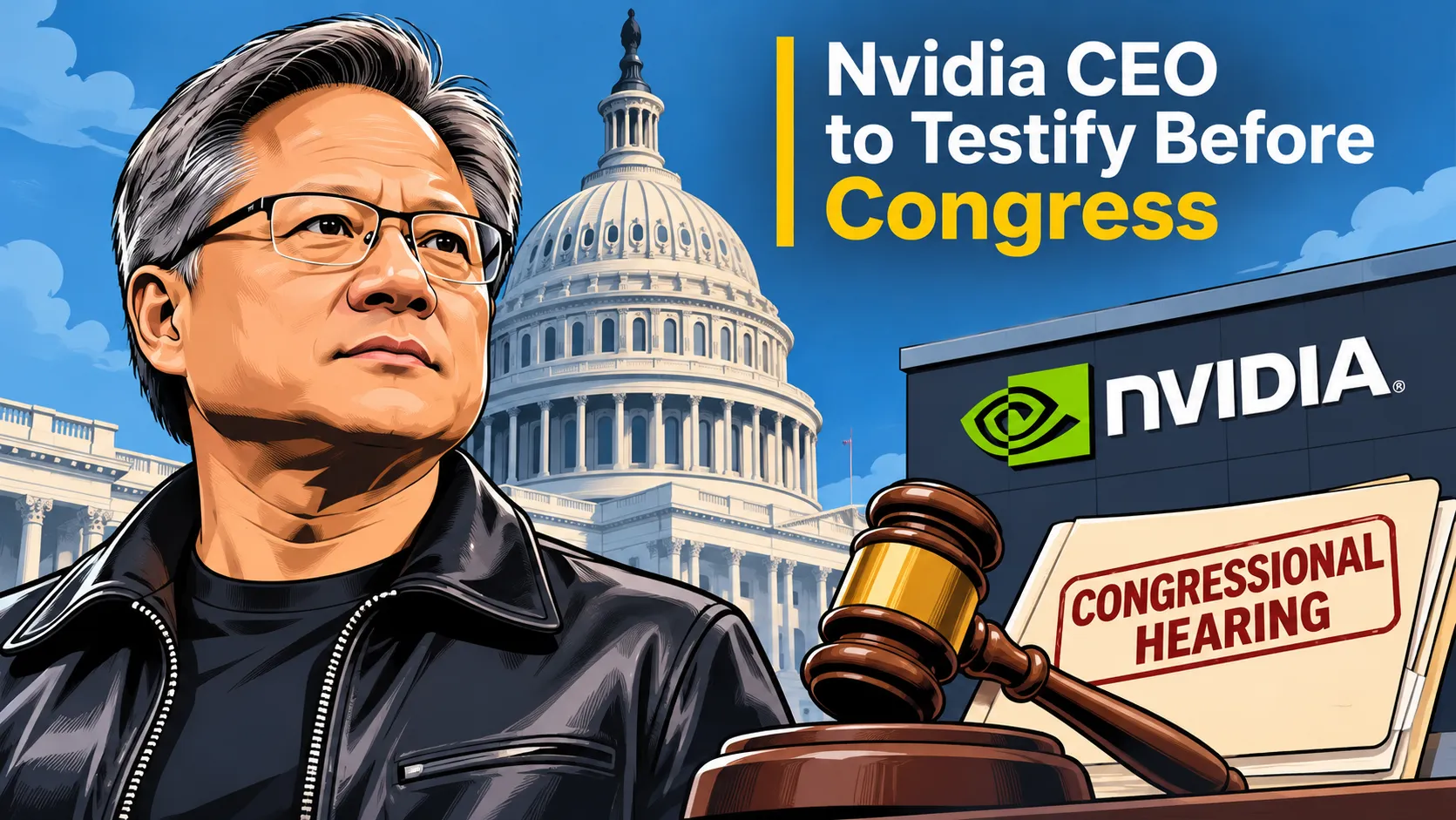

“He has some very serious questions to answer.”
— Brian Mast, Chairman, House Foreign Affairs Committee
7ddecc14-fc16-4f0d-b9c2-0d3e439f8fac.png

Partisan divisions

Not all lawmakers are focused on the personal scandal. Representative Tim Burchett, a Republican, said Huang should testify. "I don't think he's got anything to hide now. Let it fly," he said, according to ABC News.

Representative Jay Obernolte, a California Republican, called the affair a distraction and said he hoped the discussion would stay focused on export policy for advanced chips. Some Republicans dismissed concerns about Huang's access to President Trump, including state dinners and travel on Air Force One.

Republicans hope to question Huang before Democrats take control of the House in January, following their gains in the November 3 midterm elections.

The export control debate

The Huang affair has intensified a long-running debate in Washington about how tightly to restrict sales of advanced AI chips to China. The Trump administration began allowing some sales of Nvidia's H200 processors to China on a case-by-case basis in January. Critics argue that any access to top-end chips helps China's military and AI development.

On November 11, Reuters reported that a Chinese university with ties to the People's Liberation Army had bought Nvidia H200 chips this year despite being on a US export blacklist, adding fuel to calls for stricter controls and enforcement.

Implications for Nvidia

Although Huang has left Nvidia, the company faces continued scrutiny. Lawmakers may seek testimony or documents from other executives, and any findings about chip diversion could lead to stricter export rules that affect Nvidia's business in China and elsewhere. Interim chief executive Colette Kress must navigate this political environment while reassuring investors ahead of third-quarter results on November 17.

What it means for India

India has benefited from US efforts to build trusted technology supply chains outside China, and US companies, including Nvidia, have invested in Indian AI infrastructure and research. Stricter US export controls generally exempt close partners, but tighter enforcement could affect how advanced chips are distributed and tracked globally, including in India. A prolonged political storm around Nvidia could also complicate its partnerships with governments, including India's.

Business as usual?

Nvidia's board has sought to reassure customers and investors that its operations will continue without interruption. But the company's relationship with Washington is important to its business, since US export rules determine where it can sell its most advanced products. A prolonged political controversy could make it harder for Nvidia to lobby against tighter restrictions or to win approval for sales to particular markets.

The company's new leadership will need to rebuild trust with lawmakers from both parties, many of whom have long been sceptical of Nvidia's efforts to sell chips in China.

The testimony will also be closely watched by other technology executives, since it may set expectations for how companies are expected to manage national security risks in their dealings with China.

What comes next

The date of Huang's testimony has not been announced, but Mast said it would take place before Thanksgiving. Lawmakers will seek to understand what Huang knew about the alleged intelligence operation and whether national security was compromised. The outcome could shape US export policy and Nvidia's relationship with Washington for years to come.

TagsJensen HuangNvidiaCongressHouse Foreign Affairs CommitteeBrian MastJohn MoolenaarRick CrawfordChina Select Committeeexport controlsAI chipsAlice HuangMegaspeednational securityElizabeth WarrenChris CoonsHoward LutnickUS-China tech rivalrychip smugglingIndia semiconductorsinvestors

Reader reviews

Sign in to rate and review this article.
Loading reviews…

