FundingIPO Watch5 MIN READ

Jio Platforms' Record IPO Opens as Institutions Fill Their Quota Within Minutes and Retail Investors Take Their Time

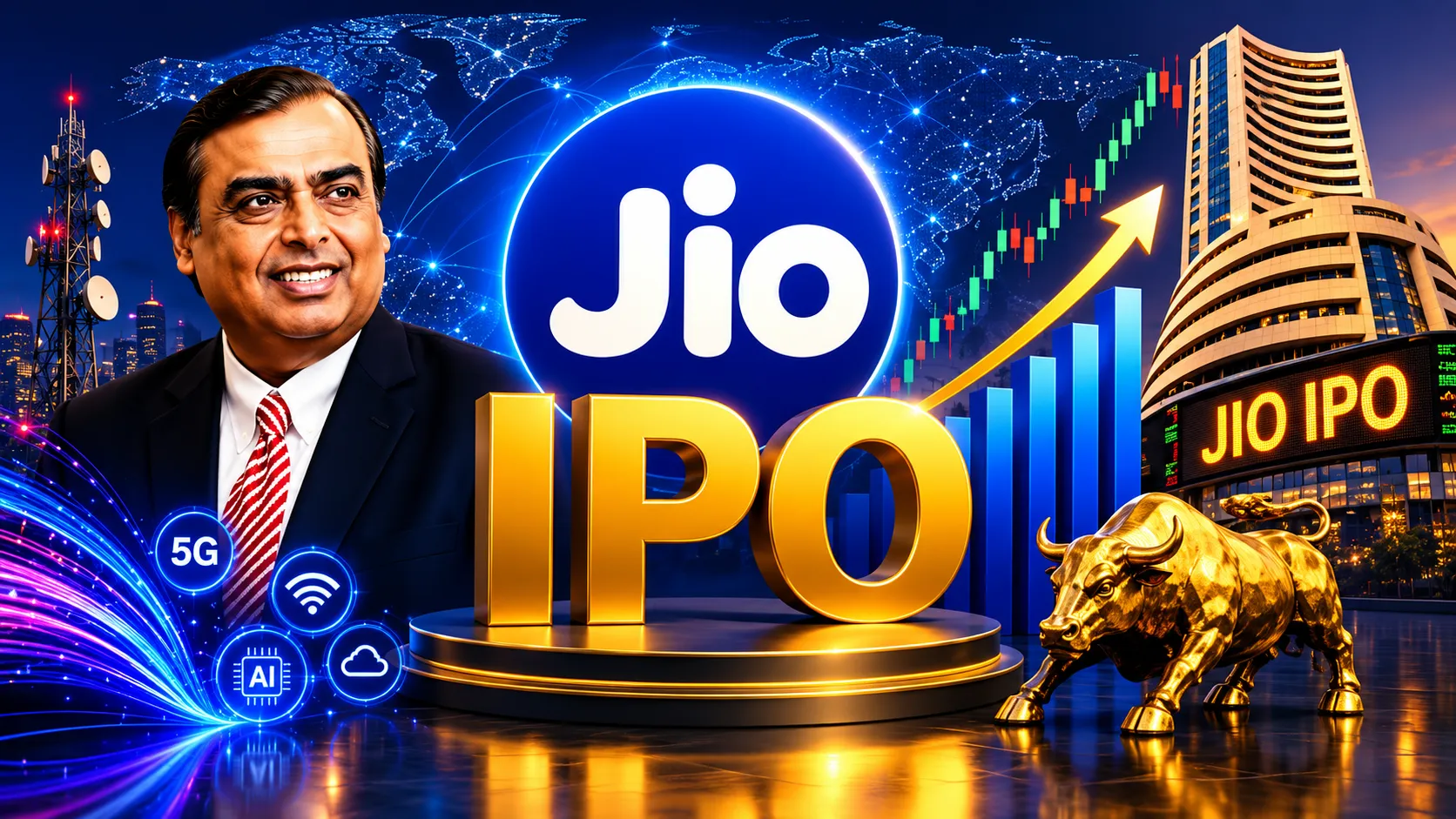
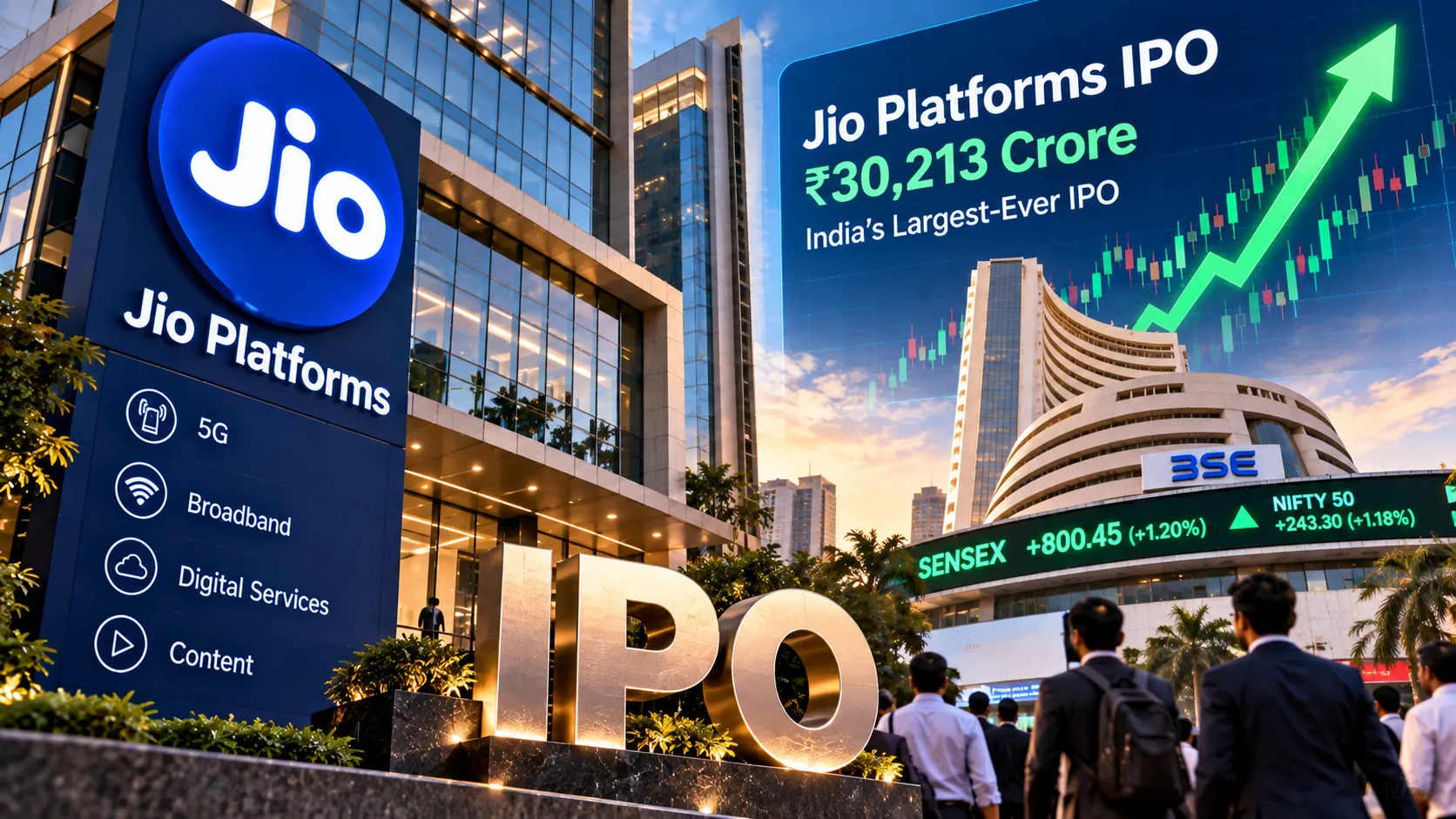
Jio Platforms' ₹30,213 crore IPO, India's largest ever, opened on October 21 with qualified institutional buyers covering their portion 1.95 times within minutes. The overall issue was 58% subscribed by mid-morning, with retail at 10%. Priced at ₹1,065-1,119 a share, the offer values Jio at about ₹10.3 lakh crore.

By Nisha Omkumar · Author21 October 2026New
Jio Platforms' Record IPO Opens as Institutions Fill Their Quota Within Minutes and Retail Investors Take Their Time

India's largest-ever initial public offering got off to a brisk start on Wednesday, October 21, as institutional investors rushed to secure shares in Jio Platforms, the digital and telecom arm of Reliance Industries, within minutes of the issue opening for subscription.

By 9:45 am, the qualified institutional buyer (QIB) portion of the ₹30,213 crore issue had been subscribed 1.95 times, according to BSE data reported by Inc42. Institutional investors had bid for 9.57 crore shares against 4.90 crore reserved for them. Domestic financial institutions, banks and insurers accounted for bids of 8.04 crore shares, while foreign institutional investors bid for 1.28 crore shares.

The overall issue was 58% subscribed at that point, with bids for 11.48 crore shares against 19.75 crore on offer. Other categories moved more slowly, as is typical on the first morning of an IPO: retail investors had subscribed 10% of their portion, non-institutional investors 12%, employees 26% and eligible Reliance Industries shareholders 21%.

The terms of the offer

Jio Platforms has priced its shares in a band of ₹1,065 to ₹1,119. At the upper end, the issue raises ₹30,213 crore, or about $3.2 billion, and implies a valuation of roughly ₹10.3 lakh crore, or about $108 billion. The offer closes on Friday, October 23.

The issue is entirely a fresh issue of up to 27 crore shares, with no offer for sale by existing shareholders. That means all the money raised goes to the company rather than to selling investors. Jio plans to use ₹27,500 crore to prepay certain borrowings of its subsidiary Reliance Jio Infocomm, with the balance for general corporate purposes.

Ahead of the opening, Jio raised about ₹8,110 crore from anchor investors, allotting about 7.25 crore shares at ₹1,119 each. Bankers said the anchor book drew institutional bids worth more than ₹2.5 lakh crore, a record for an Indian IPO, from investors including LIC, Capital Group, GIC, BlackRock and leading Indian mutual funds.
ab363422-7a3a-4814-9eef-33133b102d74.png

A landmark for Indian markets

Akash Ambani, chairman of Reliance Jio Infocomm, described the listing as a landmark for Indian capital markets in remarks reported by Business Standard on October 20. The offering comes a decade after Jio's launch in September 2016 transformed India's telecom market with cheap data and free voice calls, helping make India one of the world's largest consumers of mobile internet.

Reliance Industries shares rose more than 2% on the opening day of the IPO, contributing to a rally in the broader market. The Sensex climbed more than 800 points in early trade, helped by gains in heavyweight stocks and positive global cues.

The scale of the offer makes it a test of the depth of India's capital markets. At about ₹30,000 crore, it is larger than any previous Indian IPO, surpassing the listings of Life Insurance Corporation and Hyundai Motor India. Absorbing an issue of this size requires participation from every category of investor, from global funds to millions of retail applicants.

Why institutions moved fast

The speed of institutional demand reflects both the scale of Jio's business and the scarcity of comparable assets. Jio has more than 533 million subscribers and carries more than 60% of India's wireless data traffic. In the 2025-26 financial year, it generated revenue of about ₹1.47 lakh crore and EBITDA of about ₹73,380 crore, a margin of roughly 50%.


“The speed with which institutions filled their book suggests the biggest money in Indian markets wants a piece of Jio from day one.”
— TIGI Funding Desk

For fund managers benchmarked against Indian indices, owning Jio may become a necessity once it is listed and included in major benchmarks. Global investors seeking exposure to India's digital economy have had limited options among large listed companies, and Jio offers a direct play on data consumption, broadband, enterprise connectivity and emerging businesses such as cloud services and artificial intelligence.

The heavy participation of domestic institutions is also notable. Indian mutual funds, insurers and pension funds have been the backbone of the stock market in 2026, absorbing record selling by foreign portfolio investors, who have withdrawn more than ₹3 lakh crore from Indian equities this year.

Retail interest to build

Retail subscription of 10% in the first hour is typical for large IPOs, where individual investors often wait until the final day to apply. Analysts expect retail participation to pick up over the three-day window, encouraged by Jio's brand recognition, an active grey market and the prospect of listing gains.

A separate quota for eligible Reliance Industries shareholders gives the conglomerate's millions of retail investors a dedicated route to participate. Reliance is one of India's most widely held stocks, and the shareholder quota is designed to reward long-term investors in the parent company.

Market participants will be watching whether the retail portion is fully subscribed. Some analysts have cautioned that the size of the issue and the valuation leave less room for spectacular listing gains than in smaller, heavily oversubscribed IPOs.

Key risks for investors

The prospectus highlights several risks. Telecom is capital-intensive, and Jio must continue investing in 5G, fibre broadband and data centres while keeping tariffs competitive. Its average revenue per user, though rising, remains below that of rival Bharti Airtel, and future tariff increases are sensitive both competitively and politically.

Investors will also weigh Reliance's continued control, with a stake of about 66%, the role of strategic investors such as Meta and Google, and related-party dealings within the group. Jio's satellite broadband ambitions remain pending regulatory approvals, as does the wider satellite internet market in India.

How the IPO shapes India's capital markets

Large offerings of this kind test the depth of India's capital markets. They require significant liquidity from domestic institutions, foreign investors and retail participants at the same time, and their outcome can influence sentiment towards other issues in the pipeline. A well-received listing would reinforce India's position as one of the world's most active IPO markets, while a weak debut could make investors more cautious about pricing in upcoming deals.

What comes next

Subscription data over Thursday and Friday will show whether demand broadens across investor categories. Allotment and listing will follow after the issue closes, subject to regulatory timelines.

For India, the Jio IPO is more than a fundraising exercise. It is a statement about the maturity of the country's capital markets and the global appetite for Indian digital assets. The first morning's institutional rush suggests that appetite remains strong, even in a year of volatile markets and heavy foreign selling.

TagsJio PlatformsJio IPOReliance IndustriesMukesh AmbaniAkash AmbaniIPO subscriptionQIBretail investorsIndian stock marketlargest IPOtelecomprimary marketSensexNiftyanchor investorsReliance Jio Infocommdebt repaymentmarket capitalisationIndia digitalcapital markets

Reader reviews

Sign in to rate and review this article.
Loading reviews…
