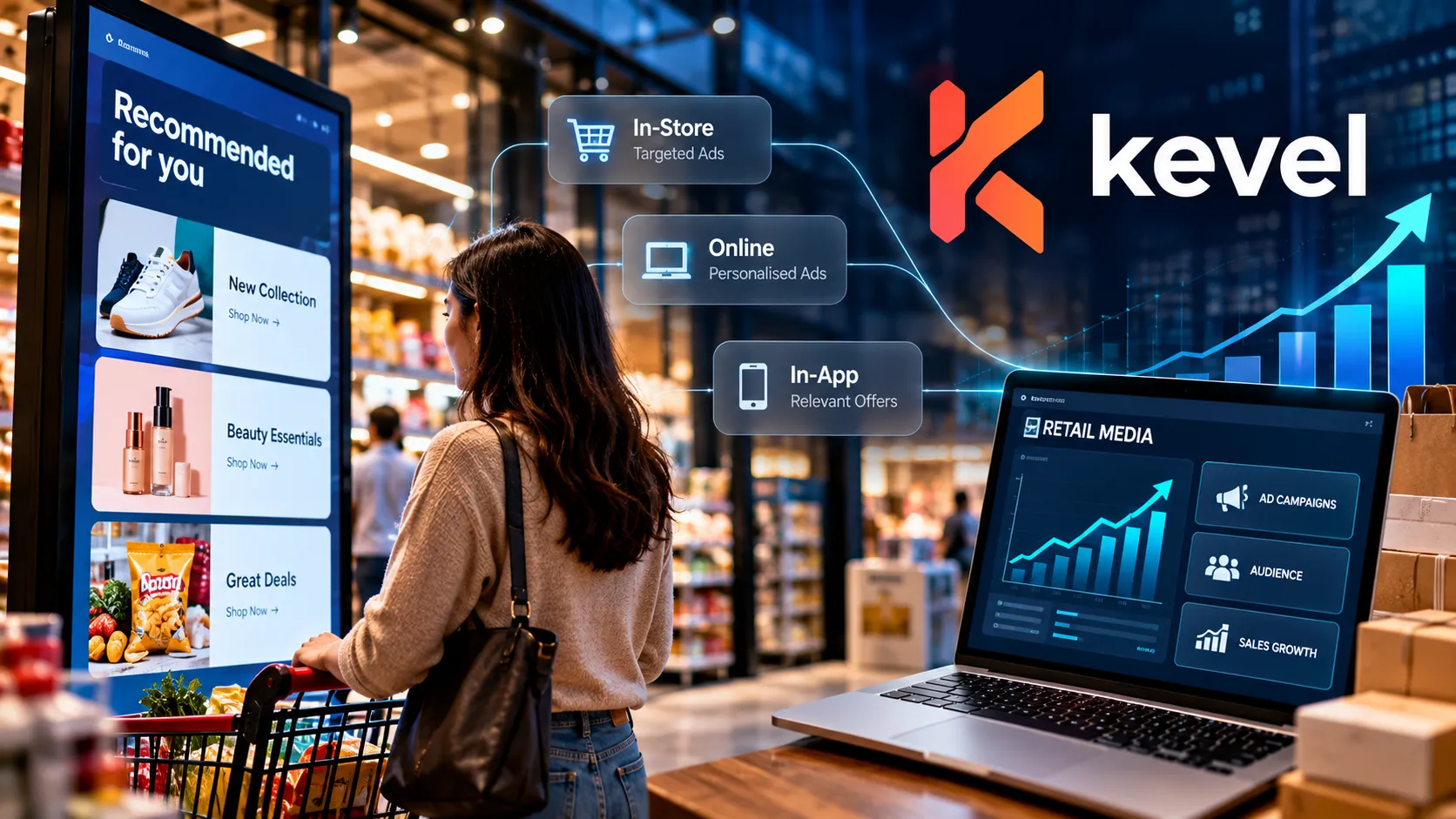
Retailers have discovered that the shoppers walking through their stores and browsing their websites are valuable not just as customers but as an audience for advertisers. Kevel, a company that provides the technology to turn that audience into revenue, has raised fresh capital to expand.
Kevel, based in Durham, North Carolina, has raised $52 million, FinSMEs reported on Friday, October 23. Investors include Fulcrum Equity Partners, dunnhumby Ventures and Iberis Capital, with ORIX Corporation USA's growth capital arm providing additional funding. Kevel has now raised more than $100 million in total.
What Kevel does
Kevel provides a commerce media platform built on an API-first architecture, meaning retailers and platforms can integrate its technology flexibly into their own systems. The platform helps retailers, marketplaces and other commerce companies build advertising businesses around their own customers, data and growth strategies.
Commerce media, often called retail media, allows brands to advertise directly on retailers' websites, apps and in-store screens, targeting shoppers based on their purchasing behaviour. For example, a snack brand might pay to appear at the top of search results when shoppers look for crisps on a grocery app.
Kevel serves more than 100 commerce media networks across North America, Europe, Latin America and Asia-Pacific. Its customers include British grocer Tesco, US discount chain Dollar General's media network, UK retailer John Lewis Partnership, PayPal, Scandinavian Airlines, Home Depot's Orange Apron Media and Brazilian digital bank Nubank.
The retail media boom
Retail media has become one of the fastest-growing segments of the advertising industry. Amazon pioneered the model, building an advertising business worth tens of billions of dollars a year. Walmart, Target, Kroger and many other retailers have followed, launching their own ad networks.
The appeal is clear. Retailers have valuable first-party data about what customers buy, which has become more important as privacy rules and changes by Apple and Google have limited advertisers' ability to track users across websites. Advertising also carries much higher margins than selling goods, making it an attractive revenue stream for retailers operating on thin margins.
Beyond traditional retailers, other businesses with large customer bases, such as airlines, payment companies, banks and travel platforms, have begun building media networks, as Kevel's customer list shows.
Why the dunnhumby investment matters
The participation of dunnhumby Ventures is notable. Dunnhumby, a customer data science company owned by Tesco, is a major player in retail analytics and retail media. Its investment suggests strategic alignment between data and analytics providers and ad technology platforms.
Where the money will go
Kevel plans to use the funding to accelerate its growth, continue developing AI-driven decisioning and optimisation capabilities, expand globally into new retail and commerce media categories, and deepen its strategic advisory services.
AI is becoming central to retail media, helping retailers decide which ads to show to which shoppers, set prices for ad placements and measure the impact of campaigns on sales.
The competition
Kevel competes with a range of retail media technology providers, as well as with large retailers and platforms that build their own ad technology. Companies such as Criteo, The Trade Desk and Google offer retail media solutions, and many retailers partner with multiple vendors.