FundingMarket Data Women5 MIN READ

Asia's AI Rout: South Korea's Kospi Plunges Below 5,000 and Triggers a Circuit Breaker as Samsung and SK Hynix Crater

South Korea's Kospi fell as much as 8.8% on November 6, dropping below 5,000 and triggering a 20-minute trading halt, as Wall Street's AI sell-off spread to Asia. Samsung Electronics and SK Hynix tumbled, Japan's Nikkei sank about 6%, its biggest drop since April 2025, and Taiwan's benchmark entered a bear market. Seoul relaxed margin rules to curb forced selling.

By Shaym Kumar · Author6 November 2026New
Asia's AI Rout: South Korea's Kospi Plunges Below 5,000 and Triggers a Circuit Breaker as Samsung and SK Hynix Crater

The sell-off in artificial intelligence stocks that battered Wall Street on Thursday swept through Asia on Friday, November 6, hitting hardest in the chip-heavy markets of South Korea, Japan and Taiwan that had been among the biggest beneficiaries of the AI boom.

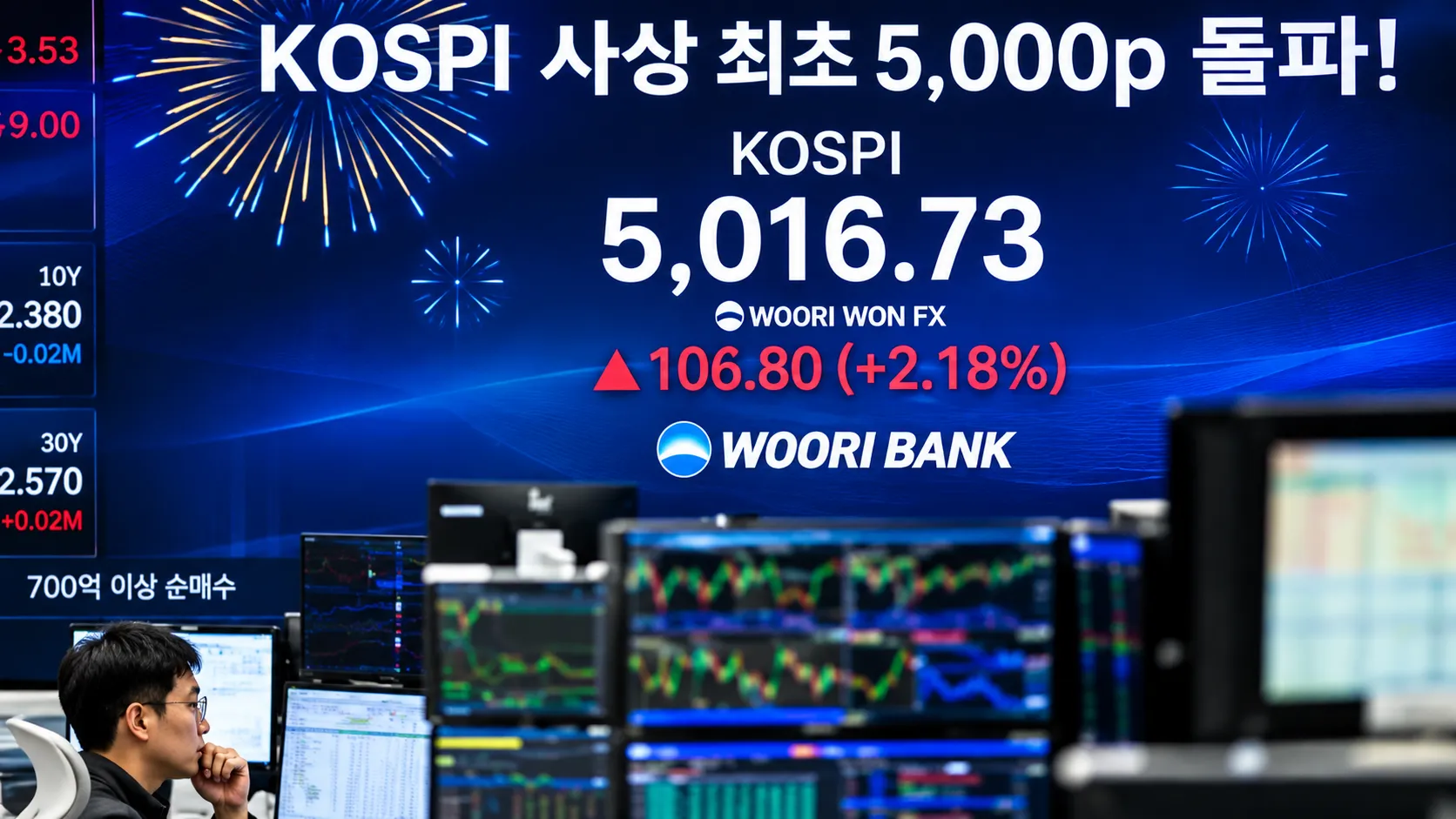
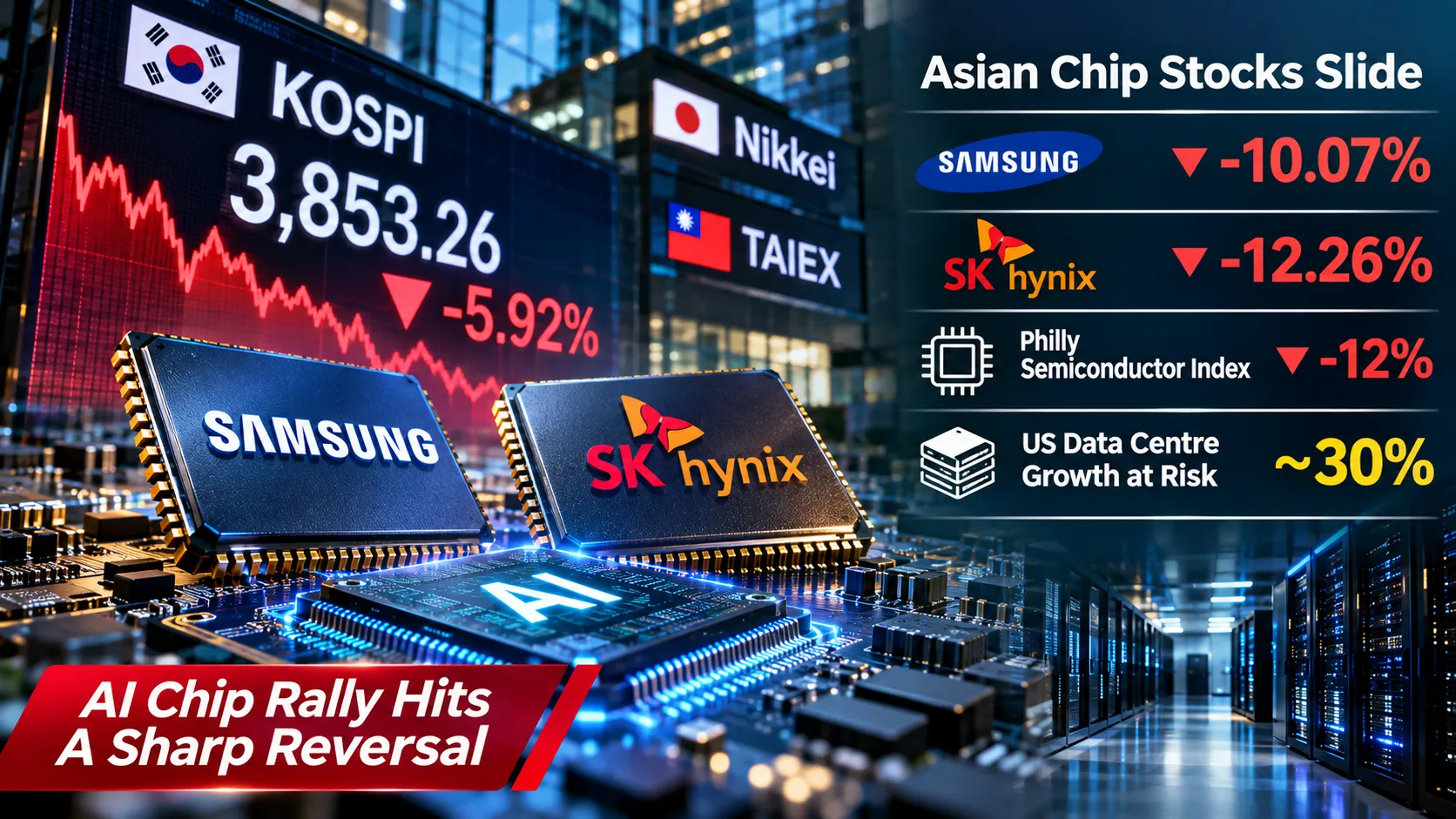
South Korea's benchmark Kospi index fell as much as 8.8%, according to FinancialJuice, dropping below the 5,000 mark and triggering a Level 1 circuit breaker that halted trading for 20 minutes, according to TradingKey. At one point the index traded at 4,923.47, down 8.55%.

Japan's Nikkei 225 fell about 5.8%, its biggest one-day drop since April 2025, according to FinancialJuice, breaking below the 60,000 level. TradingKey reported that the index fell as much as 6.2% to 57,288.91. Taiwan's benchmark dropped 4.5%, entering a bear market, and the MSCI Asia Pacific Index fell 3.8%.

Chip giants crater

The heaviest losses were in memory chip makers, which have seen extraordinary gains as demand for high-bandwidth memory used in AI servers soared. Samsung Electronics fell as much as 10.07% to 181,200 won, and SK Hynix dropped as much as 12.26% to 1,109,000 won, according to TradingKey. Chip testing equipment maker Advantest was among other supply chain companies hit by selling.

Samsung and SK Hynix together account for a large share of the Kospi's market value, meaning sharp moves in their shares have an outsized effect on the index.

The trigger from Wall Street

The Asian sell-off followed a rout in the United States on Thursday, when the Nasdaq Composite fell 5.5%, entering a correction, and the Philadelphia Semiconductor Index dropped about 12%. Memory chip makers led the declines, with SanDisk down more than 22%, and Micron and Western Digital each down more than 17%, according to TradingKey.

The sell-off was driven by fears that Democratic gains in the November 3 US midterm elections will slow the construction of AI data centres, which have faced growing opposition over their energy use and impact on electricity prices. UBS estimates that about 30% of expected 2028 US data centre capacity additions are at risk. TradingKey also linked the sell-off to concerns about data centres' carbon emissions and potential antitrust scrutiny.

The Philadelphia Semiconductor Index fell almost 16% for the week, its worst weekly performance since April 2025, according to FinancialJuice.

Governments step in

Authorities moved to stabilise markets. South Korea temporarily waived a rule requiring brokerages to hold collateral of at least 140% of margin loans, a step aimed at limiting forced selling by investors who borrowed to buy shares, according to FinancialJuice. Investors were also watching whether South Korea's National Pension Service, one of the world's largest pension funds, would activate market stabilisation funds if losses widened, according to TradingKey.

In Taiwan, the financial regulator was expected to announce stabilisation measures, FinancialJuice reported.

A boom built on chips

The severity of the sell-off reflects how much Asian markets had gained from AI. South Korea's Kospi had surged to record highs over the past year, driven by surging demand for memory chips, with SK Hynix becoming the leading supplier of high-bandwidth memory for Nvidia's AI processors. Japan's market had been lifted by chip equipment makers and companies such as SoftBank, which has invested heavily in AI. Taiwan's market is dominated by TSMC, the world's largest contract chipmaker.

“Asia's chip-heavy markets are paying the price for having ridden the AI boom harder than anyone else.”
— TIGI Markets Desk

Retail investors in South Korea had piled into chip stocks, often using borrowed money, which can amplify losses when prices fall sharply. Margin calls force investors to sell shares to repay loans, creating a cycle of falling prices.

Other markets

Elsewhere, China's 10-year government bond yield fell to a record intraday low, as investors sought safety, according to FinancialJuice. The US dollar strengthened against all Group-of-10 currencies, and US Treasuries held their gains from Thursday. Brent crude rose 1.4% to $99.70 a barrel.

US stock futures recovered somewhat, with Nasdaq 100 futures up 0.8% during the Asian session, suggesting some investors saw buying opportunities after the steep declines.

bffd52e9-cf22-4a4a-b682-011c983eb885.png

India holds firm

India was a notable exception. The Sensex edged higher on Friday morning as IT stocks rallied, and foreign investors bought ₹13,802 crore of Indian shares on Thursday, according to Business Today. India's market has relatively little exposure to semiconductor and AI hardware companies, which made it less vulnerable to the sell-off.

"The bloodbath in the US markets impacted most other markets today, but India was least impacted," said V K Vijayakumar of Geojit Investments.

Is the AI trade over?

The sell-off has raised questions about whether the AI investment boom has peaked. Bulls argue that demand for AI computing remains strong, that technology companies will continue to invest heavily, and that the political concerns about data centres in the United States are likely to cause delays rather than cancellations. Many analysts expect temporary pauses rather than long-lasting bans.

Bears point to the enormous sums being spent on AI infrastructure, the uncertain returns, rising interest rates and the growing political backlash as reasons for caution. Memory chip prices, which have soared this year, could fall if demand slows, hurting companies such as Samsung and SK Hynix.

The memory cycle

Memory chips are a notoriously cyclical business, with periods of shortage and soaring prices followed by oversupply and price collapses. The AI boom has driven an exceptional upcycle, as high-bandwidth memory for AI servers has been in short supply and has diverted capacity from conventional memory, pushing up prices across the market. Investors are now worried that any slowdown in AI spending could end the upcycle.

Retail investors in the firing line

South Korea's retail investors have been among the most active participants in the AI rally, and many will bear the brunt of the losses. The temporary easing of margin collateral rules is designed to give leveraged investors breathing room and prevent a cascade of forced selling, but it also highlights the risks that built up during the rapid rise in chip stocks.

For policymakers, the challenge is to calm markets without encouraging excessive risk-taking. Stabilisation measures, such as pension fund buying and rule changes, can slow declines, but they cannot reverse a fundamental reassessment of the AI outlook if one is under way.

What comes next

Investors will watch the US jobs report on Friday, as well as any further policy moves by Asian governments to stabilise markets. The trajectory of US data centre policy and technology companies' spending plans will be crucial for Asian chip stocks. After one of the most dramatic sessions in years, the question is whether the sell-off will deepen or whether bargain hunters will step in.

TagsKospiNikkei 225Taiwan stocksSamsung ElectronicsSK Hynixcircuit breakerAsian marketsAI selloffsemiconductorsmemory chipsAdvantestMSCI Asia PacificNational Pension Servicemargin loansWall StreetNasdaqTSMCemerging marketsIndia marketsinvestors

Reader reviews

Sign in to rate and review this article.
Loading reviews…

