FundingMarket Data Women5 MIN READ

Kotak Mahindra Bank Posts 26% Jump in Q2 Profit to ₹5,645 Crore as FCNR Deposit Drive Lifts Loan Growth to 25%

Kotak Mahindra Bank reported consolidated net profit of ₹5,645 crore for the September quarter, up 26%, while standalone profit rose 29% to ₹4,212 crore and net interest income grew 16% to ₹8,459 crore. Loan growth reached 25%, helped by a surge in FCNR deposits, though the net interest margin narrowed by about 22 basis points. The shares rose on October 26.

By Shaym Kumar · Author27 October 2026New
Kotak Mahindra Bank Posts 26% Jump in Q2 Profit to ₹5,645 Crore as FCNR Deposit Drive Lifts Loan Growth to 25%

Kotak Mahindra Bank has delivered one of the strongest results among India's large private lenders this earnings season, as a surge in foreign currency deposits from non-resident Indians helped accelerate loan growth.

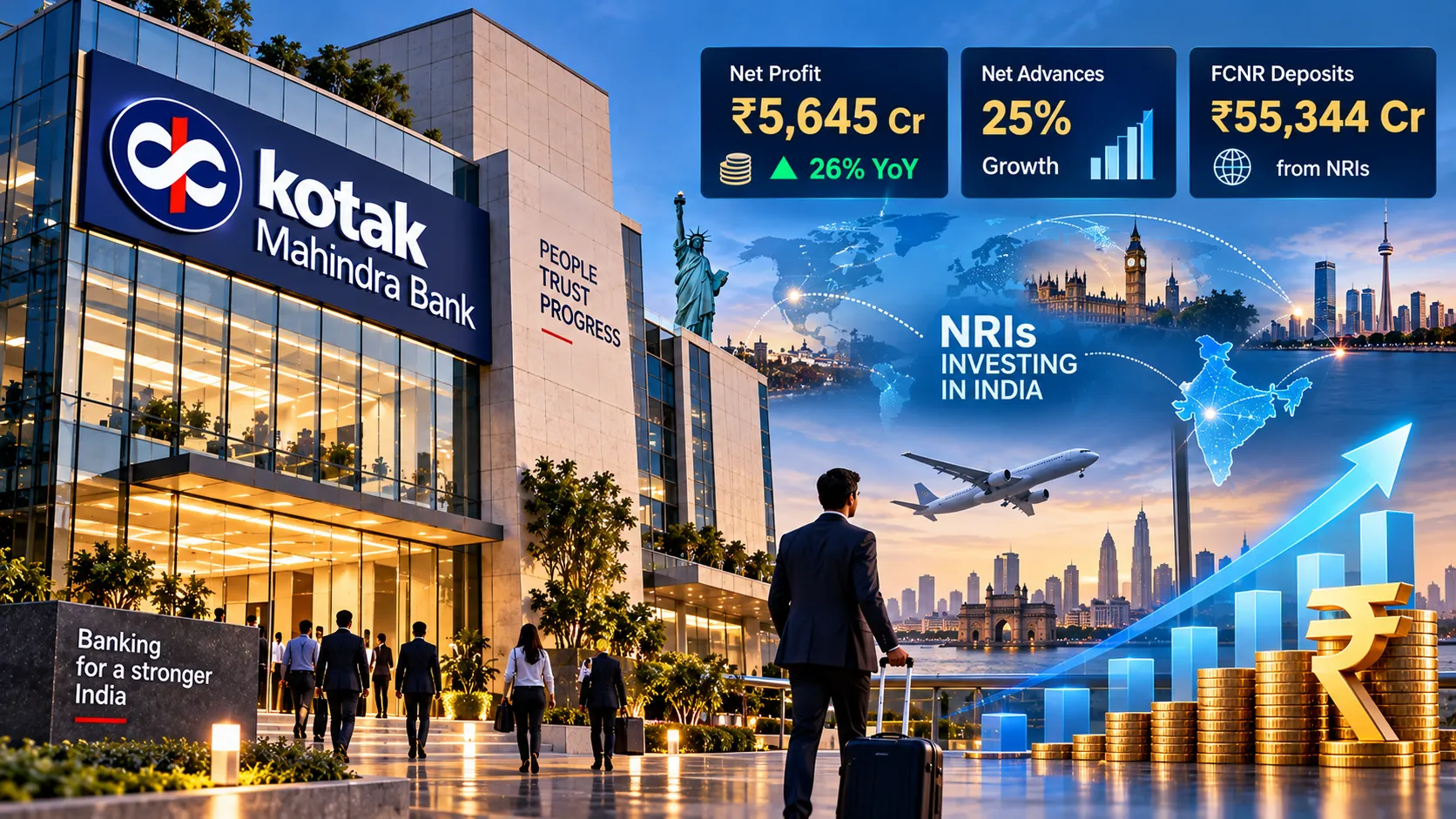
The Mumbai-based lender reported consolidated net profit of ₹5,645 crore for the July-September quarter, up 26% from a year earlier. Standalone profit, which covers the bank alone and excludes subsidiaries such as Kotak Securities and Kotak Mahindra Life Insurance, rose 29% to ₹4,212 crore.

Net interest income, the difference between what the bank earns on loans and pays on deposits, grew 16% to ₹8,459 crore. Net advances rose 25%.

Kotak shares were among the top gainers on the Sensex in early trade on Monday, October 26, even as the broader market fell.

The FCNR advantage

A key driver of the quarter's growth was the bank's success in attracting foreign currency non-resident (FCNR) deposits. Kotak raised ₹55,344 crore through FCNR deposits during the quarter.

FCNR deposits allow non-resident Indians to hold money in Indian banks in foreign currencies such as the US dollar, protecting them from rupee depreciation. With the rupee near record lows of about 94.9 per dollar, NRIs have found these deposits attractive, and banks have competed to attract them.

Kotak deployed part of these funds through FCNR-linked lending, disbursing ₹16,110 crore. Excluding the effect of the FCNR programme, loan growth would have been about 19%, still a healthy pace but lower than the headline figure.
30c174ea-786c-4590-a537-20d3b9dbfc88.png

Margin pressure

The growth came at a cost to margins. The net interest margin, a key measure of lending profitability, narrowed to about 4.3%, a decline of roughly 22 basis points. Upstox data put the decline at 0.23 percentage points.

Margins have been under pressure across the banking sector as the Reserve Bank of India's earlier rate cuts reduced yields on loans linked to external benchmarks, while deposit costs have been slower to adjust. Foreign currency lending typically carries lower margins than domestic retail loans, which also weighed on Kotak's overall margin.

Analysts upbeat

Brokerages responded positively to the results. Nuvama maintained a Buy rating with a target price of ₹550, while Systematix set a target of ₹510. The stock was quoted at ₹430.10 in brokerage reports on the results.

Analysts noted that the bank's strong loan growth and improving fee income outweighed concerns about margins. The bank's capital position remains strong, giving it room to keep growing.

A turnaround under Vaswani

The results reinforce a recovery at Kotak under chief executive Ashok Vaswani, who took over from founder Uday Kotak in January 2024. The bank faced a setback in April 2024, when the Reserve Bank of India barred it from onboarding new customers through online and mobile channels and issuing new credit cards because of deficiencies in its IT systems. The restrictions were lifted in February 2025.

Since then, Kotak has worked to restore growth, investing in technology and expanding its retail and corporate lending. The latest results suggest it has regained momentum.

Banking sector context

Kotak's performance stands out in a mixed earnings season for Indian banks. IDFC First Bank's profit nearly tripled to ₹1,045 crore, DCB Bank's profit rose 29% and CSB Bank's rose 14%, all helped by lower bad loans. But some lenders, particularly non-bank lenders focused on rural and small business customers, have faced rising credit costs.


“Kotak has used the rupee's weakness to raise cheap foreign currency deposits and turned them into a powerful growth engine.”
— TIGI Markets Desk

The banking sector has benefited from improved asset quality over the past few years, as bad loans from the previous credit cycle were cleaned up. The challenge now is to sustain loan growth while managing margins and keeping a lid on new defaults, particularly as high fuel prices squeeze borrowers.

The NRI deposit boom

Kotak is not alone in benefiting from NRI deposits. A weak rupee and higher interest rates on foreign currency deposits in India compared with some other markets have drawn record inflows from the Indian diaspora. These inflows also help support the rupee by bringing foreign currency into the country.

For banks, FCNR deposits provide a stable source of funding. But they also carry currency risks that banks must manage, typically through hedging.

What it means for investors

For investors, Kotak's results show the benefits of a strong deposit franchise and a well-capitalised balance sheet in a challenging environment. The bank's ability to grow loans at 25% while maintaining asset quality is notable, though the narrowing margin is a reminder that rapid growth can come at the expense of profitability.

Private bank stocks have been among the more resilient segments of the Indian market during the recent sell-off, as investors seek companies with strong fundamentals. Kotak's results may reinforce that preference.

Subsidiaries add strength

Kotak's subsidiaries, which include one of India's largest brokerage firms, an asset management company and a life insurer, contributed to the gap between consolidated and standalone profit. Capital market activity has remained strong despite volatility, supporting brokerage and investment banking revenues, while the IPO pipeline has boosted fee income for the group's investment bank.

What FCNR deposits mean for the rupee

FCNR inflows do more than fund banks. Every dollar deposited by a non-resident Indian adds to the country's foreign currency resources, helping to cushion the rupee at a time when foreign portfolio investors are selling Indian equities. Previous episodes of rupee weakness, such as in 2013, saw the Reserve Bank of India actively encourage FCNR deposits to shore up reserves. This time, the inflows have come largely through market forces, as NRIs respond to attractive returns and a weak currency, and Kotak's numbers suggest the scale has been significant.

What comes next

Kotak will need to show that it can sustain growth as the FCNR deposit drive slows and as competition for deposits remains intense. Management's commentary on margins and asset quality in coming quarters will be closely watched.

The bank's performance will also depend on broader economic conditions, including the impact of high oil prices on borrowers and the path of interest rates. For now, the results have given investors reason for optimism about one of India's most closely watched private lenders, and have strengthened the case that its post-restriction recovery is on track. For the wider banking sector, Kotak's ability to grow quickly without a deterioration in asset quality offers a benchmark. Peers will be judged on whether they can match its loan growth while protecting margins, and on how effectively they tap the surge in NRI deposits that the weak rupee has created.

TagsKotak Mahindra BankQ2 resultsAshok Vaswanibank earningsnet interest incomenet interest marginFCNR depositsNRI depositsloan growthprivate banksIndian bankingNuvamaSystematixbank stocksSensexNifty Bankdepositscredit growthasset qualityrupee

Reader reviews

Sign in to rate and review this article.
Loading reviews…
