Biotechnology investors have rarely been so willing to write large cheques, and one company has taken full advantage.
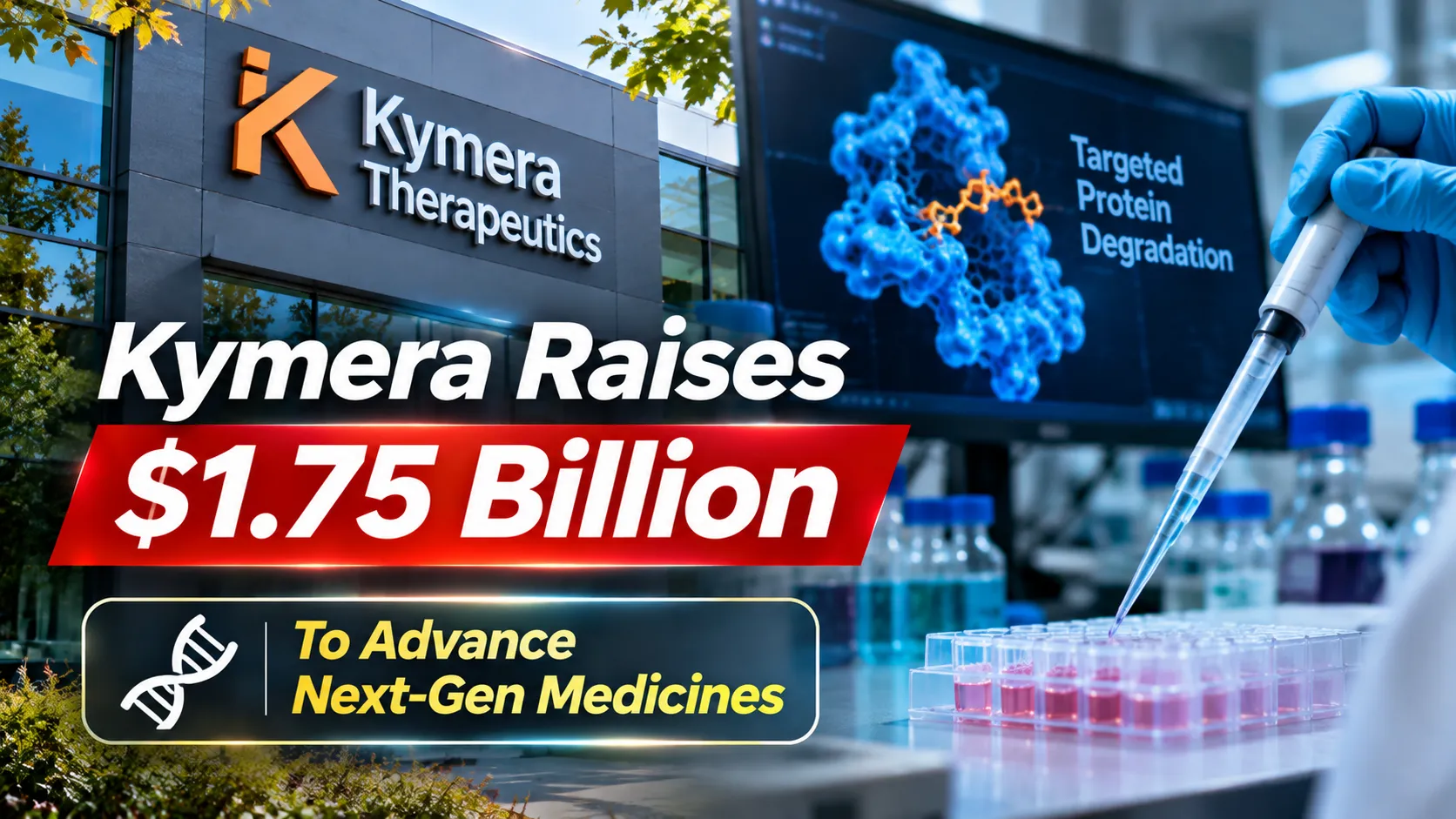
Kymera Therapeutics priced an upsized public offering of 11,638,000 shares at $150.37 per share on Tuesday, November 24, raising about $1.75 billion, according to market reports compiled by VistaP Global. Underwriters have an option to buy up to 1,745,700 additional shares. The offering is expected to close on November 25.
The raise ranks among the largest equity offerings by a biotechnology company in 2026.
Who Kymera is
Kymera Therapeutics, based in the Boston area, develops medicines using an approach known as targeted protein degradation. Most traditional drugs work by blocking the activity of disease-causing proteins. Protein degraders instead harness the body's own system for disposing of unwanted proteins, tagging specific disease-causing proteins for destruction.
This approach could allow drugs to address targets that have been difficult or impossible to treat with conventional medicines, and to achieve more complete and lasting effects. Kymera has focused particularly on immunology and inflammatory diseases, developing oral degraders that could offer alternatives to injectable biologic drugs.
Why investors are interested
Oral drugs that can match the effectiveness of injectable biologics are highly attractive commercially. Many immunology treatments, such as those for eczema, psoriasis, asthma and inflammatory bowel disease, are given by injection. A pill with similar efficacy could be more convenient for patients and capture a large share of the market.
A large offering at a high share price suggests that investors are confident in Kymera's clinical progress and the potential of its pipeline. Companies typically raise money after positive clinical data, when investor demand is strongest.
Strong day for biotech
The offering came on the same day that Sanofi agreed to acquire Insmed for $41 billion in cash, one of the largest pharmaceutical deals of the year. Large acquisitions signal that big drugmakers are willing to pay high prices for promising drugs, which tends to lift valuations across the biotech sector and encourage investors to back companies that could become acquisition targets.
Large pharmaceutical companies face patent expiries on major drugs in the coming years and are seeking to refill their pipelines through acquisitions and partnerships, particularly in immunology, oncology and other high-value areas.
Biotech's recovery
The biotech sector endured a difficult period after the pandemic-era boom, as rising interest rates reduced investor appetite for companies with long development timelines and no revenue. Funding became scarce, and many companies cut staff or shut down programmes.
In 2026, sentiment has improved, helped by a wave of mergers and acquisitions, positive clinical results and investor interest in new therapeutic approaches. Large follow-on offerings such as Kymera's are a sign that capital is once again flowing to companies with promising science.
What the money will fund
Companies typically use the proceeds of such offerings to fund clinical trials, research and development, manufacturing and general corporate purposes. Late-stage clinical trials, which test drugs in large numbers of patients, are expensive and can cost hundreds of millions of dollars.
A large cash reserve allows a biotech company to advance multiple programmes simultaneously, negotiate partnerships from a position of strength and potentially commercialise drugs on its own rather than licensing them to larger companies.
The risks
Biotechnology investing carries significant risks. Drugs can fail in clinical trials, regulatory approvals can be delayed or denied, and competition can emerge from other companies developing similar treatments. Share offerings also dilute existing shareholders, and stocks often fall when new shares are issued.
Targeted protein degradation is a relatively new approach, and its long-term safety and effectiveness in large patient populations are still being established.
The competitive landscape
Several companies are developing protein degraders, including Arvinas, which has partnerships with large pharmaceutical companies, and others in the United States, Europe and China. Large drugmakers have also invested in the approach through internal programmes and acquisitions.
What it means for India
India's pharmaceutical and biotechnology industry has a growing stake in innovative drug development. Indian contract research and manufacturing companies, such as Syngene, Aragen and others, provide research and manufacturing services to global biotech firms, and benefit when funding for biotech increases. Strong capital markets for biotech can translate into more outsourced research and manufacturing work for Indian companies.
Indian biotech startups are also exploring new therapeutic approaches, and global investor enthusiasm can improve their access to capital.
Investor appetite for biotech
The size of the offering, and the decision to upsize it, indicates that demand from institutional investors exceeded the amount originally planned. Specialist healthcare investors, crossover funds and large asset managers are typically the main buyers in such offerings.
Strong demand allows companies to raise more money at favourable prices, reducing the need for further fundraising in the near term.
The immunology opportunity
Immunology has become one of the most lucrative areas of drug development, with blockbuster drugs such as Dupixent and Humira generating tens of billions of dollars in annual sales. Large pharmaceutical companies are seeking new treatments as patents on existing drugs expire.
This creates strong interest in companies developing next-generation immunology therapies, including oral alternatives to injectable biologics.
How follow-on offerings work
In a follow-on offering, a company that is already publicly listed sells additional shares to raise capital. The offering price is typically set at a discount to the recent market price to attract buyers. Upsized offerings, in which the company sells more shares than originally planned, signal strong demand.
Biotech M&A outlook
Bankers expect pharmaceutical acquisitions to remain active into 2027, as large drugmakers seek growth and face patent expiries. Biotech companies with promising mid- to late-stage assets are likely to attract the most interest, particularly in immunology, obesity, oncology and neuroscience.
Strong capital markets give biotech companies the option of raising money independently rather than selling, improving their negotiating position.
Shareholder dilution
Existing Kymera shareholders will see their stakes diluted by the new shares, but many investors accept dilution when the capital is used to advance promising programmes that could significantly increase the company's value. Biotech investors will also watch how the shares trade after the offering closes, as a measure of lasting demand.
What comes next
Kymera will use the proceeds to advance its pipeline. Investors will watch upcoming clinical trial results and any partnership announcements. More broadly, the success of the offering may encourage other biotech companies to raise capital while investor appetite remains strong.