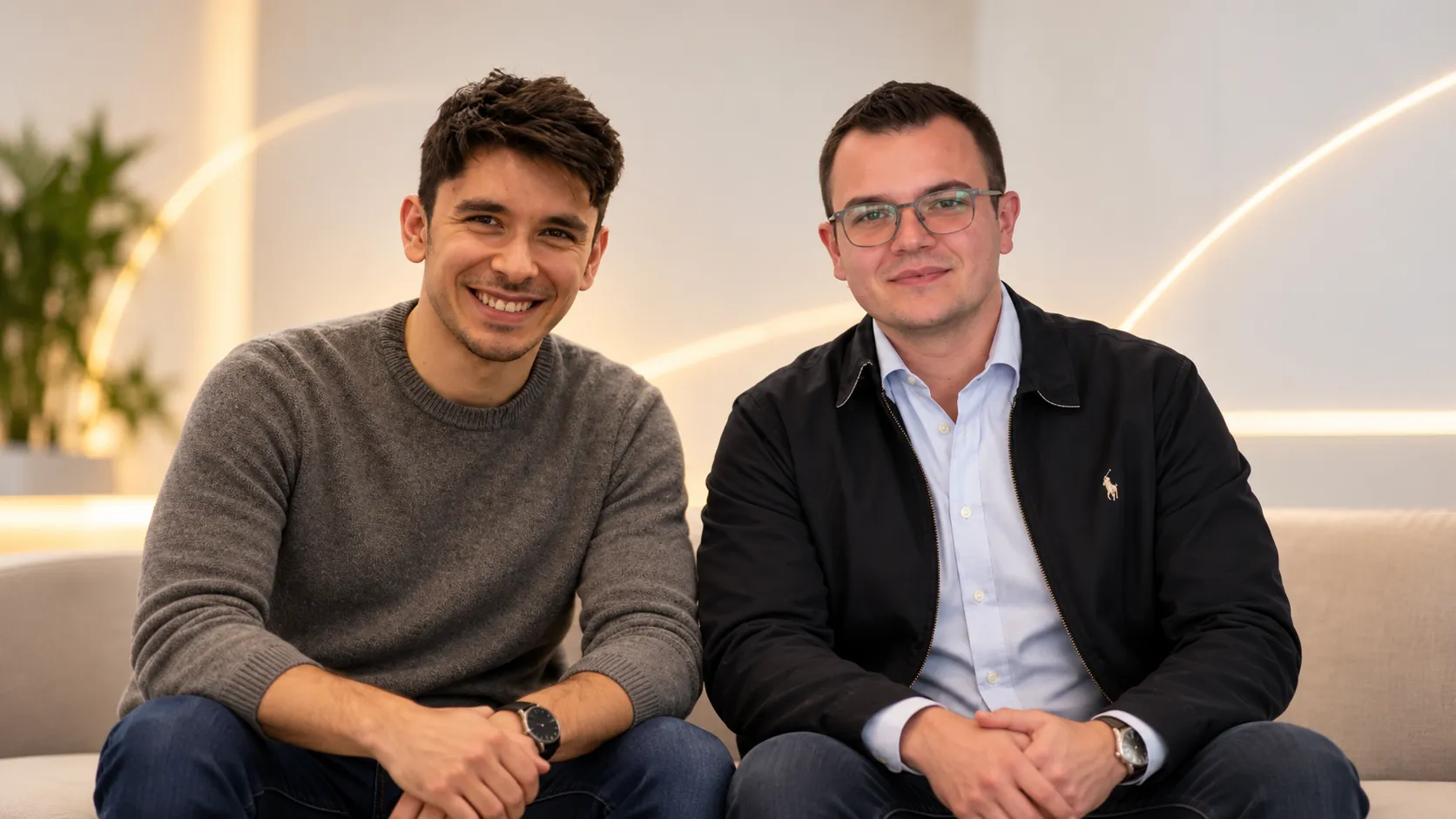
Kyndred, a Romanian startup building artificial intelligence companions with persistent memory, voice and facial animation, has closed a €500,000 pre-seed round from Early Game Ventures, one of the most active early-stage investors in Central and Eastern Europe.
The capital, disclosed on 29 September 2026, will support development of the company's first companion, Maya, which Kyndred says reached more than 150 paying users within three months of launch. The company also generated revenue before the product was fully released, through a pre-launch campaign.
It is a small round. But it touches one of the largest unanswered questions in consumer technology: as AI models become more capable and more widely available, who will own the everyday relationship between people and AI?
From tutoring to companionship
Kyndred was founded by Alex Băraru and Rareș Moșescu, who previously built Meditații.ro, an education marketplace in Romania that generated more than €15 million in gross merchandise value, according to the funding announcement. The idea for Kyndred grew in part from their attempt to create an AI tutor for that business.
That origin is telling. A good tutor remembers what a student has learned, adapts to their pace and builds rapport over time. Those same qualities, memory, personalisation and a sense of continuity, are what distinguish a companion from a conventional AI assistant.
Maya is designed less as a task-specific tool and more as a persistent digital character. She remembers previous conversations, speaks with a synthesised voice, and appears with an animated face that responds in real time. The aim is to create an interaction that feels continuous and personal, rather than a series of disconnected exchanges with a chatbot.
The companion market
AI companions have become one of the fastest-growing, and most debated, categories in consumer technology. Apps that allow users to converse with AI characters for friendship, entertainment, emotional support or practice in social skills have attracted millions of users worldwide. Some have generated substantial subscription revenue, demonstrating that people are willing to pay for ongoing relationships with AI characters.
The category has also drawn scrutiny. Concerns have been raised about emotional dependency, the effect of AI relationships on loneliness and human connection, the protection of minors and the handling of sensitive personal data shared in intimate conversations. Regulators in several jurisdictions have examined companion apps, and some platforms have faced lawsuits and restrictions, particularly regarding use by children and teenagers.
Any company entering the space must navigate those concerns carefully. Clear age restrictions, transparent data practices and design choices that support rather than exploit users' wellbeing are becoming baseline expectations.
Who owns the interface?
Kyndred's investors are betting on a larger thesis. If foundation models, the underlying AI systems built by companies such as OpenAI, Google, Anthropic and Meta, become increasingly interchangeable, then value may shift to the companies that own the interface with users. Persistent identity, memory, personality, distribution and daily engagement could create a type of consumer relationship that is hard to replicate.
That thesis has parallels in earlier technology cycles. When computing power became commoditised, value accrued to operating systems and applications that owned the user relationship. When internet access became universal, it shifted to search engines, social networks and marketplaces. AI companions could, in theory, become a new layer through which people interact with information, services and each other.
The risk is obvious. The largest technology companies are building memory, voice and personality into their own assistants, which already reach billions of users through phones, messaging apps and operating systems. A small startup cannot match that distribution. To survive, Kyndred will need to offer something that general-purpose assistants do not: a distinctive character, a community, or a depth of engagement that makes users choose Maya repeatedly.
Early signals
The early numbers are modest but encouraging for a company at this stage. More than 150 paying users within three months, combined with revenue before full launch, suggests that there is demand for the product and willingness to pay. For a pre-seed company, evidence of monetisation is valuable, since many consumer AI products struggle to convert free users into paying customers.
The founders' track record also matters. Having built and scaled a marketplace in Romania, they have experience in acquiring users, managing operations and generating revenue, all of which will be essential in a crowded consumer market.
## Building responsibly
For Kyndred, the ethical dimension of its product is likely to shape its long-term prospects as much as its technology. Companion apps handle deeply personal conversations, and users may share information about their emotions, relationships and health. How that data is stored, whether it is used to train models, and who can access it are questions that users and regulators increasingly ask.
Product design choices also matter. Companions can be built to maximise time spent in the app, or to encourage healthy patterns of use, including nudging users toward real-world relationships and activities. Features such as clear disclosure that the user is talking to an AI, limits for younger users and escalation paths when conversations suggest distress are becoming important markers of responsible design. Startups that adopt such practices early may find it easier to earn trust and withstand scrutiny as the category matures.
Central and Eastern Europe's AI ambitions
Kyndred's round also highlights the growing startup ecosystem in Central and Eastern Europe. Romania has produced notable technology companies, most famously UiPath, the automation software company that grew into one of Europe's most valuable startups before listing in New York. Early Game Ventures, based in Bucharest, has been among the most active investors in the region, backing a portfolio of software and consumer companies.
The region's strengths, including a large pool of engineering talent and lower costs than Western Europe, position it well for AI development. At the same time, consumer products built in smaller markets must quickly find audiences internationally to reach meaningful scale.
For Kyndred, the next phase will involve refining Maya, expanding its user base and demonstrating that engagement holds up over time. Consumer AI is moving quickly, and the window for new entrants to establish a foothold may be narrow. But if Kyndred can show that users form lasting, healthy relationships with its companions and are willing to pay for them, it could become an early example of a new kind of consumer technology company, one built not around apps or feeds, but around characters people choose to talk to every day.