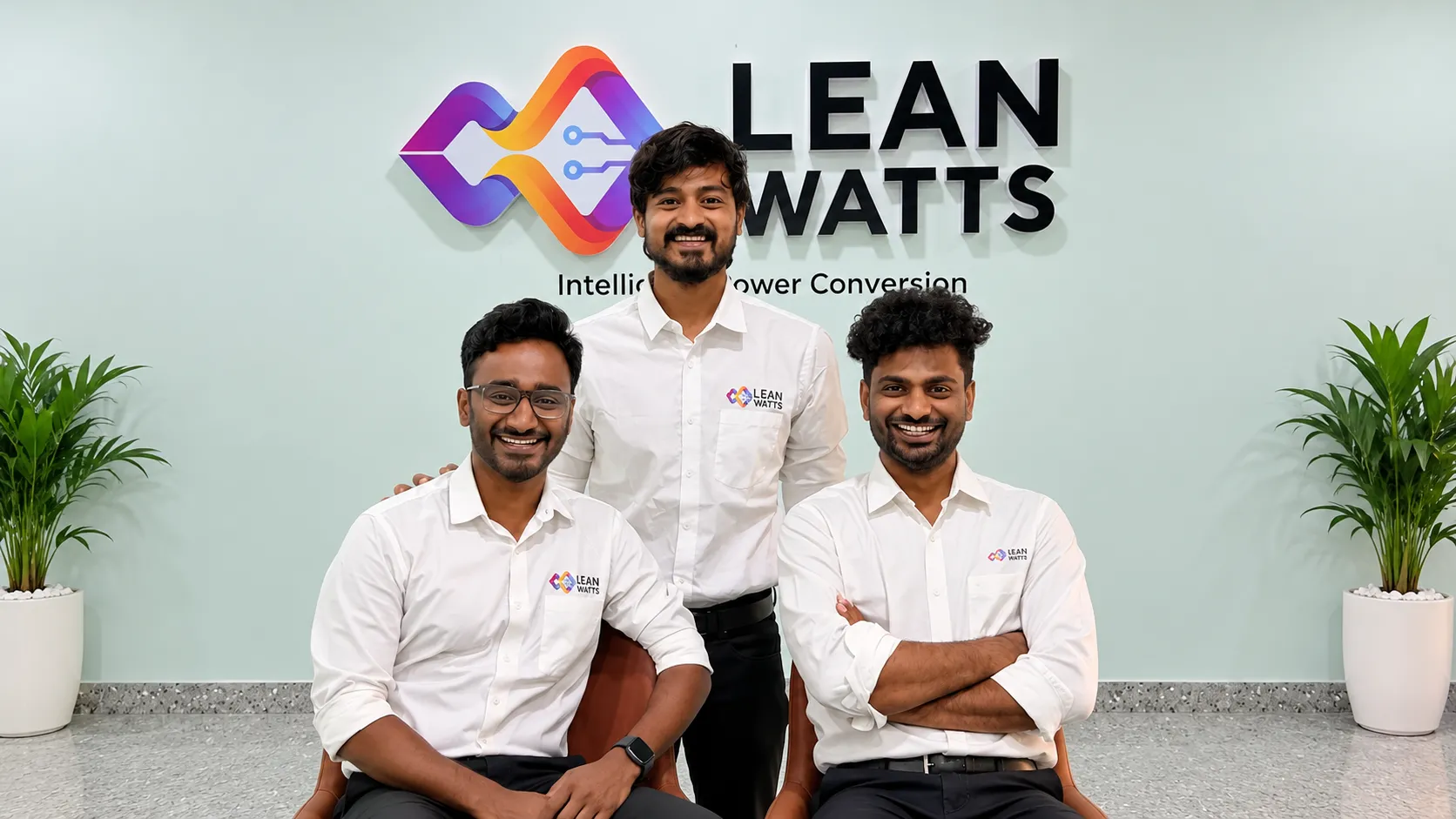
Leanwatts, a Hyderabad-based power electronics company building charging infrastructure for electric vehicles, has raised approximately $2 million in seed funding across two tranches, led by Trivest Partners with participation from angel investors Abraham George and Alok Rungta. The round adds fresh capital to a company operating in one of the less glamorous but increasingly critical corners of India's electric mobility transition: the charging hardware itself.
While much of the attention in India's EV ecosystem has gravitated toward vehicle manufacturers and battery-swapping networks, the underlying charging components that make electrification practical at scale have quietly become a competitive and capital-intensive category in their own right, one where domestic manufacturing capability is increasingly seen as a strategic advantage.
The seed round also lands at a moment when India's broader electric vehicle component manufacturing base is receiving heightened policy attention, with government incentive schemes increasingly targeting domestic production of the power electronics, battery management systems and charging infrastructure components that have historically been imported, often from established manufacturing hubs in China and Southeast Asia.
Engineering professionals within India's automotive components sector point out that power electronics design for electric vehicles requires a distinct set of technical competencies compared with traditional automotive component manufacturing, spanning thermal management, electromagnetic compliance and battery communication protocols, a specialised skill set that remains in comparatively short supply domestically and has historically constrained how quickly Indian manufacturers could compete with established international power electronics suppliers on both cost and reliability.
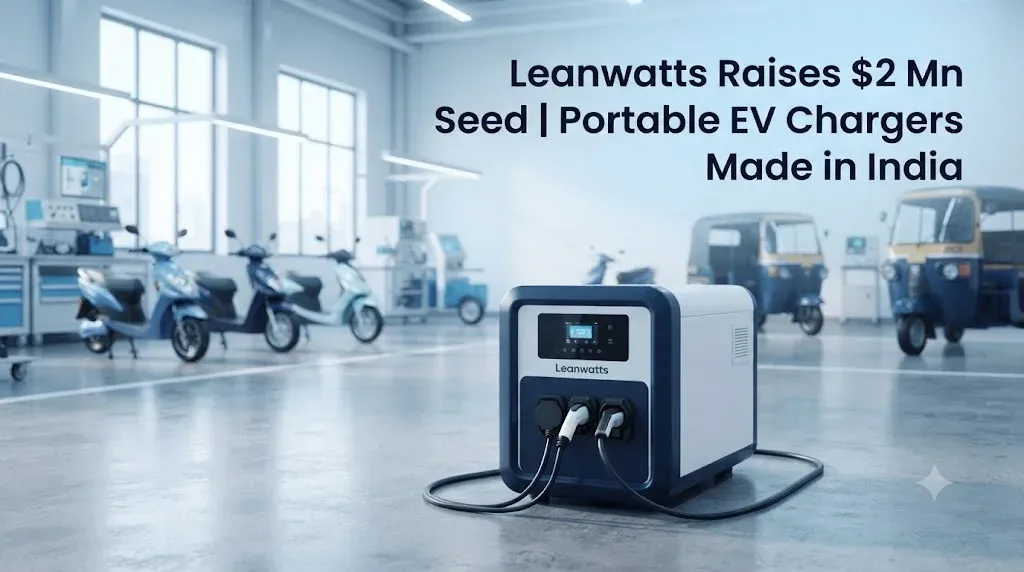
Founded in October 2023 by Pradeep Chowdary, Sujith Kumar and Abhilash Reddy, Leanwatts designs and manufactures a range of power electronics products, including portable and onboard EV chargers spanning from 500 watts to 6.6 kilowatts, aimed at two-wheelers, L2 and L5 category vehicles, and electric tractors. That breadth of vehicle-class coverage positions the company to serve multiple segments of India's electrification push simultaneously, from urban last-mile delivery fleets to agricultural applications.
The company said the fresh funds will be used to strengthen its supply chain, increase localisation of components, and expand manufacturing capabilities, priorities that reflect broader national policy pushes around reducing import dependence in clean-energy hardware, particularly for power electronics and semiconductor-adjacent components that have historically been sourced from overseas suppliers.
Portable and onboard chargers spanning such a wide power range, from 500 watts suitable for light two-wheelers up to 6.6 kilowatts for larger commercial vehicles and agricultural equipment, allow Leanwatts to serve multiple distinct customer segments through a shared underlying engineering and manufacturing platform, a strategy that can meaningfully improve capital efficiency for an early-stage hardware manufacturer working with limited initial funding.
India's Production Linked Incentive schemes for advanced automotive technology components have specifically prioritised power electronics and battery-adjacent manufacturing as strategic categories, offering financial incentives designed to encourage exactly the kind of localisation and scaled domestic manufacturing capability that Leanwatts is positioning its seed capital deployment around over the next eighteen to twenty-four months.
Leanwatts has set a target of reaching an annualised revenue run rate of nearly INR 60 crore by March 2027, a goal that would require sustained growth in both unit volumes and average order sizes as electric two-wheeler and light commercial vehicle adoption continues to climb across Indian cities. The company's focus on localisation is particularly notable given how much of India's broader clean-energy manufacturing ambition, spanning solar, batteries and EV components, hinges on building domestic supply chains that can compete on cost with established Chinese and Southeast Asian manufacturers.
For early-stage investors like Trivest Partners, backing hardware-heavy clean-tech manufacturers carries different risk and reward dynamics compared with software-first startups, typically requiring longer capital cycles but offering a more defensible moat once manufacturing scale and component sourcing relationships are established.
Localisation of power electronics components carries particular strategic weight given how concentrated global supply chains for semiconductor-adjacent components have historically been, a concentration that has periodically exposed Indian electric vehicle manufacturers to supply disruptions and cost volatility whenever global chip shortages or geopolitical trade tensions have affected component availability from overseas suppliers.
For investors and policymakers focused on India's clean manufacturing ambitions, Leanwatts' progress will offer an early indicator of whether early-stage Indian hardware companies can successfully compete on both cost and quality against established international power electronics suppliers, a competitive test that will shape how quickly the broader domestic component manufacturing ecosystem can mature to support the country's electrification targets.
The seed round also reflects a quieter but persistent trend within India's climate technology funding landscape: capital continuing to flow into unglamorous but essential infrastructure layers of the electrification stack, even as headline funding for the broader climate tech sector has cooled from its earlier highs. Charging hardware, in particular, sits at a critical bottleneck point, since vehicle adoption curves are ultimately constrained by how quickly reliable, affordable charging infrastructure can be deployed and maintained.
As Leanwatts moves to scale manufacturing and deepen localisation, its progress will offer an early signal of whether India's domestic power electronics sector can mature quickly enough to support the broader electric mobility targets that both policymakers and vehicle manufacturers have set for the remainder of the decade.
As India's electric two-wheeler and light commercial vehicle adoption curves continue to climb, the availability of reliable, domestically manufactured charging hardware is likely to become an increasingly important determinant of how quickly the broader electrification transition can proceed, positioning component manufacturers like Leanwatts as a quieter but structurally important layer of India's clean mobility ecosystem alongside the more visible vehicle makers themselves.
Entrepreneurs building in adjacent clean-energy hardware categories are likely to watch Leanwatts' seed-stage progress closely as a reference point for how early-stage manufacturing startups can structure fundraising and supply chain strategy in a sector where component localisation increasingly carries as much strategic weight with investors and policymakers as pure technological innovation alone.
The bottom line for TIGI's readers: Leanwatts sits squarely inside India's push to localise clean-energy hardware, and its progress over the next eighteen months will offer an early signal of how quickly domestic manufacturers can compete with established overseas power electronics suppliers.
Investors backing early-stage clean-energy hardware manufacturers generally accept longer paths to scale than software-first startups, and Leanwatts' progress against its own stated revenue targets over the next few reporting cycles will be the clearest indicator of whether that patience is being rewarded.