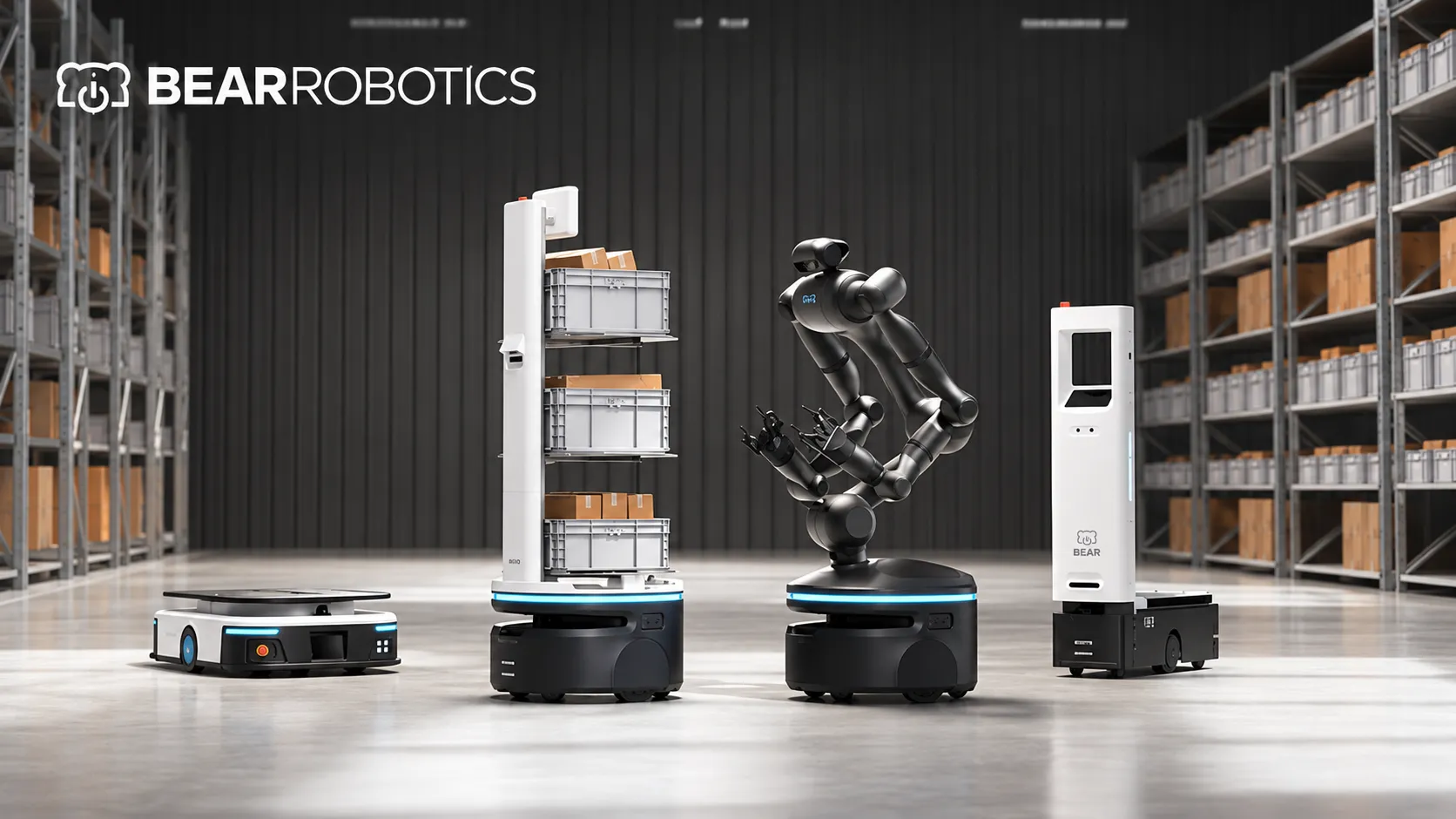
Shares of LG Electronics rose more than 8 percent on September 7, 2026, after local media outlet Hankyung reported that the company is exploring a pre-IPO fundraising round for Bear Robotics, its U.S.-based service-robotics subsidiary, ahead of a planned Nasdaq listing. LG holds a 56.9 percent stake in Bear Robotics, according to the report, and has reportedly engaged Bank of America to lead a funding round seeking to raise up to 400 billion won — roughly $297 million — at a valuation of around 2 trillion won.
Bear Robotics has built its business primarily around autonomous service robots for the hospitality and food-service industries, deploying units that carry food and bus tables in restaurants — a category of commercial robotics that has moved from novelty to mainstream deployment across several major markets as labour shortages in service industries persist and unit economics for robotics-as-a-service models have improved. A Nasdaq listing would mark one of the more significant public-market tests yet for a service-robotics company, at a time when investor enthusiasm for humanoid and applied robotics has surged on the back of broader excitement around embodied AI.
Separately, an LG Electronics executive said the company is in talks with several global technology firms over potential orders for actuators, a critical mechanical component in humanoid robots that translates electronic signals into precise physical movement. That disclosure signals LG's ambitions extend beyond Bear Robotics' existing service-robot line into supplying core components for the broader humanoid-robotics supply chain — a market that has drawn aggressive investment from chipmakers, automakers and consumer-electronics conglomerates alike as they position for what many industry executives now describe as robotics' equivalent of the smartphone moment.
For LG, a successful Bear Robotics listing would crystallise the value of an early robotics bet at a moment when public markets have shown a growing willingness to reward advanced-hardware companies with premium valuations, even ahead of sustained profitability. It would also give the Korean conglomerate a currency — a publicly listed, well-capitalised subsidiary — to pursue further acquisitions or partnerships in a robotics landscape that is consolidating quickly. Whether the reported 2 trillion won valuation holds up through the roadshow process will be closely watched by rivals across Asia's service-robotics sector, many of whom are weighing similar public-listing paths of their own.