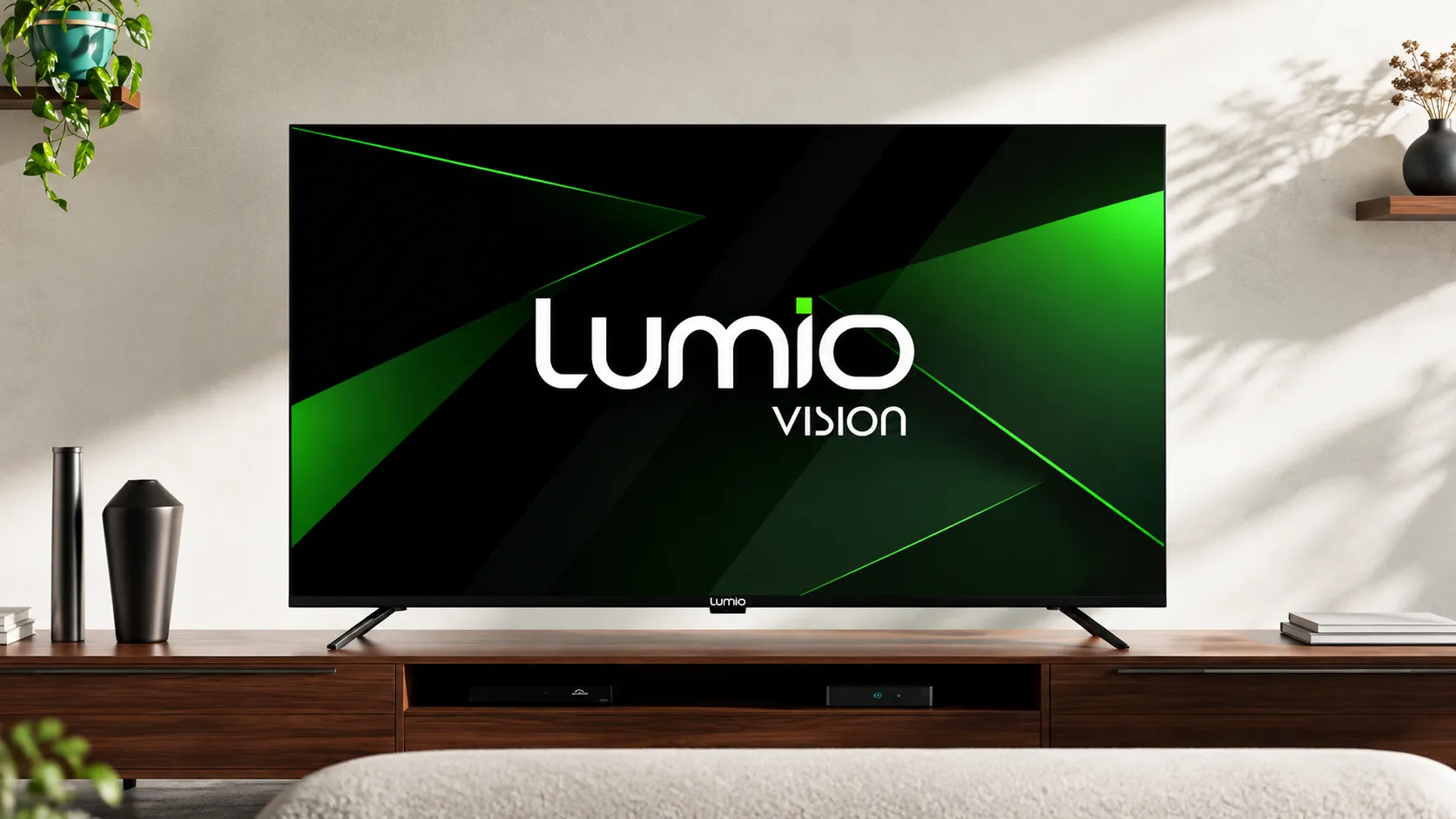
FundingLatest Deals5 MIN READ

Smart TV Maker Lumio Raises $12 Million in Series A Led by Blume Ventures

Lumio, founded by former Xiaomi India executive Raghu Reddy and ex-Flipkart executive Kailash Sankaranarayanan, has raised about ₹102.5 crore to expand its range of smart TVs and projectors and open offline stores.

By Nisha Omkumar · Author8 October 2026New
Smart TV Maker Lumio Raises $12 Million in Series A Led by Blume Ventures

Lumio, an Indian maker of smart televisions and projectors, has raised $12 million (about ₹102.5 crore) in a Series A round led by Blume Ventures, as the young brand tries to win buyers from global electronics giants by competing on software and speed.

Existing backers Stellaris Venture Partners and 3one4 Capital also took part in the round, which was announced on 7 October, Inc42 reported. Lumio is operated by Circuit House Technologies.

The company said it would use the money to invest in its products and software, enter new product categories, strengthen after-sales service and quality, and open offline retail outlets where customers can see and try its products before buying.
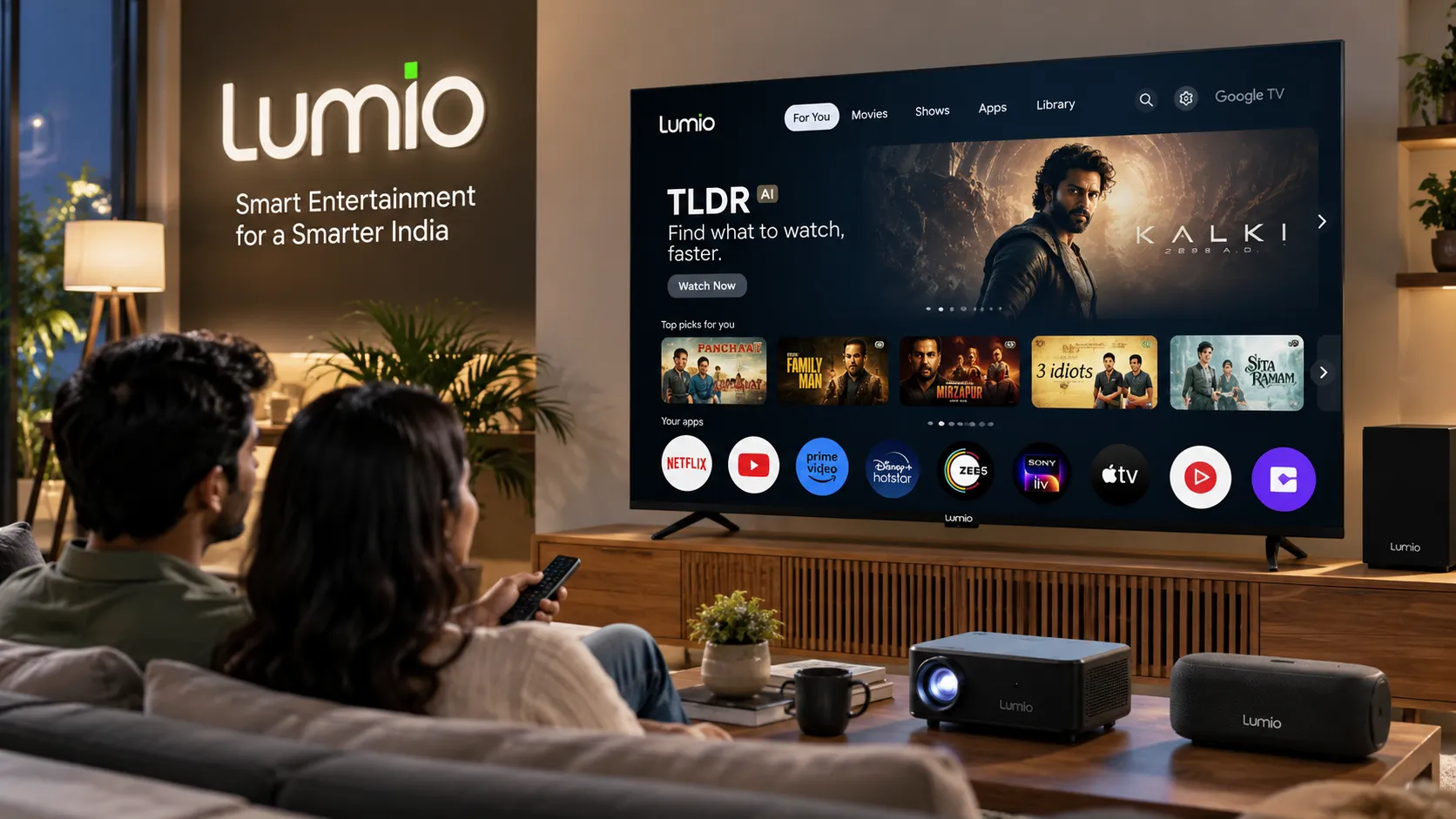
6f9c790f-1e10-4884-9a3b-7d49ca585f82.png

Built by consumer electronics insiders

Lumio was set up in 2024 by Raghu Reddy, a former chief business officer at Xiaomi India who also held leadership roles at Snapdeal, and Kailash Sankaranarayanan, who previously worked at Hindustan Unilever and Flipkart. The two are college friends. Circuit House Technologies was incorporated in March 2024 and the Lumio brand launched in May 2025.

The founders' starting point was a study of buyer complaints. According to an Inc42 profile published in July 2025, they analysed more than 50,000 user reviews on ecommerce platforms and found that sluggish performance and difficulty finding content were common problems across price ranges. Reddy described smart TVs at the time as “clunky, slow and unintuitive”.

Lumio's answer was to pair capable hardware with lightly modified Google TV software. The company says its TVs use a high-performance chip for fast app launches, enough memory to avoid slowdowns while multitasking and a network chipset tuned for patchy Indian internet connections. Its products have been manufactured by Dixon Technologies, the Inc42 profile said.

The founders benchmarked their sets against Nvidia's Shield TV streaming box, a favourite among enthusiasts for its responsiveness, and said their TVs were at least twice as fast as top-selling models on app switching and boot time, a claim that has not been independently tested.

Its main software feature is TLDR, an AI-powered content discovery engine that suggests what to watch across streaming apps. Lumio says the system is backed by multiple patent filings and works in nine Indian languages. Reddy has described the problem it targets as the “Netflix paradox”, too many choices with too little guidance.

“This funding gives us the opportunity to invest further in our products and software,” Reddy said in a social media post announcing the round.

Early traction

Lumio says it now serves more than 35,000 households across more than 5,000 pin codes. It crossed ₹100 crore in gross merchandise value within 13 months of starting commercial sales, and says its GMV more than tripled year on year for the April–August 2026 period. These figures are company-reported and have not been independently verified.

The product range covers smart TVs, projectors and speakers. Its first TVs, the Vision 7 QLED and Vision 9 QD-Mini LED models, launched in 2025 at prices starting at ₹29,999 for a 43-inch set, placing Lumio in the mid-premium band against established brands. In April 2026 it introduced a 2026 edition of the Vision 9, including a 75-inch MiniLED model running on a MediaTek chip and Google TV, which the company pitched against premium sets from larger rivals, MySmartPrice reported.


“India's 3-3.5 Cr affluent households are reimagining their living rooms.”
— Sajith Pai, Partner, Blume Ventures

Sales have so far run largely through online marketplaces such as Amazon, with Lumio setting its own installation and service procedures. The company has said it has service coverage across more than 19,000 pin codes, and in April it reported that 80% of orders were installed within 24 hours.

The early numbers were modest but promising. In its first two months on sale in 2025, Lumio said it sold more than 3,000 units and held an average Amazon rating of 4.4 stars. Reddy said at the time that 70% of its buyers were Amazon Prime members and 40% of its web traffic came from iOS devices, an indication of the relatively affluent, urban customer it was attracting. Furniture retailer Urban Ladder had begun displaying Lumio products in six cities.

By April 2026, the company said it had a network of more than 350 walk-in service centres, and it was working on a WhatsApp-controlled feature called Project Neo. It also said then that it planned to enter at least one more home entertainment category this year, a plan the new funding is meant to support.

Before this round, Lumio raised a $4.3 million seed round in July 2024 from Stellaris Venture Partners, 3one4 Capital, Mamaearth co-founder Varun Alagh, Tracxn co-founder Abhishek Goyal and other angel investors.

Taking on Samsung, LG, Sony and Xiaomi

Lumio competes in a market dominated by large multinational brands, including Samsung, LG, Sony and Xiaomi, as well as a long tail of value-focused players such as TCL, Hisense and Vu. India's consumer electronics market is expected to grow at about 6.6% a year over the next eight years to reach $158.4 billion by 2034, according to estimates cited by Inc42.

Blume Ventures' thesis rests on a narrower group of buyers. Sajith Pai, a partner at the fund, pointed to India's 3 crore to 3.5 crore affluent households, who he said are rethinking how their living rooms look and work. That segment is willing to pay for better products but has, in Lumio's view, been poorly served by sets that look good in a showroom and feel slow at home.

The challenge for a young hardware brand is that software advantages can be copied, while scale advantages are hard to match. The global brands have deep retail networks, large marketing budgets and the purchasing power to secure panels and chips at lower cost. Lumio will also need to keep after-sales service strong as it grows, a frequent weak point for new electronics brands in India.

The plan to open physical stores signals that Lumio sees online-only sales as a ceiling. Televisions are high-value purchases that many buyers still want to see in person, and offline retail could help the brand reach households that do not shop for electronics online, though it will add cost.

Lumio is one of a small number of venture-backed Indian brands trying to build consumer electronics businesses around design and software rather than price alone. With fresh capital and a founding team that has worked inside the companies it is now competing with, the next 12 to 18 months will show whether its early growth can hold as it moves beyond its first wave of online customers.

TagsLumioCircuit House TechnologiesBlume VenturesStellaris Venture Partners3one4 CapitalSeries ASmart TVConsumer ElectronicsRaghu ReddyGoogle TVFundingStartupsIndia

Reader reviews

Sign in to rate and review this article.
Loading reviews…