
Lyte, a company developing advanced perception technology for autonomous machines, has raised $165 million in fresh funding, according to a roundup of Israeli and Israeli-founded technology financings published on September 4, 2026 by industry outlet VC Cafe.
The company's technology is designed to help autonomous machines interpret and interact with their physical surroundings — a capability that sits at the core of the broader push toward physical AI, where software-driven autonomy is extended beyond digital workflows into robots, vehicles and other machines operating in real-world environments.
Lyte's raise was one of several sizeable financings that together propelled Israeli and Israeli-founded startups to approximately $1.4 billion in announced funding during the first three days of September 2026, a figure more than double what VC Cafe reported for the whole of the preceding month.
Perception technology — the systems that allow machines to sense, interpret and respond to their physical environment — has become one of the more closely watched subfields within the broader autonomous systems and robotics markets. As companies across logistics, manufacturing, defense and consumer robotics race to deploy increasingly capable autonomous hardware, the underlying sensing and interpretation layer has emerged as a critical bottleneck, and a corresponding investment opportunity, for specialized providers like Lyte.
The company's positioning reflects a wider pattern within Israel's technology sector, where deep expertise in optics, sensor fusion and embedded systems — cultivated in part through the country's defense and aerospace industries — has translated into a cluster of startups building foundational perception and sensing technology for the broader physical-AI economy. That expertise has increasingly found commercial application well beyond defense, spanning autonomous vehicles, industrial robotics, and drone-based systems.
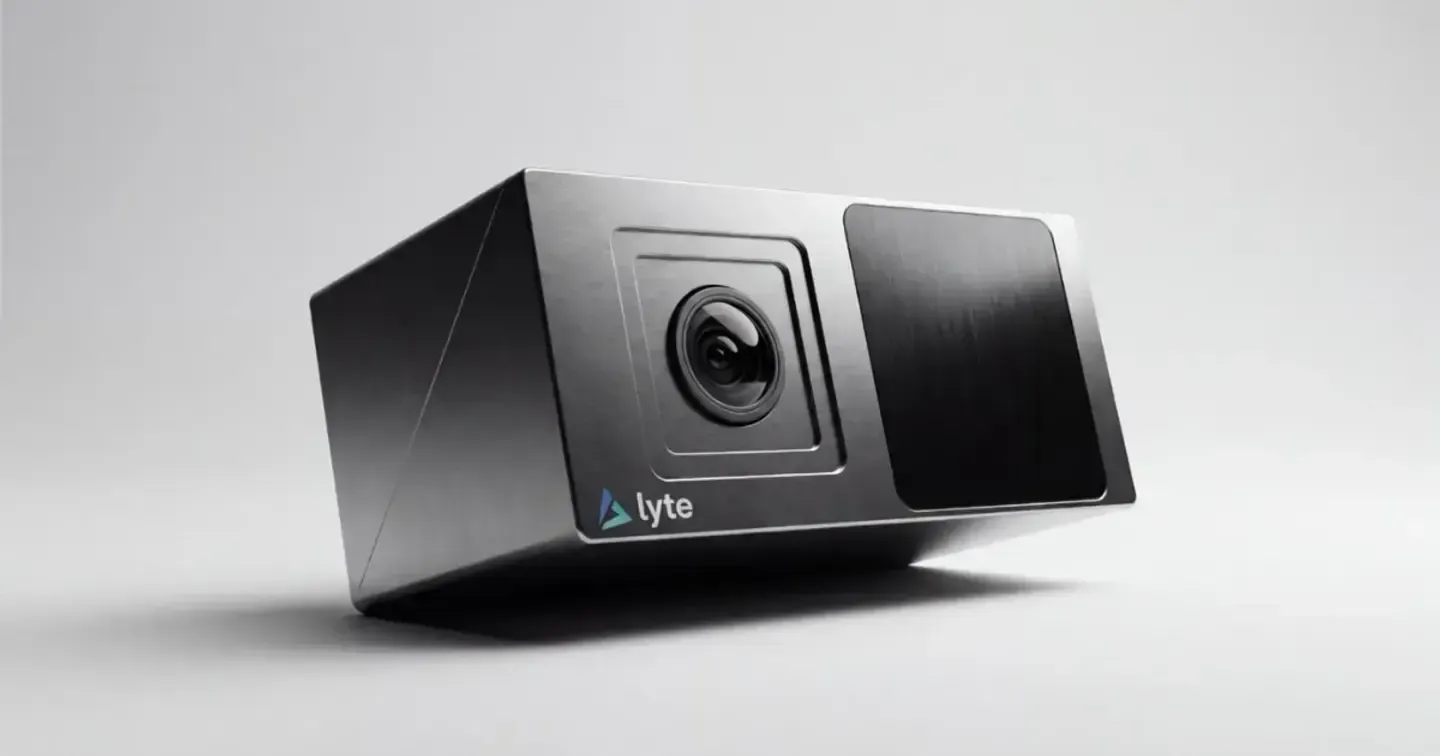
Lyte's $165 million raise arrived alongside other autonomous-systems-adjacent financings during the same period, including a $41 million round for autonomous defense and edge-AI company AITAN, suggesting sustained investor appetite for the sensing, compute and perception infrastructure that underpins the broader autonomy stack, independent of any single end-market application.
The scale of Lyte's raise, set against a backdrop of major AI-agent and cybersecurity financings in the same week, illustrates the breadth of Israel's current technology funding surge: capital is flowing not only into software-layer AI applications but into the physical sensing and hardware infrastructure required to extend autonomy into the real world.
For investors evaluating the broader autonomous systems and robotics landscape, Lyte's financing is a useful indicator of where specialized, deep-technology companies are commanding investor attention even amid a funding environment often characterized as dominated by large language model and software-layer AI companies.
Lyte has not disclosed specific plans for the new capital, though its focus on perception technology suggests continued investment in sensor development, software integration and expansion of commercial partnerships across autonomous-systems end markets.